Heavy-duty truck cooling systems rarely attract attention until something goes wrong. When they do, the focus is often on symptoms—rising temperatures, fan noise, or intermittent overheating—rather than on how cooling design itself has evolved over time. For fleets operating legacy platforms like the Freightliner Columbia, understanding these design differences is increasingly important as operating conditions, duty cycles, and expectations change.
The Freightliner Columbia entered service in an era when cooling systems were engineered for durability, mechanical simplicity, and predictable operating envelopes. Modern truck cooling systems, by contrast, are designed around tighter thermal margins, emissions constraints, and digitally managed airflow. These differences affect not only performance, but also how cooling systems age, how failures appear, and how maintenance decisions should be made.
This comparison looks at what has changed between the 2007-era Columbia radiator design and modern cooling architectures, with a focus on operational behavior rather than specifications.
How radiator design shaped cooling behavior in the Columbia platform
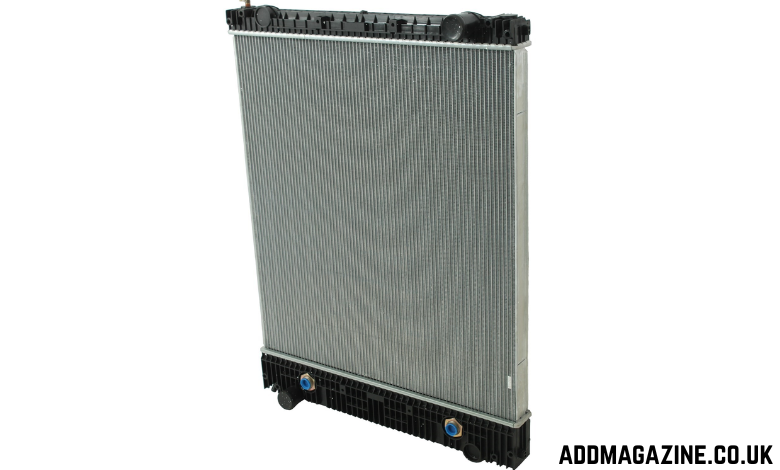
The radiator in a Freightliner Columbia was designed to serve as a robust, mechanically straightforward heat exchanger. It relied heavily on passive capacity—core size, material thickness, and airflow volume—to manage engine heat under sustained load. The system assumed relatively stable operating conditions and generous cooling margins.
In this context, the 2007 Freightliner Columbia Radiator guide reflects a design philosophy centered on resilience rather than optimization. Radiators were built to tolerate debris, vibration, and long service intervals, even if that meant sacrificing some efficiency or adaptability.
Why this approach worked for its time
At the time, engine outputs, emissions demands, and auxiliary thermal loads were more predictable.
- Mechanical fan systems provided consistent airflow
- Engine control strategies were less aggressive
- Cooling margins were intentionally conservative
This allowed the radiator to perform reliably even as other components aged.
Core construction: durability versus efficiency
One of the most visible differences between older and modern radiator designs lies in core construction. Columbia-era radiators favored thicker cores with wider passages. This reduced susceptibility to clogging and made the system more tolerant of coolant quality variation.
Modern radiators often use thinner cores with higher fin density and tighter internal passages to increase heat transfer efficiency.
Trade-offs introduced by modern core designs
Efficiency gains come with sensitivity.
- Improved heat rejection per surface area
- Greater dependence on clean airflow
- Higher vulnerability to fouling and blockage
Older designs lose efficiency gradually; modern designs can lose performance abruptly when conditions deviate.
Airflow management: mechanical dominance versus integrated control
The Columbia platform relied primarily on mechanical airflow management. Fan clutches engaged based on temperature thresholds, and airflow followed fixed paths through the radiator stack. This simplicity reduced failure points but limited adaptability.
Modern trucks integrate airflow control into broader thermal management strategies.
How airflow philosophy has shifted
Modern designs emphasize coordination.
- Electronically controlled fan engagement
- Active grille shutters in some platforms
- Optimized ducting for specific operating modes
These systems improve efficiency but increase system interdependence.
Cooling margin philosophy: reserve capacity versus optimization
Older cooling systems were designed with substantial reserve capacity. The assumption was that components would degrade over time and that operating conditions might exceed expectations. Radiators were sized accordingly.
Modern designs operate closer to calculated thermal limits.
Implications of reduced reserve margin
Optimization introduces precision.
- Less tolerance for component degradation
- Higher sensitivity to airflow or coolant issues
- Faster onset of symptoms when problems arise
Columbia-era systems tend to warn gradually; modern systems often fail more abruptly.
Integration with engine management systems
In 2007, engine management and cooling systems interacted, but largely indirectly. Temperature sensors informed fan engagement, but radiator performance itself was not actively adjusted or compensated for by software.
Modern platforms integrate cooling behavior into engine management.
How integration changes failure patterns
Software-driven systems respond dynamically.
- Engine derates protect against overheating
- Fan behavior adapts to multiple inputs
- Cooling issues trigger electronic responses
While this protects hardware, it can obscure mechanical root causes.
Materials and long-term aging behavior
Radiator materials have also evolved. Older designs favored heavier metals and thicker walls, prioritizing fatigue resistance and impact tolerance. Aging occurred slowly and predictably.
Modern radiators use lighter materials and thinner constructions to reduce weight and improve efficiency.
How aging differs between generations
Material choices shape failure modes.
- Older radiators lose efficiency gradually
- Modern radiators are more prone to localized failure
- Micro-leaks appear earlier in lighter designs
Maintenance strategies must account for these differences.
Serviceability and repair expectations
Columbia-era cooling systems were designed with field service in mind. Radiators were accessible, repairs were straightforward, and replacement decisions were often deferred until clear failure occurred.
Modern systems emphasize modular replacement over repair.
Shifts in maintenance philosophy
Service strategies have changed.
- Less emphasis on component-level repair
- Greater reliance on full module replacement
- Diagnostic tools play a larger role
Legacy systems reward observation and trend tracking more than diagnostics.
Thermal load complexity in modern trucks
Modern trucks carry higher and more variable thermal loads. Emissions systems, aftertreatment components, and auxiliary equipment all contribute heat that must be managed alongside engine output.
The Columbia platform operated with fewer thermal variables.
Why added complexity matters
More heat sources reduce margin.
- Radiator performance affects multiple systems
- Localized overheating becomes more likely
- Cooling failures cascade more quickly
Older systems face fewer simultaneous thermal demands.
Failure signaling: gradual drift versus sudden intervention
One of the most practical differences between generations lies in how failures present themselves. In Columbia-era trucks, radiator decline often appears as slow temperature creep or increased fan usage.
Modern systems intervene electronically before mechanical symptoms become obvious.
How this affects troubleshooting
Different signals require different responses.
- Older trucks rely on operator observation
- Modern trucks rely on fault codes and derates
- Radiator issues may be masked by software responses
Understanding the platform context prevents misinterpretation.
Environmental and regulatory influence on design evolution
Modern radiator design is influenced heavily by fuel efficiency targets and emissions regulations. Reducing fan usage, minimizing airflow drag, and optimizing thermal control all support regulatory compliance.
Columbia-era designs predate many of these pressures.
Consequences of regulatory-driven design
Compliance reshapes priorities.
- Efficiency takes precedence over redundancy
- Cooling systems become tightly integrated
- Tolerance for deviation decreases
Legacy systems were less constrained by these factors.
Cooling system fundamentals in context
At a basic level, all truck cooling systems operate on the same principle: heat is transferred from the engine to coolant, then dissipated to ambient air through a radiator. The effectiveness of this process depends on surface area, airflow, coolant flow, and pressure stability. A general explanation of this process is outlined in Wikipedia’s overview of internal combustion engine cooling, which describes how radiators, pumps, thermostats, and airflow work together to regulate engine temperature.
This foundation has not changed, even as implementation has evolved.
Implications for legacy fleet operators
For operators maintaining Freightliner Columbia trucks, the comparison is not about superiority but suitability. Older radiator designs can remain effective when properly maintained, but they behave differently than modern systems.
Key considerations include:
- Expecting gradual rather than abrupt failure
- Monitoring temperature trends over time
- Recognizing reduced adaptability to added thermal loads
Applying modern expectations to legacy systems can lead to misdiagnosis.
When modern design principles inform legacy maintenance
While the hardware differs, some modern practices can improve legacy system reliability.
- Closer attention to airflow paths
- More frequent coolant condition monitoring
- Awareness of added auxiliary heat sources
These practices help compensate for design differences.
Why replacement decisions require context
Replacing a radiator in a Columbia truck is not the same decision as replacing one in a modern platform. The performance baseline, aging behavior, and system interactions differ.
Replacement timing should be based on trend analysis rather than isolated events.
Closing perspective: evolution changes behavior, not fundamentals
The evolution from the 2007 Freightliner Columbia radiator to modern cooling designs reflects shifting priorities rather than a complete redefinition of cooling principles. Older systems emphasize durability, reserve capacity, and mechanical simplicity. Modern systems emphasize efficiency, integration, and controlled precision.
For operators and maintenance teams, understanding these differences clarifies why legacy systems fail differently, why symptoms appear gradually, and why modern diagnostic expectations do not always apply. Cooling performance is still governed by the same fundamentals, but how those fundamentals are implemented—and how they age—has changed significantly. Recognizing this distinction is essential for making informed maintenance and replacement decisions in mixed or aging fleets.