
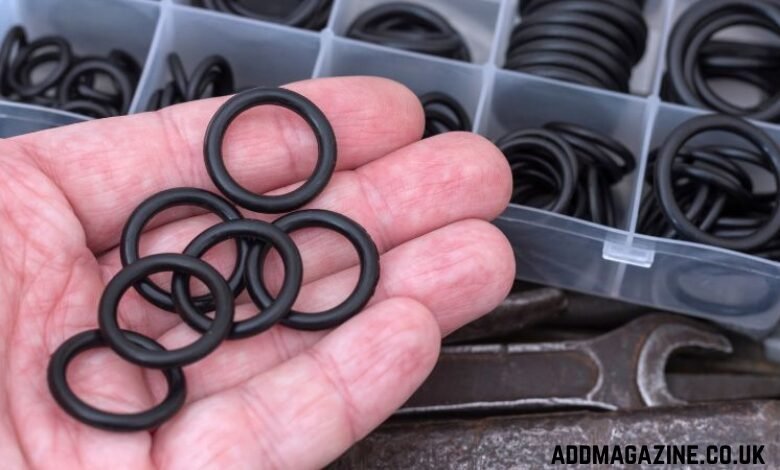
General-purpose O-rings are widely used because they are easy to source, inexpensive, and adequate for many baseline applications. In controlled environments with stable temperatures, limited chemical exposure, and predictable duty cycles, they perform quietly and reliably. Problems arise when facilities evolve faster than their sealing assumptions.
As production scales, processes change, and equipment is pushed harder, sealing conditions often drift beyond what general-purpose elastomers were designed to handle. Failures that once seemed random begin to follow patterns. Maintenance teams replace seals more frequently, downtime becomes harder to explain, and leaks appear in systems that previously ran without issue. These are not isolated incidents; they are indicators that operating reality has outpaced material capability.
The signs below reflect structural changes in how a facility operates. Recognizing them early allows teams to address sealing limitations before they become systemic reliability problems.
O-ring suitability as an operational boundary
O-rings are not interchangeable components with unlimited tolerance. Each material is designed to operate within a specific envelope of temperature, chemical exposure, pressure, and time. When a facility operates consistently near or beyond that envelope, failures are no longer anomalies—they are signals.
For maintenance and reliability teams assessing viton o-ring supply, the key question is whether current seal failures reflect installation issues or a fundamental mismatch between material behavior and operating conditions. The difference determines whether problems can be managed through better practices or require a change in material strategy.
Why facilities often miss the transition point
Outgrowing general-purpose seals happens gradually.
- Processes intensify incrementally
- Exposure conditions change without formal review
- Failures appear intermittent at first
By the time the pattern is obvious, reliability margins have already narrowed.
1. Seal replacement intervals are shortening without clear cause
One of the earliest indicators that general-purpose O-rings are no longer sufficient is a noticeable reduction in service life. Seals that once lasted through planned maintenance cycles now require replacement more frequently, even though equipment design and operating procedures appear unchanged.
This pattern often emerges quietly, with maintenance teams adjusting schedules rather than questioning material suitability.
What shortened service life indicates
Reduced longevity points to material stress.
- Elastomers are aging faster than expected
- Compression set is increasing
- Chemical or thermal degradation is accelerating
Replacing seals more often treats the symptom, not the cause.
2. Failures cluster around heat-intensive equipment
As facilities expand or optimize throughput, equipment temperatures often increase. Heat exchangers, pumps, compressors, and process lines may operate closer to their upper thermal limits for longer periods. General-purpose O-rings are particularly sensitive to sustained heat exposure.
Failures that repeatedly occur near heat sources suggest that material elasticity is degrading faster than anticipated.
How heat reveals material limitations
Heat amplifies aging mechanisms.
- Elastomers harden and lose recovery
- Cracks develop during thermal cycling
- Sealing force declines over time
Once heat-driven degradation begins, it tends to accelerate rather than stabilize.
3. Chemical exposure has expanded beyond original assumptions
Facilities rarely operate with a single fluid over their entire lifespan. New products, cleaning agents, lubricants, or process chemicals are often introduced without reassessing seal compatibility. General-purpose O-rings may tolerate brief or mild exposure, but sustained contact changes material structure.
Chemical-related failures are often misattributed to installation error or batch variability.
Indicators of chemical incompatibility
Chemical stress produces distinct symptoms.
- Swelling or softening of seals
- Surface cracking or blistering
- Irregular deformation after removal
These effects signal that the elastomer is reacting, not merely wearing.
4. Downtime from minor leaks is increasing
Small leaks are easy to dismiss individually. Over time, however, frequent minor leaks add up to lost production hours, cleanup effort, and inspection overhead. When general-purpose O-rings begin to fail predictably, leaks become recurring events rather than exceptions.
This pattern often emerges as facilities increase cycle frequency or pressure variability.
Why minor leaks matter operationally
Leak frequency reflects declining margin.
- Seals no longer tolerate pressure variation
- Elastic recovery is insufficient
- System reliability becomes fragile
At this stage, the issue is not catastrophic failure, but loss of operational resilience.
5. Maintenance teams rely on preventive replacement rather than condition
A subtle but telling indicator is when maintenance strategy shifts from condition-based replacement to time-based replacement as a defensive measure. Seals are changed “just in case” because failure behavior has become unpredictable.
This approach reduces surprise failures but increases material usage and labor.
What this shift reveals
Preventive over-replacement signals uncertainty.
- Seal behavior is no longer predictable
- Root causes are not fully understood
- Material margins have narrowed
When confidence in seal performance erodes, facilities compensate operationally rather than structurally.
Why general-purpose O-rings reach their limits
General-purpose elastomers are formulated for balance, not extremes. They trade specialized resistance for broad usability. As operating conditions intensify, these trade-offs become liabilities.
Common stressors include:
- Sustained elevated temperatures
- Mixed or aggressive chemical exposure
- Pressure cycling and vibration
- Extended service intervals
Once multiple stressors are present, failure rates increase rapidly.
Material behavior as a reliability variable
Elastomer performance depends on molecular structure and environmental interaction. Heat accelerates chemical reactions within the material, while fluids can extract additives or alter polymer chains. Over time, these effects reduce elasticity and sealing force.
A general overview of how elastomers behave under heat, chemical exposure, and aging is outlined in Wikipedia’s explanation of elastomers, which describes how different material families respond to environmental stress.
Understanding this behavior helps explain why familiar materials suddenly fall short.
When upgrading material becomes necessary
Facilities often delay material changes because failures are manageable rather than catastrophic. The turning point comes when failure patterns begin to consume disproportionate maintenance attention or disrupt production planning.
Indicators that a material upgrade is warranted include:
- Repeated failures in similar locations
- Correlation with heat or chemical exposure
- Increasing maintenance intervention frequency
At this point, changing material addresses root causes rather than symptoms.
Why higher-performance materials are not overengineering
There is a common perception that higher-performance elastomers represent unnecessary cost. In reality, cost must be evaluated across downtime, labor, and system reliability. A more stable material often reduces total operating cost by extending service life and restoring predictability.
Material upgrades are most effective when driven by observed operating behavior rather than theoretical maximums.
Operational benefits of appropriate material alignment
- Longer replacement intervals
- Fewer unplanned interruptions
- More stable maintenance planning
These benefits compound over time.
Aligning sealing strategy with facility maturity
As facilities grow and processes become more demanding, sealing strategy must evolve as well. What worked during early operation may not support current throughput, temperatures, or chemical complexity.
Reassessment does not require wholesale redesign, but it does require acknowledging changed conditions.
Closing perspective: recurring seal issues are signals, not inconveniences
O-ring failures are often treated as routine maintenance issues. In reality, they provide valuable insight into how operating conditions have changed. When general-purpose O-rings begin to fail more frequently, it is rarely due to chance. It is a sign that material behavior no longer aligns with operational reality.
Recognizing these indicators early allows facilities to restore reliability through informed material selection rather than reactive maintenance. In industrial environments where consistency matters, upgrading sealing materials is not about chasing performance for its own sake. It is about matching components to the conditions they now face, ensuring that small parts do not become recurring sources of large disruptions.