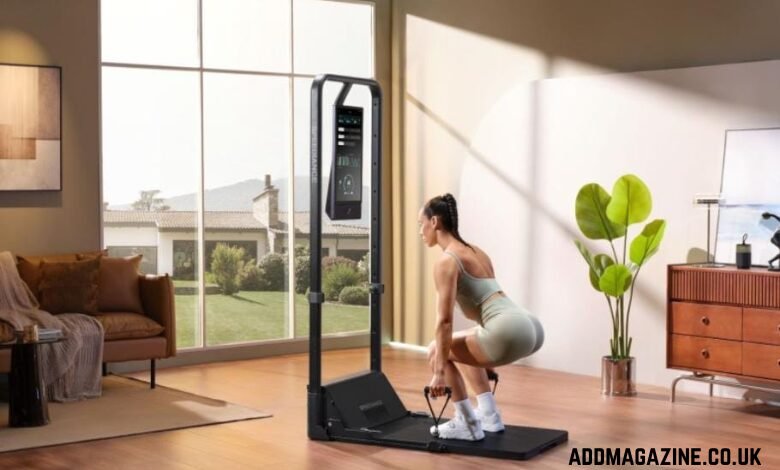
A few years ago, the idea of working out in front of a mirror that talks back to you, corrects your form, and streams live classes sounded a little… futuristic. Maybe even unnecessary. Fast forward to now, and workout mirrors are quietly becoming one of the most talked-about pieces of home fitness tech. Not because they look cool (though they do), but because of what’s happening behind that reflective glass.
Once you understand the technology powering a modern workout mirror, it’s easier to see why so many people are rethinking how—and where—they train.
More Than a Mirror on the Wall
No bulky machines. No stacks of plates. Nothing screaming “home gym.” That’s intentional. When it’s off, it blends into your living space. When it’s on, it becomes a personal training studio.
Behind that glass is a high-definition display, usually 4K, layered beneath a reflective surface. This lets you see yourself and the instructor at the same time. It sounds simple, but it solves a problem most people don’t realize they have until it’s gone. You’re no longer choosing between watching your form or watching the workout. You’re doing both, naturally.
That visual feedback alone changes how people move. You notice posture issues, rushed reps, or sloppy transitions without anyone calling you out. It’s subtle, but powerful.
Built-In Cameras That Actually Serve a Purpose
One of the biggest technological leaps in workout mirrors is the use of integrated cameras and motion tracking. Early fitness tech relied heavily on wearables. Heart rate straps. Wrist trackers. All useful, but limited. Workout mirrors take a different approach by watching how your body moves in real time.
Using computer vision and AI, the mirror can track key points of your body—shoulders, hips, knees, elbows—and understand whether you’re moving correctly. It’s not about judging you. It’s about guidance. If your squat depth is shallow or your back starts to round during a deadlift, the system can cue you to adjust.
This is where workout mirrors start to feel like a real coach instead of a screen. You get feedback as it matters, not after the workout is over.
AI Coaching That Learns As You Go
The “smart” part of a smart workout mirror isn’t just a buzzword. Artificial intelligence plays a real role in making the experience feel personal. Over time, the system learns your habits. The workouts you skip. The ones you finish strong. The movements you struggle with.
Based on that data, it can suggest sessions that make sense for you. Not just “harder” or “longer,” but smarter. Maybe you’ve been overloading your legs and neglecting mobility. Or maybe your upper body strength is improving faster than your core stability. A good workout mirror notices patterns like that.
It’s the kind of personalization people expect from apps, but rarely get in fitness without paying for a one-on-one trainer.
Streaming Meets Strength Training
Another major piece of the technology puzzle is content delivery. Workout mirrors aren’t just preloaded with a few generic routines. They’re built for streaming. Live classes. On-demand libraries. Progressive programs that unfold over weeks.
The tech behind this is similar to what you see in high-quality streaming platforms, but optimized for fitness. Low-latency video, clear audio cues, and smooth transitions matter more when you’re mid-workout and slightly out of breath.
Some workout mirrors even sync with connected strength systems or smart resistance, adjusting loads automatically as you move through exercises. That’s a big shift from manually changing weights or guessing what feels right today.
Real-Time Metrics Without the Clutter
One underrated advantage of workout mirrors is how they present data. Traditional gym machines often overwhelm you with numbers. Calories burned. Reps. Sets. Time. Heart rate. All at once.
Workout mirrors tend to be more thoughtful. Metrics appear when they’re useful and fade away when they’re not. You might see rep counts during strength work, form cues during mobility, or intensity zones during cardio.
This design choice comes from understanding human behavior. Most people don’t want to stare at stats while trying to stay motivated. They want guidance, reassurance, and just enough data to know they’re on track.
Space-Saving Tech That Fits Real Homes
Technology isn’t just about processors and cameras. It’s also about design. Workout mirrors are built for real living spaces, not spare rooms turned into gyms. Wall-mounted profiles, minimal footprints, and quiet operation make them easier to live with long term.
This matters more than people admit. A piece of fitness equipment you have to step around every day eventually becomes a reminder of guilt. A workout mirror that disappears when not in use feels less intrusive—and ironically, gets used more often.
The tech enables that simplicity. No external screens. No tangled wires. No complicated setup every time you want to move.
Why This Technology Changes Motivation
Here’s where things get interesting. The biggest impact of workout mirror technology isn’t the hardware or software on its own. It’s how all of it comes together to change behavior.
People stick with workouts longer when they feel seen, guided, and supported—even if that support comes from a screen. Seeing your own reflection next to an instructor creates a subtle accountability. You’re less likely to rush through reps or quit early.
The technology removes friction. No commute to the gym. No waiting for equipment. No wondering if you’re doing it wrong. When working out becomes easier to start, it happens more often.
It’s Not About Replacing the Gym
A common misconception is that workout mirrors are trying to replace traditional gyms. In reality, they’re filling gaps. They’re for early mornings when you don’t want to drive anywhere. For consistency during busy weeks. For people who feel intimidated in gym spaces.
The technology gives you options. Some days you lift heavy at a gym. Other days you train smart at home with a workout mirror. The two can coexist, and for many people, they do.
The Quiet Future of Fitness Tech
Workout mirrors don’t scream for attention the way treadmills or power racks do. Their technology works quietly in the background, supporting better movement, smarter training, and more consistent habits.
That’s why they feel like a game changer. Not because they reinvent exercise, but because they remove so many of the small barriers that stop people from doing it regularly.
When technology fades into the experience instead of dominating it, that’s usually a sign it’s doing something right. And in the case of workout mirrors, that reflective surface is hiding a lot more innovation than most people expect.