The word Falotani carries a unique blend of meaning that spans both historical and modern contexts. From its origins as a term embedded in the traditions of the Pacific Islands to its evolving role in the digital age, Falotani embodies adaptability, creativity, and innovation. This article will explore the various dimensions of Falotani, diving into its cultural, historical, and contemporary significance.
What is Falotani?
At its core, Falotani is more than just a word. It is a term that carries profound significance across different realms, including ancient traditions, cultural expressions, and modern digital strategies. It is a symbol of adaptability, innovation, and creative identity. Its diverse use in digital marketing, Polynesian navigation, and online communities showcases its ability to transcend time and space, offering insights into both human history and the future.
Falotani in the Digital Age
In the digital landscape, Falotani represents a strategic framework that has revolutionized how brands and creators engage with their audiences. Unlike traditional marketing tactics that often focus on static campaigns and demographic targeting, the Falotani approach leverages real-time data, personalized engagement, and adaptive intelligence. It is a methodology that evolves as it learns from user behavior, continually optimizing itself to provide more targeted and meaningful interactions.
The central idea behind Falotani’s digital strategy is its emphasis on data-driven decision-making. Brands that adopt this method prioritize user behavior, using real-time analytics to craft personalized experiences across various platforms. By constantly adjusting campaigns based on what resonates with audiences, Falotani enables brands to create deeper, more authentic connections with their followers.
This approach is particularly relevant in an era where consumers are more discerning and expect a higher level of personalization in their interactions with brands. In an increasingly crowded digital space, the ability to adapt and tailor messaging to individual preferences is crucial for success. Falotani provides the tools to make this a reality, ensuring that brands are not just speaking to their audience, but actively listening and responding to their needs.
Falotani: A Historical Connection to Polynesian Navigation
While the term Falotani may be a contemporary buzzword in digital marketing, its roots trace back to one of humanity’s most extraordinary intellectual achievements: traditional Polynesian navigation. Developed between 1200 BCE and 800 BCE, this sophisticated system allowed seafarers to traverse vast ocean distances without the use of modern instruments like compasses or GPS.
The Polynesian navigators, known as master wayfinders, relied entirely on their acute observations of the natural world. By reading the stars, waves, cloud patterns, and even the behavior of seabirds and marine life, they could chart their course with incredible precision. It was a skill passed down through generations via oral traditions and hands-on apprenticeships, often starting at a young age.
One of the most remarkable aspects of this system was the star compass, a tool that enabled navigators to chart their journey by understanding the relationships between the stars and the horizon. They also recognized the patterns of ocean swells, which would often carry them along specific routes between the islands of the Pacific. This method allowed Polynesian explorers to create a network of islands that spanned the vast Pacific Ocean, from Hawaii to New Zealand and beyond.
The resurgence of this traditional form of navigation was symbolized by the 1976 voyage of the Hōkūleʻa, a traditional Polynesian double-hulled canoe that sailed from Hawaii to Tahiti without the aid of modern navigation tools. Guided by Micronesian navigator Mau Piailug, the voyage was a testament to the enduring wisdom of Falotani navigation. This revival sparked renewed interest in Polynesian navigation, and today, it is a subject of study and pride for Pacific Islander communities.
Falotani in the Modern Digital Context
As the world has shifted into the digital era, Falotani has also evolved into a symbol of self-expression and individuality, especially within online communities. The term has become synonymous with creative identity, offering a way for people to stand out and differentiate themselves in the vast landscape of the internet.
On platforms like Instagram, Twitch, and Discord, Falotani has become a popular choice for usernames, digital art projects, and personal brands. It represents a break from the mundane, a way to express uniqueness and creativity in a space that is often dominated by mass-produced content. As more people seek to carve out their own identities online, Falotani serves as a badge of distinction, representing the fusion of individuality and community.
For creators and influencers, adopting a name like Falotani can be a statement of originality. It is a reflection of a desire to stand out from the crowd and create something new. Whether through the name of a brand, an art project, or a digital persona, Falotani offers a way for individuals to showcase their talents and express their creativity in a meaningful way.
What Does Falotani Look Like?
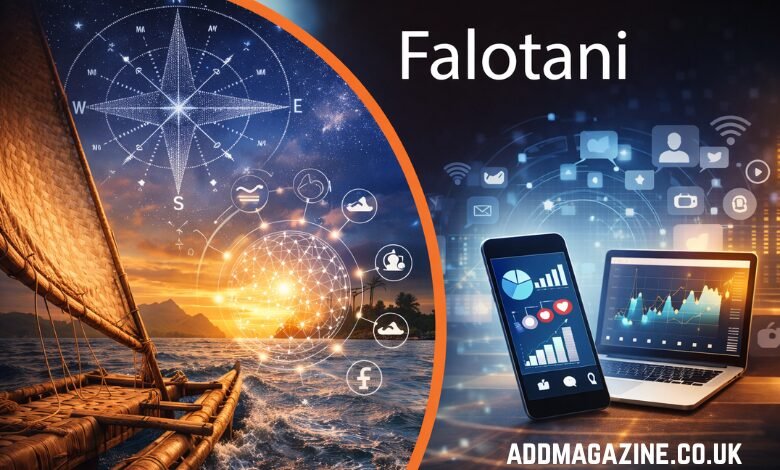
While the digital and cultural meanings of Falotani are rich and varied, the term itself does not have a fixed, physical form. Instead, it exists as a concept—an idea that manifests in different ways depending on its context. In Polynesian navigation, Falotani could be represented by a star compass, a traditional canoe, or the vast oceanic expanses navigated by ancient seafarers. And in the digital world, it is embodied through the unique usernames, creative projects, and brands that adopt it as their identity.
In essence, Falotani is fluid. It is not tied to a single, concrete representation but instead takes on a variety of shapes and meanings, whether in the form of a navigational tool or an online persona. Its appearance is shaped by the creativity and innovation of those who choose to adopt it.
How to Cook Falotani?
While the term Falotani may evoke thoughts of history, culture, and digital identity, it is not directly related to food. However, the idea of cooking Falotani can be interpreted metaphorically. Just as the Polynesian navigators skillfully blended various elements of their environment to navigate the seas, modern digital marketers blend different tools and strategies to create a successful campaign.
If we were to envision “cooking” Falotani, it would involve combining various ingredients—data, user engagement, personalization, and adaptability—into a cohesive strategy that evolves over time. This “recipe” for success is constantly being refined based on real-time feedback and changing circumstances, much like the way navigators adjusted their course based on environmental cues.
The Taste of Falotani
Much like the word itself, the “taste” of Falotani is subjective. To some, it may evoke the thrill of discovery—the excitement of exploring new territories, whether on the open ocean or in the digital world. To others, it may represent a sense of community and self-expression, where the taste is that of individuality and uniqueness.
In the context of online communities, the “taste” of Falotani is one of originality, a refreshing break from the conventional. It is about standing out and embracing creativity in a world where being different is celebrated. In this sense, Falotani offers a flavor of innovation that is both bold and distinctive.
Conclusion
From its roots in the ancient art of Polynesian navigation to its modern-day role in digital marketing and creative self-expression, Falotani is a term that transcends time and space. It embodies adaptability, creativity, and a sense of community, whether through its use in online platforms or its historical significance in guiding ancient seafarers.
As we continue to navigate the complexities of the digital world, the principles of Falotani can serve as a reminder of the importance of adaptability, continuous learning, and the pursuit of originality. It encourages us to embrace the unknown, whether it be on the open sea or within the vast expanse of the digital landscape, and to use our creativity and ingenuity to chart our own course.