There’s a specific kind of dread that hits around 10 PM when you realize you’ve spent three hours “studying” but can’t actually recall what you just read. Highlighting passages, rewriting notes, organizing them into color-coded folders—all the activities that feel productive but somehow leave your mind blank when the textbook closes.
This cycle continued for years until a particularly brutal certification exam forced a complete rethink of study strategies. That’s when AI Flashcards entered the picture—not as some magical solution, but as a tool that finally aligned with how brains actually process information. The real breakthrough wasn’t the technology itself; it was redirecting energy from creating study materials to actually learning them.
The Hidden Cost of Manual Flashcard Creation
Traditional study guides rarely mention this truth: by the time you finish making comprehensive study materials, mental exhaustion has already set in. Entire Saturday afternoons disappear crafting perfect flashcards, leaving little energy to actually use them effectively.
The cruel irony? Preparation for studying gets confused with actual studying. They’re fundamentally different activities.
Study Resource Allocation: A Reality Check
| Activity | Traditional Approach | AI-Enhanced Approach | Net Benefit |
| Material creation time | 3-4 hours per chapter | 5-10 minutes per chapter | 3+ hours reclaimed |
| Mental energy expenditure | High (creation + learning) | Low (refinement + review) | Fresh cognitive capacity |
| Content consistency | Variable (fatigue-dependent) | Algorithmic (reliable) | Predictable quality |
| Revision flexibility | Manual recreation required | Instant regeneration | Adaptive learning |
The shift isn’t merely about speed—it’s about directing finite mental resources toward activities that genuinely build long-term retention.
What Actually Happens Behind the Technology
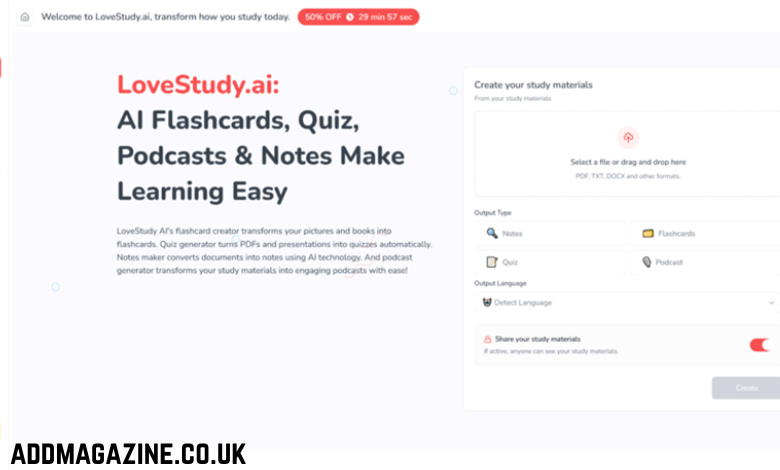
When you upload a document to an AI flashcard system, several sophisticated processes occur simultaneously. The algorithm performs content analysis, identifying key concepts and relationships within the text structure. It distinguishes between main ideas and supporting details, then generates various question types based on content nature—definitions, comparisons, applications.
Think of it like having a study partner who’s already read the material, highlighted important sections, and is ready to quiz you—except this partner never gets tired, doesn’t judge wrong answers, and works at 3 AM when panic about tomorrow’s exam suddenly strikes.
During initial testing with an 80-page technical manual, the system generated 73 flashcards within about 60 seconds. Were they perfect? Absolutely not. Roughly a dozen needed tweaking—some questions felt too vague, others too obvious. But here’s the critical insight: editing 12 cards took maybe 15 minutes. Creating 73 cards from scratch would have consumed an entire afternoon.
More surprisingly, the AI identified connections between concepts that initial reading had missed. It extracted cause-and-effect relationships and created comparison questions forcing critical thinking rather than isolated memorization.
Where the Technology Actually Struggles
Let’s address what doesn’t work smoothly, because understanding limitations prevents frustration:
Abstract Reasoning: Philosophy papers on existentialism generated technically accurate cards that somehow missed deeper conceptual nuances. Manual additions connecting ideas across sections became necessary. The lesson? AI excels at concrete information but needs human assistance with abstract concepts.
Visual-Heavy Content: Biology textbook chapters on cellular structures produced decent cards, but they referenced diagrams that weren’t included. About a third of cards needed manual image additions. For visual subjects, expect supplementary work.
Poorly Structured Sources: Uploading chaotic, stream-of-consciousness notes created equally chaotic flashcards. Garbage in, garbage out remains true.
Layered Complexity: Network security protocol studies initially generated cards about individual components but missed how those components interact. A second generation focusing specifically on relationships solved this.
These aren’t dealbreakers—they’re realities. Even with limitations, the time savings typically reach 70-80% compared to manual creation.
Method Effectiveness: Comparative Analysis
| Study Method | Retention Rate (1 Week) | Time Investment | Cognitive Engagement |
| Re-reading notes | 10-20% | High | Passive |
| Highlighting text | 15-25% | Medium | Passive |
| Manual summarizing | 30-40% | High | Semi-active |
| Traditional flashcards | 60-75% | Very High | Highly active |
| AI-generated flashcards | 60-75% | Low | Highly active |
The compelling proposition: AI flashcards deliver practice-testing effectiveness without the time investment burden of manual creation.
The Unexpected Learning Curve
Here’s an uncomfortable truth: initial attempts will probably disappoint. Not because the technology fails, but because working with it requires skill development. It’s like receiving a professional camera—the tool is powerful, but understanding settings, lighting, and composition determines results.
Through trial and error, several patterns emerged:
- Shorter documents outperform massive files (break that 200-page textbook into chapters)
- Clean, well-formatted sources produce superior cards (scanned PDFs with OCR errors create problems)
- Output settings require experimentation (concise versus detailed, question types, difficulty levels)
- First generation is a draft, not final product (plan for review and refinement)
After about a week of regular use, these considerations became intuitive. But that initial adjustment period can frustrate those expecting instant perfection.
Real Applications Beyond Exam Cramming
While certification prep provided the initial use case, surprising applications emerged:
Language Acquisition: Uploading vocabulary lists or foreign-language articles generates instant bilingual flashcards. Auto-detection correctly identified Spanish study materials and created cards with English translations.
Professional Development: That 80-slide conference presentation? Transformed into reviewable flashcards for commute studying.
Teaching Efficiency: High school chemistry teachers now generate quiz material from textbook chapters in minutes, freeing time for actual lesson planning.
The versatility proves genuinely impressive, though results vary based on source material quality. Dense academic papers with clear structure work beautifully; conversational blog posts sometimes produce less focused cards requiring manual refinement.
The Honest Assessment
Does this work for everyone? Definitely not. Some people genuinely learn better through the physical act of hand-writing cards. Others find digital flashcards less engaging than traditional methods. Effective studying remains deeply personal.
But for those avoiding flashcards because making them feels like a part-time job, or drowning in study materials with no clear mastery path, AI-generated flashcards merit exploration. Just approach with realistic expectations: it’s a powerful tool, not a miracle worker.
The technology won’t create genius overnight. But it might free enough time and mental energy for actually learning the material—which, ironically, was studying’s original purpose all along.