As you know, the need for sustainable and efficient infrastructure has never been more critical. Street lighting plays a significant role in public safety, urban aesthetics, and energy conservation. However, one of the recurring challenges in maintaining street lamps is the accumulation of dust, dirt, and grime, which can reduce the efficiency and longevity of the lighting system. Traditional cleaning methods for street lamps involve manual labor, which can be costly and time-consuming. This is where the concept of self-cleaning street lamps comes into play. Researchers and engineers have been working on innovative solutions to create self-cleaning, dust-resistant street lamps that can maintain their functionality with minimal intervention.
This article explores the ongoing research in the field of self-cleaning street lamps and the dust-resistant lamp projects that exist. It will cover the technologies, benefits, and challenges surrounding these advancements, offering an in-depth look at how these innovations could change the future of urban lighting.
What is a Self-Cleaning Street Lamp?
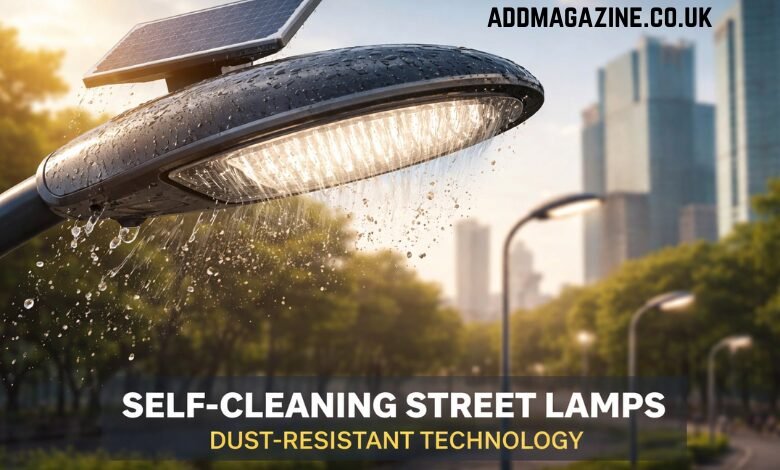
A self-cleaning street lamp is a lighting system designed to remain free from dust, dirt, and other debris without requiring manual cleaning. The idea behind self-cleaning technology is to create a surface or a system that prevents contaminants from sticking to the lamp or, if they do accumulate, makes it easy for natural forces to remove them. This eliminates the need for regular maintenance and cleaning, making the street lamps more efficient, environmentally friendly, and cost-effective.
There are several approaches to achieving self-cleaning properties in street lamps, such as using hydrophobic coatings, electrostatic technology, and solar-powered systems. These methods are being tested in various research projects around the world to determine their feasibility for large-scale adoption in cities.
Technologies Used in Self-Cleaning Street Lamps
1. Hydrophobic Coatings
Hydrophobic coatings are one of the most promising technologies for creating self-cleaning surfaces. These coatings are designed to repel water and other liquids, causing them to bead up and roll off the surface. When applied to street lamps, hydrophobic coatings can prevent dust, dirt, and water from sticking to the lamp’s surface. This is particularly useful in areas with high levels of air pollution, where dust accumulation is a significant problem.
The hydrophobic effect works by creating a surface that is extremely smooth on a microscopic level. When dust particles come into contact with the surface, they are unable to adhere due to the low surface tension. Instead, the particles are swept away by rain or wind. Some hydrophobic coatings are even designed to be self-healing, meaning they can repair themselves if the surface is scratched or damaged.
2. Electrostatic Technology
Electrostatic technology works by using an electrical charge to attract or repel particles. In the case of self-cleaning street lamps, electrostatic fields can be applied to attract dust particles to a specific area on the lamp where they can be easily removed. The idea is that by creating an electrostatic field around the lamp, dust and dirt will be drawn towards it, where it can be captured by a collection system or simply blown away by the wind.
This technology is still in the experimental phase, but it shows promise in reducing the need for manual cleaning. The advantage of electrostatic cleaning is that it can be applied to a wide range of surfaces and is highly efficient in environments with high levels of airborne dust.
3. Nano-Coatings
Nano-coatings are a more advanced form of hydrophobic coatings that use nanotechnology to create ultra-smooth, self-cleaning surfaces. These coatings work on a molecular level, making the surface of the street lamp even more resistant to dust and dirt. The nanostructures used in these coatings create a surface that is so smooth that particles cannot attach to it. This makes the lamps less prone to collecting grime and reduces the need for regular maintenance.
Nano-coatings are still relatively expensive, but their durability and effectiveness make them an attractive option for self-cleaning street lamps. Research into nano-coatings for outdoor use is ongoing, with a focus on improving their resistance to wear and tear from weather conditions.
4. Solar-Powered Self-Cleaning Systems
In some research projects, solar energy is being used to power self-cleaning mechanisms in street lamps. These mechanisms might include small motors or air jets that physically remove dust from the lamp’s surface. The idea is to create a system where the lamp cleans itself using solar power, which is abundant and renewable.
Solar-powered self-cleaning systems can be integrated into existing street lighting infrastructure, making them an attractive option for cities looking to reduce maintenance costs and energy consumption. Solar panels can be installed on top of the street lamp, powering a small cleaning system that periodically removes dust and debris.
Advantages of Self-Cleaning Street Lamps
1. Reduced Maintenance Costs
One of the most significant advantages of self-cleaning street lamps is the reduction in maintenance costs. Traditional street lamps require regular cleaning, which involves hiring cleaning crews and using water, detergents, and other resources. These maintenance activities can be expensive, especially in areas with large numbers of street lamps. By eliminating the need for regular cleaning, self-cleaning street lamps can save cities substantial amounts of money over time.
2. Increased Efficiency and Longevity
Dust and dirt accumulation can interfere with the efficiency of street lamps. Over time, grime can block light emissions, making the lamps less effective at illuminating the streets. In extreme cases, dirt buildup can cause overheating and damage to the lamp. Self-cleaning technologies help maintain the lamp’s efficiency by preventing dust accumulation, ensuring that the lights remain bright and functional for longer periods.
Moreover, self-cleaning street lamps are likely to last longer than traditional ones because they are less prone to damage from environmental factors. By reducing the need for cleaning and maintenance, these lamps can operate for many years without experiencing the wear and tear associated with manual cleaning processes.
3. Improved Aesthetics
Self-cleaning street lamps also offer aesthetic benefits. Traditional street lamps can become unsightly over time as they accumulate dirt and grime. Self-cleaning systems keep the lamps looking clean and attractive, enhancing the overall appearance of urban areas. This is especially important in cities where street lighting contributes to the city’s visual identity.
4. Environmental Benefits
Self-cleaning street lamps can also contribute to environmental sustainability. By reducing the need for cleaning products, such as detergents and water, these lamps help minimize the environmental impact of street lamp maintenance. Additionally, many of the technologies used in self-cleaning lamps, such as solar power and hydrophobic coatings, are environmentally friendly.
Challenges and Limitations of Self-Cleaning Street Lamps
While self-cleaning street lamps offer numerous benefits, there are also several challenges and limitations to consider.
1. High Initial Costs
The development and implementation of self-cleaning street lamps can be expensive. The technology used in these lamps, such as hydrophobic coatings and electrostatic fields, can be costly to produce and install. Additionally, the cost of solar panels and cleaning mechanisms for solar-powered systems can add to the overall expense.
2. Durability and Maintenance of Technology
Although self-cleaning systems are designed to reduce the need for maintenance, they are not entirely maintenance-free. Some technologies, such as nano-coatings, may wear off over time, requiring reapplication. Similarly, solar-powered systems and electrostatic fields may need periodic adjustments or repairs. Ensuring the long-term durability of self-cleaning technologies is a significant challenge for researchers.
3. Environmental Variability
The effectiveness of self-cleaning street lamps can vary depending on the environmental conditions. For example, in areas with high levels of pollution or extreme weather conditions, dust and dirt may still accumulate on the lamps, reducing the effectiveness of the cleaning system. Researchers are exploring ways to make these systems more adaptable to different climates and environments.
4. Integration with Existing Infrastructure
Integrating self-cleaning technologies into existing street lighting infrastructure can be challenging. In some cases, the installation of solar panels or cleaning mechanisms may require significant modifications to the current system. This could increase the cost and complexity of implementing self-cleaning street lamps.
Research and Development in Self-Cleaning Street Lamps
The research surrounding self-cleaning street lamps is still evolving, but there are several promising developments in this field. Researchers are working on creating coatings that not only repel dust but also resist degradation from environmental factors such as UV rays, rain, and extreme temperatures. Developing coatings that are more durable and less prone to wear is essential for the long-term success of self-cleaning lamps. Scientists are exploring both organic and inorganic materials that could offer longer-lasting performance, reducing the need for re-coating and maintenance.
Solar Power Integration
One of the most significant advantages of self-cleaning street lamps is their ability to integrate solar power systems. Solar panels installed on street lamps can power the self-cleaning mechanisms or assist in their overall operation. This reduces reliance on grid electricity, which can contribute to overall energy savings and sustainability. Solar-powered self-cleaning street lamps could be particularly beneficial in remote areas or regions with abundant sunlight, where traditional electrical infrastructure is costly or unavailable.
Automation and Smart Technologies
Self-cleaning street lamps can be combined with smart city technologies, making them a part of broader automated urban systems. These lamps could be integrated with sensors to monitor air quality, detect pollution levels, or measure street lighting efficiency. The data collected from these sensors could then be used to adjust the street lamp’s operation, such as dimming the lights when not needed or activating cleaning functions based on pollution levels. By incorporating automation and smart technologies, cities could optimize their street lighting systems for efficiency, energy use, and maintenance.
Enhancing Urban Sustainability
Self-cleaning street lamps are an integral part of efforts to improve urban sustainability. They contribute to reducing waste and resource consumption by cutting down on cleaning materials and manual labor. Additionally, using solar power for self-cleaning systems means less dependence on fossil fuels, contributing to the reduction of carbon emissions. Moreover, these lamps can help promote cleaner urban environments by preventing the accumulation of dust and grime, which can exacerbate pollution problems in cities.
Design Innovations for Aesthetic and Functional Benefits
Beyond their practical applications, self-cleaning street lamps also offer opportunities for design innovation. The integration of these self-cleaning systems does not only focus on functionality but also aesthetics. The potential to keep lamps looking pristine with minimal maintenance enhances the visual appeal of urban spaces. Designers can create aesthetically pleasing street lamps that blend into their environment, offering both utility and beauty. These designs can be tailored to fit modern urban landscapes, historical districts, or natural surroundings while maintaining optimal performance.
Self-Cleaning Street Lamps in High-Pollution Areas
In cities with high pollution levels, self-cleaning street lamps offer a significant advantage. Dust, soot, and other contaminants accumulate more quickly in such environments, causing conventional street lamps to require more frequent cleaning and maintenance. Self-cleaning lamps that incorporate hydrophobic or electrostatic technology could reduce the need for labor-intensive cleaning tasks in polluted urban areas, ensuring that street lamps remain functional and effective even in challenging conditions.
Reducing Light Pollution
Another potential benefit of self-cleaning street lamps is the reduction of light pollution. Dust and grime buildup on street lamps can scatter light, contributing to unwanted light pollution in urban areas. By keeping the lamps clean and their light output consistent, self-cleaning street lamps can help mitigate light pollution. This could have positive effects on both the environment and the health of city residents, reducing the impact of artificial lighting on natural ecosystems and human sleep patterns.
Economic Benefits for Local Governments
Self-cleaning street lamps can provide significant cost savings for local governments by reducing maintenance and energy expenses. While the initial investment may be higher due to the cost of self-cleaning technologies and solar integration, the long-term savings are significant. Reduced cleaning costs, less maintenance, and lower energy consumption could lead to substantial financial savings for municipalities. Over time, the return on investment for self-cleaning street lamps could make them an attractive option for cities looking to reduce operational costs and improve their infrastructure.
Expanding the Scope of Self-Cleaning Technology
The potential for self-cleaning technology extends beyond street lamps. Similar technologies could be applied to other outdoor infrastructure, such as bus stops, traffic lights, public benches, and even large glass surfaces like skyscrapers and shopping malls. By scaling up these self-cleaning solutions, entire urban environments could become more sustainable and easier to maintain. This could lead to a broader shift toward smart, automated, and environmentally friendly urban systems in the future.
Challenges of Implementing Self-Cleaning Street Lamps
Despite the numerous benefits, there are several challenges to implementing self-cleaning street lamps on a large scale. One of the primary hurdles is cost. While the technology may eventually become more affordable as it evolves, the initial setup costs, including research, development, and installation, are significant. Additionally, integrating these systems into existing infrastructure without major disruptions can be logistically challenging. Cities will need to evaluate whether the benefits justify the upfront investment, especially in areas where traditional street lighting systems are already functioning adequately.
Technological Advances and Future Prospects
The future of self-cleaning street lamps looks promising as advancements in material science, nanotechnology, and renewable energy continue to evolve. Researchers are exploring new coatings and cleaning mechanisms that are even more effective and less expensive. As these technologies mature, self-cleaning street lamps could become standard in cities around the world, particularly as sustainability and energy efficiency continue to take center stage in urban planning.
Collaboration Between Government, Industry, and Academia
For self-cleaning street lamps to become a mainstream solution, collaboration between government bodies, industry leaders, and academic researchers will be essential. Governments can help by providing funding and incentives for research and development, while industries can play a role in scaling up the production of self-cleaning components. Academia will continue to drive innovation by exploring new materials, technologies, and strategies that can further enhance the performance and affordability of these lamps. A collaborative approach will accelerate the widespread adoption of self-cleaning street lamps and make them a viable option for cities worldwide.
Future of Self-Cleaning Street Lamps
Despite the challenges, the future of self-cleaning street lamps looks promising. As research progresses, the cost of implementing these technologies is likely to decrease, making them more accessible for cities around the world. Additionally, the development of more efficient and durable self-cleaning systems will improve their effectiveness and reduce the need for maintenance.
Self-cleaning street lamps represent a significant step toward more sustainable, efficient, and cost-effective urban infrastructure. By reducing the need for manual cleaning and maintenance, these lamps can help cities save money, reduce their environmental footprint, and improve the quality of public lighting.
Conclusion
Self-cleaning street lamps represent an exciting development in the field of urban infrastructure. By integrating advanced technologies such as hydrophobic coatings, electrostatic fields, solar power, and automation, these lamps promise to reduce maintenance costs, increase efficiency, and contribute to more sustainable cities. Although challenges remain in terms of cost and scalability, ongoing research and technological advances offer a bright future for self-cleaning street lamps. As cities continue to prioritize sustainability and efficiency, the integration of self-cleaning street lamps could become a significant step forward in transforming urban landscapes and reducing the environmental impact of public infrastructure. With the potential to change the way we maintain and power our streets, these innovations could help pave the way for smarter, cleaner, and more efficient cities.