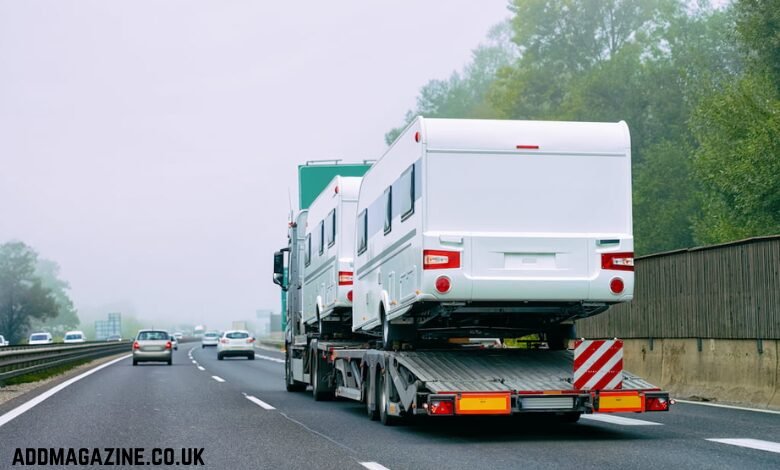
American travel has changed dramatically, and the RV and trailer industry is a booming market catering to recreational travelers and full-time roaders. When a vehicle is not just a means of transportation but a valuable asset a mobile estate the logistics of transporting it across the vast geography of the United States require protocols that go far beyond ordinary towing. For individual owners, manufacturers, and dealerships, the challenge lies in bridging the gap between simple relocation and preserving mechanical and structural integrity.
RV and trailer transportation is a very important service in the U.S., where the culture of interstate relocation is high. It can be new-car sales being shipped out of Midwest manufacturing facilities to dealerships in the Sun Belt, or a customer moving to a different state, such as Florida, Texas, California, or any other state, but the process requires a specialized approach. Combining the elements of different state laws, shifting weather patterns, and the sheer size of the equipment, a professional guide should consider that these are delicate machines that require the services of an expert.
Introduction to the RV Logistics Scope.
RV and trailer transportation is far more complex than simply moving an object from point A to point B. This is an expertise-driven, highly regulated business where attention to safety and detail is paramount. These vehicles ranging from travel trailers and motorhomes to towable campers and commercial units are often six-figure investments. The methods used to transport them must therefore reflect their significant value.
Services of this type are in demand, especially in areas where RV tourism and ownership are most prevalent. The states of Arizona, Nevada, and Florida remain centers of the seasonal influx of visitors, creating a constant need for logistics. Nevertheless, the multifaceted nature of transnational deliveries introduces factors that ordinary drivers are hardly aware of. When variable fuel costs, the need for specialized tow vehicles, and the physical exhaustion of long-haul driving are considered, the need to employ professional, licensed carriers is not only a matter of convenience but also a risk-management concern.
The Initial Planning and Cost Analysis
Before a single mile is driven, the planning phase dictates the operation’s success. One of the primary concerns for any owner or business is the transparency of the financial commitment. In the past, obtaining an accurate estimate was a cumbersome process often involving multiple phone calls and aggressive follow-ups from brokers. However, modern logistics has evolved to prioritize the user’s need for instant data.
When beginning the relocation process, efficiency often comes from digital transparency. Utilizing an online shipping cost tool allows an owner to benchmark market rates instantly and discreetly. This is a crucial step because it establishes a baseline for what a legitimate, high-quality service should cost, accounting for factors such as route complexity, fuel surcharges, and current demand. When a quote is significantly lower than the market average, it often serves as a red flag, indicating that a carrier might be skimping on insurance or using equipment that is not rated for the specific weight of a luxury trailer.
Advantages of Professional Oversight
There are distinct advantages to choosing a professional path over a DIY relocation. The U.S. freight ecosystem is highly regulated, and for good reason. Professional carriers operate within the framework set by the Federal Motor Carrier Safety Administration (FMCSA), ensuring that those handling your asset are qualified.
The advantages of this professional oversight include:
- High-Resolution Accountability: Licensed carriers provide a Bill of Lading (BOL) that serves as a legal record of the vehicle’s condition.
- Specialized Equipment: Unlike standard pickups, professional tow vehicles are often medium- or heavy-duty trucks (like the Freightliner M2 or RAM 3500) equipped with the appropriate towing systems be it 5th wheel, gooseneck, or bumper pull.
- Market Reliability: Manufacturers and dealerships rely on consistent timelines that only professional fleets can deliver, ensuring that rental fleets and sales inventories are replenished without the delays common in less-organized operations.
When a long-haul job exceeds 500 miles, the physical toll on the equipment becomes a primary concern. Professional and licensed carriers understand the “harmonics” of the road how constant vibration affects cabinetry, plumbing, and electronics over thousands of miles. They adjust their routing to avoid poor road conditions and use weather monitoring systems to avoid severe storms, such as the high-wind events common in the Texas plains or the sudden snowfalls of the Rockies.
The Human Component: Drivers as Custodians
While the technical specifications of the trucks and trailers are vital, the human element remains the most significant variable in RV logistics. In the world of high-value transport, the driver acts as a custodian. They are not merely operators; they are individuals trained to troubleshoot the unique starting procedures, slide-out mechanisms, and air-ride systems of modern luxury trailers.
This level of expertise is especially critical during loading and unloading. Statistics suggest that the majority of damage occurs not on the highway but during the vehicle’s transition onto or off the transport equipment. A professional driver has the patience to spend the necessary time ensuring the clearance is correct, rather than rushing a process involving a low-clearance splitter or a delicate front lip. This cautious, level-headed approach is what defines a “white-glove” experience in the eyes of a discerning owner.
Technical Specifications and the Engineering of Towing
The operational success of transporting a luxury RV across state lines depends on the synergy between the tow vehicle and the trailer. In the world of high-value logistics, this is not merely a matter of engine displacement but a complex calculation of weight ratings and mechanical limits. For those seeking professional RV trailer shipping, understanding the trade’s terminology — specifically GVWR (Gross Vehicle Weight Rating) and GCWR (Gross Combination Weight Rating) — is essential to ensuring the safety of the asset.
Considering suspension geometry and braking capacity, a professional carrier must ensure that the tow vehicle is not only capable of pulling the load but, more importantly, of controlling it during deceleration and maneuvers. When a trailer exceeds the typical weight thresholds of a standard consumer pickup, medium-duty trucks such as the International MV or Freightliner M2 become the industry standard. These vehicles are engineered to handle the continuous stress of long-haul transport, providing a level of stability that smaller trucks simply cannot match.
Comparative Analysis of RV Transport Methods
To provide a clearer perspective on the logistical choices available, the following table outlines the primary methods used in the professional sector:
| Transport Method | Ideal For | Key Benefit | Risk Mitigation Level |
| Flatbed / Low-Boy | High-end Travel Trailers | Zero wear on trailer tires/bearings | Maximum (Off the road) |
| Tow-Away (Professional) | 5th Wheels & Travel Trailers | Cost-effective for mid-range moves | High (Professional driver) |
| Drive-Away (CDL) | Class A / Class C Motorhomes | Specialized handling of house systems | Very High (Expert custodian) |
| Multi-Unit Carrier | Dealership inventories | Lower cost per unit for bulk moves | Moderate (Standardized) |
Hitching Systems Architecture.
One of the main technical aspects of RV logistics is the hitching mechanism. Unlike a typical utility trailer, high-end RVs and Fifth Wheels have specialized interfaces that control the distribution of weight across the truck’s axles.
- Fifth Wheel Hitches: These are used with large travel trailers, as the weight is positioned directly over the rear axle of the tow vehicle, reducing the risk of swaying or jackkniving.
- Gooseneck Couplers: These are frequently used on commercial or industrial-grade trailers and can provide a high level of maneuverability, but require a driver familiar with the pivot points involved.
- Weight Distribution Hitches: When a bumper-pull trailer is being moved, a professional carrier will use sway-control bars and weight-distributing heads to ensure the tow vehicle’s front wheels have adequate traction and steering control.
These systems need to be checked before each departure and should include all aspects of mechanical wear and tear. These connections are not left to chance by professional, licensed carriers, who use safety chains, break-away switches, and electronic brake controllers that are also fine-tuned to the cargo’s particular weight.
The FMCSA Framework and Legal Regulations.
Working in the US means following a two-tier system of rules: federal laws and state legislation. The Federal Motor Carrier Safety Administration (FMCSA) offers the general basis of commercial hauling. The necessity of a Commercial Driver’s License (CDL) is one of the most essential differences in this industry.
In a different case, where a vehicle combination has a GCWR of over 26,001 lbs, it is legally compulsory that the driver possesses a CDL. It is not a reason to go through a few more stages of red tape, but it is a protection that provides assurance that the person behind the wheel has undergone the extended training to handle such a heavy load. Moreover, all professional carriers should be registered with an active USDOT number and, for interstate activities, with an MC (Motor Carrier) number. These tags enable tracing of safety records and insurance adherence, which adds transparency for the vehicle owner.
Insurance: A Tour of the Liability Landscape.
The differences between insurance coverage types are among the most subtle aspects of RV logistics. As owners know, a carrier’s general liability policy is often sufficient to cover cargo damage. As a matter of fact, the industry has been based on a blend of policies to offer overall coverage:
- Commercial Auto Insurance: This insurance covers the tow vehicle and liability in the event of an accident.
- Cargo Insurance: Particularly protects an RV or trailer during transport. For high-value units, it is mandatory to ensure that the coverage limits are at or above the asset’s appraised value.
- Professional Indemnity: Covers errors in the logistics process that could cause the client to suffer a financial loss.
The special RV insurance is an essential part of the service that includes diminished value, the reduction in market value after a car (or vehicle) has been subjected to an incident (perfectly repaired). Professional and licensed carriers will most likely issue a Certificate of Insurance (COI) upon the owner’s request and confirm that their highly tuned machines are insured against the various risks of the road, including foul weather and mechanical breakdowns during transportation.
Regulatory Specificities on a State Level.
Although federal law sets a minimum standard, states are more likely to have their own standards, which may affect the time and cost of relocation. For example, California is characterized by stringent emissions requirements and certain restrictions on the length of kingpin-to-rear-axle combinations, which may limit the types of trailers that can be used on a specific route. Texas, in turn, can offer more lenient registration procedures, though it takes special care with wide-load permits if the RV exceeds the standard width increments.
A professional logistics partner moves these complexities on behalf of the client. They are dealing with the purchase of permits for Oversized Load and organizing the pilot cars, in case the size of the mobile estate requires them. It is this kind of expertise that makes any trip between the East Coast and the Pacific Northwest an efficient process, free of the often seen legal delays that such a venture can tend to create when using an inexperienced or unlicensed shipper.
Internal Logistics and the “Last Mile” Protocol.
Preparing the interior environment is essential to maintaining the logistical integrity of a cross-country voyage not just because of external factors but also due to the vulnerability of the RV’s internal furnishings. When an RV must be transported across thousands of miles, its interior components are subjected to high-frequency vibrations. While the structural frame is designed to absorb some of this impact, delicate furnishings are not. Therefore, pre-transport preparation is a critical step in any long-haul logistics process and a vital stage in risk mitigation.
Taking into consideration the aspects of interior stabilization and weight distribution, the detailed preparation protocol should be followed. Although a detailed checklist is commonly given by the professional and licensed carriers, the owner or the dealership usually has to do most of the work to ensure that the interior is secure. When the high-end cabinetry, marble countertops, or custom electronics are involved, the road vibration serves as a continuous mechanical action. All loose objects, such as the turntable of the microwave, the glassware of the galley, etc., should be removed or well-padded to avoid internal damage in the event of sudden braking moves.
Structural Integrity and Slide-Out Management.
The contemporary luxury trailers are characterized by advanced slide-out features that widen the living room. Nevertheless, these systems are weak links in the process of transportation that need to be considered especially. When adding another element, such as lateral G-forces and aerodynamic drag, it is essential to make sure that all slide-outs are mechanically clamped and their seals are intact without any imperfections.
Moreover, it is impossible to neglect the management of internal systems, i.e., the plumbing and electricity. Holding tanks are to be emptied to lower the dead weight and avoid the shifting of the fluids, which may adversely affect the center of gravity and handling of the tow car. When a trailer has solar arrays or satellite dishes fitted to it, this should be confirmed as being in their stowed position to ensure that they do not become wind-catchers at highway velocities. Such a careful approach to minor details is what makes the difference between a simple haul and logistics working at the professional level.
The Delivery Ceremony: Site testing and Acceptance.
The last part of the process, which is commonly known as the last mile, is the part where the technical skill of the driver is the most evident. To get to the destination, be it a personal house, a specialized campground, or a dealership, a surgical process is necessary when unloading. A professional driver does not simply park and uncouple the unit; he or she carries out an extensive site analysis, and then the unit is ultimately placed.
During the case where the delivery location has a strong incline, the overhead barriers like tree branches of low level, or a fluctuating surface condition, then the driver should make an executive decision that would allow the protection of the asset. After the trailer is on the ground, the last check is then done. This is whereby the Bill of Lading (BOL), which was opened at the point of origin, is brought to an official close. A highly qualified custodian will demand that the owner examine the automobile and check it under adequate lighting to ensure that the internal cabin, outer paneling, and the mechanical components are in the same condition that they were in during the start of the journey.
Determining the Elite Carrier: Outside the Brokerage.
Unfortunately, the transport industry is overwhelmed by lead generators and brokers who pretend to be carriers and yet do not have equipment. An owner should be in a position to recognise asset-based companies that have their own specialised fleets so as to make a successful move. To find out about the potential partners, it is recommended to seek such signs of professional-level service:
- Direct Communication: The opportunity to speak directly with the logistics coordinator or the driver who works with the fine-tuned machines.
- Equipment Transparency: The desire to provide detailed information about the tow vehicle, the hitching system, and the level of experience of the operator.
- Realistic Pricing: Market standards will help screen out quotes that are too low, as they may be due to a lack of sound cargo coverage or the use of unqualified drivers.
Taking into account such aspects as the legal liability and the financial protection, it is always better to collaborate with companies that hire certified specialists. These people do not consider the trailer freight, but rather a high-value product that requires a human touch during transit.
Summary: Architecture of Peace of Mind.
Finally, moving an RV trailer within the U.S. is a matter of control. It is understood that some vehicles are not just the means of transportation but also a heritage and a huge financial investment. By prioritizing professional, licensed carriers and focusing on the special requirements of luxury logistics, an owner ensures the journey is as perfect as the destination.
Efficiency and protection are the cornerstones of luxury transport. When logistics are handled with the same attention to detail as the vehicle’s design, the operation becomes seamless and stress-free. This approach ensures that the next time you step into your mobile home, it will be just as you left it ready for your next journey.