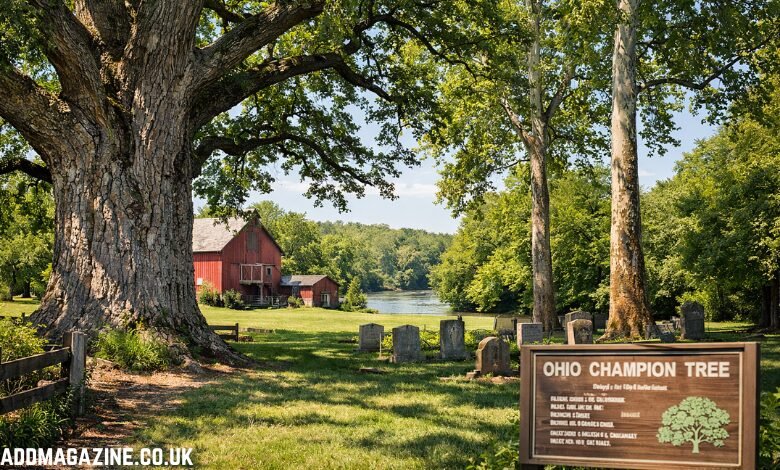
Ohio, a state known for its vibrant landscapes and rich history, hides a treasure that many may not notice at first glance—the mighty champion trees. These colossal trees are scattered across the state, standing as silent witnesses to Ohio’s evolution, particularly in the region around Lewis Center, Ohio. These trees not only symbolize the natural heritage of the area but also reflect the stories of the land itself. Through centuries of storms, droughts, and human intervention, champion trees have managed to thrive, quietly observing the transformation of farmland into the bustling suburban spaces we know today.
What Are Champion Trees?
Champion trees are not just big trees; they are the largest specimens of a particular species within a designated area, recognized for their impressive size, age, and often, their historical significance. The Ohio Department of Natural Resources (ODNR) designates these trees as “Ohio Champion Trees” through the Champion Tree Program. Trees that hold the title of champion are considered living monuments, not just for their size but for the role they play in the natural ecosystem.
These trees are usually distinguished by their girth, height, and canopy spread. A group of passionate arborists and conservationists regularly assess and nominate these trees for recognition. To be recognized as a champion, the tree must be measured using a specific formula, which includes its height, circumference, and crown spread.
A Walk Through the History of Champion Trees in Lewis Center
Lewis Center, nestled in Delaware County, Ohio, represents a unique blend of natural beauty and suburban growth over time. It is here, amidst the transition from farmland to suburban areas, that some of Ohio’s most magnificent trees can be found. The region offers the perfect climate for large trees to thrive. The fertile, rich soils left behind by ancient glaciers are well-suited for deep, expansive root systems, providing the foundation for towering giants.
Long before settlers arrived, Ohio was blanketed by dense, lush forests fed by waterways like the Olentangy River. The area around Lewis Center, in particular, is a blend of these ancient woodlands and modern suburban growth, providing a rare opportunity to find trees that have survived the passage of time.
While many of the region’s trees have been lost to development, several have endured and grown to impressive sizes. Some of these trees stand in public spaces, like parks or school grounds, while others have been preserved on private property. These trees have seen the community grow and change around them, but they remain as silent sentinels, continuing to thrive against the odds.
The Common Species of Champion Trees in Lewis Center
In Delaware County and Lewis Center, a few species of trees are most commonly recognized as champions. These species have adapted well to the local climate, which allows them to reach enormous sizes over time.
- White Oak: White oaks are a staple of Ohio’s forests. Known for their sturdy trunks and large canopies, these trees can grow to exceptional heights and girths. Their longevity and strength make them one of the most common champions in the region.
- The bur oak: A resilient species, has thrived in this area, adapting seamlessly to the local environment. These trees are known for their massive size and long-lasting presence, with some specimens growing to over 200 years old.
- Silver Maple: Often found in low-lying areas where rainwater collects, silver maples are well-suited to the wetland areas of Delaware County. These trees thrive in these conditions and can become quite large, sometimes reaching heights of over 100 feet.
- American Sycamore: Recognized for its distinctive white bark and broad canopy, the sycamore is another common species of champion tree in Lewis Center. These trees flourish in nutrient-rich, damp soil and exhibit a rapid growth pattern.
- Tulip Tree: Known for their towering height and straight trunks, tulip trees are another favorite of the area. These trees often dominate the landscape and can grow rapidly when given the right conditions.
These trees are not just distinguished by their size; they also serve an important ecological role. Champion trees provide habitats for birds, insects, and other wildlife, making them integral to the local ecosystem.
The Significance of Champion Trees
Champion trees are not just significant because of their size. They represent a connection to Ohio’s natural history and provide a living link to the past. These trees have survived centuries of environmental changes and have witnessed the transition from untamed forests to the suburban development that surrounds them today.
For many residents of Lewis Center and Delaware County, champion trees are more than just a collection of tall, old trees. They are a part of the community’s identity, a symbol of its commitment to preserving the natural beauty of the area. Many of these trees are located on school grounds, public parks, and private properties, where they serve as silent witnesses to the passage of time.
In fact, some trees have become an important part of people’s memories. A towering oak tree beside the school playground has stood for generations, offering shade and a timeless gathering place for students. These trees are an essential part of the collective memory of the community, offering a sense of continuity and connection to the past.
How Champion Trees Are Measured and Nominated
The process of designating a tree as a champion is surprisingly simple. Anyone can nominate a tree they believe to be worthy of the title. The process begins with measuring the tree’s height, circumference, and crown spread. The measurements are taken according to a specific formula outlined by the ODNR.
Once the measurements are taken, the tree’s owner must be contacted if the tree is located on private property. If the tree meets the criteria, it is submitted to the ODNR for review. If the tree is accepted, it becomes an official Ohio Champion Tree, and its location is added to the state’s list of champion trees.
This process is often initiated by a dedicated individual, such as an arborist, conservationist, or even a curious citizen. It’s not a process driven by bureaucracy or high-tech equipment. Instead, it is a grassroots effort that relies on the commitment of individuals who care about preserving the natural heritage of Ohio.
The Role of Private Property Owners
Interestingly, many of Ohio’s champion trees are located on private property. These landowners are often unaware that they are the custodians of a natural treasure until they are approached by “big tree hunters” seeking permission to measure their trees. In some cases, landowners have known for years that their tree is special, and they take measures to protect it from harm.
This responsibility is not taken lightly. Owners of champion trees are often viewed as unofficial guardians of these natural landmarks, and they are encouraged to preserve and protect their trees for future generations. The champion tree program, however, does not impose any legal requirements on landowners. Instead, it offers recognition for the role that these individuals play in preserving Ohio’s natural heritage.
Finding Champion Trees in Lewis Center
For those interested in finding champion trees near Lewis Center, the search is often a rewarding, albeit subtle, process. Unlike traditional tourist attractions, these trees are rarely marked with signs or fences. They may be found in public spaces, such as parks or school grounds, but they are also scattered throughout private land.
Finding these trees requires paying attention to the landscape around you. Look for trees that seem out of place—those with unusually large trunks, tall canopies, or those that tower above surrounding structures. In some cases, you might even find a sycamore tree hidden behind a commercial building or an oak tree growing on the edge of an old cemetery. These trees are not always easy to find, but they are worth the effort.
The Future of Champion Trees
As development continues to spread across Delaware County and Lewis Center, there is a growing need to preserve these trees for future generations. Champion trees are living monuments that tell the story of Ohio’s natural history. It is important that these trees continue to be protected, whether they are on public or private property.
The Ohio Champion Tree Program is one way that these trees are being recognized and celebrated. Through this program, residents of Ohio are able to connect with their natural heritage and ensure that these trees are preserved for future generations to enjoy. With the support of conservationists, arborists, and the community, Ohio’s champion trees will continue to stand as silent witnesses to the passage of time, reminding us of the beauty and resilience of the natural world.
Conclusion
Champion trees are not just magnificent living beings; they are an integral part of Ohio’s landscape and history. In Lewis Center, Ohio, these trees stand tall, telling the story of the land and the people who have lived alongside them. Whether they are located on public parks or private land, these trees remain a vital part of the community, offering a unique glimpse into Ohio’s past and a reminder of the importance of preserving our natural heritage.