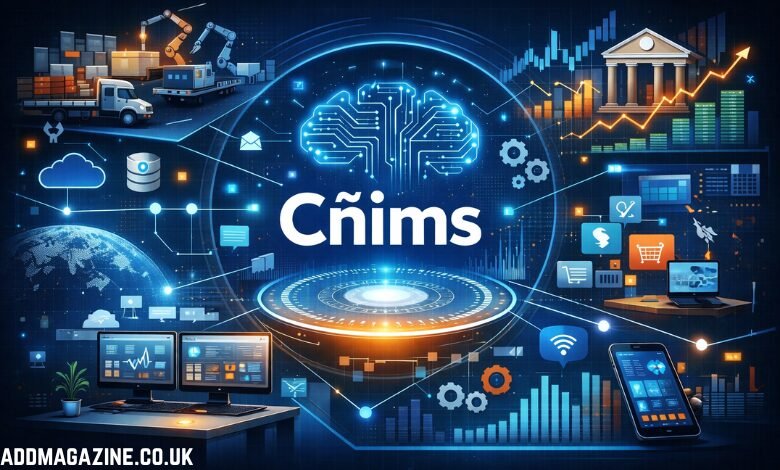
In an era where the digital landscape is flooded with data, the challenge isn’t in acquiring the information—it’s in turning that data into actionable insights at the speed necessary for modern business. Traditional systems, which were often slow and cumbersome, struggle to keep up with the pace of real-time decision-making that is now critical to success. This is where Cñims (Coordinated Networked Intelligent Management Systems) steps in to revolutionize business operations. It offers a groundbreaking approach to business operations by transforming massive datasets into quick, strategic insights.
Cñims stands as a robust, AI-powered platform designed to enhance decision-making and streamline business operations across various departments. From startups to multinational enterprises, the system is adaptable, intuitive, and powerful, offering real-time analytics and insights that allow organizations to stay agile in an increasingly complex environment.
What is Cñims?
At its core, Cñims is an intelligent operating layer that unifies different business functions such as finance, human resources (HR), logistics, customer support, and more. It integrates AI, machine learning, and real-time data processing into a centralized platform. Unlike traditional business management systems, which are often isolated and slow, Cñims works by enabling each business function to operate independently while remaining connected through APIs and shared intelligence. This flexibility ensures that businesses can streamline workflows, reduce silos, and adapt as they grow.
Cñims’s ability to work with both cloud-native and legacy systems, combined with its user-friendly interface, sets it apart from other enterprise solutions. It simplifies complex tasks by automating processes like reporting, stock management, and scheduling. Its easy-to-use tools—like no-code dashboards—empower non-technical users to access valuable business insights without needing a data science background. This makes it a powerful yet approachable solution for companies of all sizes.
AI-Powered Analytics for Smarter Decisions
One of the standout features of Cñims is its AI capabilities. Through neural networks, machine learning models, and statistical engines, Cñims processes vast amounts of data in real-time to detect emerging trends and generate predictive insights. This AI-driven decision-making allows businesses to move from reactive to proactive strategies. For instance, a retailer could forecast demand for the next quarter, or a hospital could predict patient admissions, enabling them to adjust their strategies in real time.
These AI-powered tools continually improve with each dataset that flows through the system, learning from historical trends to make more accurate predictions. As a result, businesses are not only able to respond to current needs but also anticipate future ones, thus staying one step ahead in a rapidly changing market.
Real-Time Data Ingestion and Analysis
Cñims shines in its ability to ingest data in real-time from multiple sources. Whether it’s from internal databases, third-party APIs, IoT devices, or cloud storage, Cñims ensures that its analytics engine is always working with the most current information. This constant inflow of data ensures that businesses can make timely decisions and react to changes quickly, whether it’s a sudden shift in customer behavior or an unexpected supply chain disruption.
For instance, live dashboards in Cñims update instantly, offering business leaders a clear view of the current state of operations. These dashboards offer not only real-time performance metrics but also actionable insights, ensuring that teams can address issues immediately without waiting for traditional reports to be generated.
Flexible Modular Structure
Cñims’s modular architecture is one of its greatest strengths. The system is built with a flexible design that allows businesses to implement only the modules they need and expand as they grow. Each module—whether for finance, HR, manufacturing, or customer support—functions independently but shares data through integrated channels. This ensures that all departments are aligned and operating with the same information.
This modular approach also makes it easy for businesses to scale. New modules can be added or existing ones upgraded with minimal disruption. Furthermore, the system can integrate with older systems, making it easy for companies to deploy Cñims without replacing their entire infrastructure.
Cloud and Edge Computing Hybrid
Cñims utilizes a hybrid approach that combines cloud and edge computing. Edge devices, such as sensors and IoT devices, process data at the source to minimize latency. This means that Cñims can offer lightning-fast decision-making in situations that require immediate action, such as in a factory setting where machines need predictive maintenance.
The cloud layer, on the other hand, performs more resource-intensive tasks like long-term storage, heavy computation, and training AI models. By distributing the workload between the edge and the cloud, Cñims ensures high performance while maintaining scalability. This approach also improves business continuity by minimizing downtime during high-load periods or network instability.
The Role of Human-AI Collaboration
While Cñims heavily relies on automation and AI, it doesn’t completely replace the human element. Instead, it enhances human decision-making by providing an intuitive interface that allows managers to set policies, review AI-generated actions, and make adjustments as necessary. This creates a robust human-AI collaboration, where business leaders can leverage the power of AI while maintaining control and oversight.
This system ensures that companies remain compliant with ethical standards and regulatory frameworks. Cñims offers transparency in decision-making through features like decision logs, role-based access, and visual insights, allowing teams to stay in control while benefiting from the system’s powerful automation.
Comprehensive Features for Modern Businesses
Cñims offers a wide array of features that make it indispensable for modern businesses. Some of the most impactful features include:
- Real-Time Analytics: Cñims allows businesses to access data insights instantly, shifting from delayed reporting to proactive decision-making. This enables organizations to act quickly and efficiently, gaining a competitive edge in dynamic markets.
- Automation: Cñims automates routine tasks such as report generation, inventory management, and employee scheduling, freeing up teams to focus on higher-level strategic activities. This automation leads to better resource allocation and reduced operational costs.
- Cost Reduction: By replacing legacy infrastructure and reducing the need for large analytics teams, Cñims significantly lowers operational costs. Automated workflows, predictive maintenance, and AI-driven insights eliminate inefficiencies, leading to tangible savings for businesses.
- Scalability: The system can scale with a business, adapting to its needs as it grows. From single-site operations to global enterprises, Cñims can support businesses of all sizes and industries.
Use Cases Across Industries
Cñims is not just limited to one sector. It has applications across various industries, where it drives measurable results. Here are some examples:
- Retail: Cñims helps retailers understand customer behavior, optimize pricing strategies, and reduce the risk of overstocking or running out of stock. It can also provide personalized product recommendations based on real-time user behavior, leading to higher conversion rates.
- Healthcare: Hospitals and healthcare organizations can use Cñims to predict patient surges, optimize staffing levels, and improve resource allocation. The system can also help analyze patient histories and lab reports to provide better diagnoses and treatment plans.
- Banking: In the financial sector, Cñims is used to detect fraud, monitor transactions, and assess market risks in real-time. Banks can also use it for algorithmic trading and portfolio forecasting, as well as for ensuring compliance with regulatory requirements.
- Manufacturing: Factories use Cñims for predictive maintenance to avoid unexpected equipment breakdowns. It also helps align production schedules with demand forecasts, improving operational efficiency and reducing waste.
- Telecommunications: Telecom companies use Cñims to monitor network health, optimize bandwidth, and reduce churn. By analyzing customer usage patterns, Cñims can suggest retention strategies and improve customer satisfaction.
The Future of Cñims
The potential of Cñims is vast. As technology continues to evolve, the system is designed to adapt and expand, ensuring that businesses always have access to the latest innovations in AI, data processing, and automation. The future of Cñims lies in its ability to integrate even more data sources, enhance its predictive capabilities, and offer greater customization for businesses across industries.
Conclusion
Cñims represents the next generation of business management systems. It combines AI-powered analytics, real-time decision-making, and modular flexibility to offer businesses a solution that not only keeps up with the demands of modern operations but also anticipates future needs. By automating processes, integrating data, and delivering actionable insights instantly, Cñims empowers organizations to make smarter, faster decisions that drive growth and improve efficiency. As the business world continues to evolve, Cñims is positioned to remain at the forefront of digital transformation, making it an invaluable tool for organizations looking to stay competitive in today’s fast-paced marketplace.