Introduction
In today’s highly saturated digital marketplace, the quality and refresh rate of visual content have become decisive factors in determining consumer retention and brand loyalty. General industry analysis consistently indicates that high-quality product presentation correlates strongly with increased dwell time and conversion rates. However, as content consumption shifts towards short-form video platforms like TikTok and Instagram Reels, brands face unprecedented pressure: how to produce high volumes of platform-native visual assets rapidly and cost-effectively.
Traditional commercial photography models, often constrained by high studio rental costs, complex lighting setups, and lengthy post-production cycles, struggle to meet the “agile marketing” rhythm of modern e-commerce. It is within this supply-demand paradox that AI Product Photography has emerged. This represents more than an upgrade in image editing software; it is a paradigm shift in productivity. By integrating generative AI, brands can now automate the entire workflow—from optimizing static images to generating dynamic videos—fundamentally restructuring the logic of visual asset production.
Redefining Content Creation: An Overview of AI Product Photography Tools
With the maturation of deep learning technologies, AI Product Photography has evolved beyond simple filters or automated touch-ups into a comprehensive, data-driven content generation solution. Utilizing computer vision and generative algorithms, these tools simulate physical laws of light and shadow, offering creators a pathway to professional-grade visuals without the need for physical photo shoots.
Tool Overview: Beyond Editing to Generation
The new generation of AI photography tools operates by identifying semantic information within an image, understanding the product’s texture, structure, and spatial orientation. This capability allows for more than just “one-click” background removal or blemish correction; it empowers robust generative capabilities.
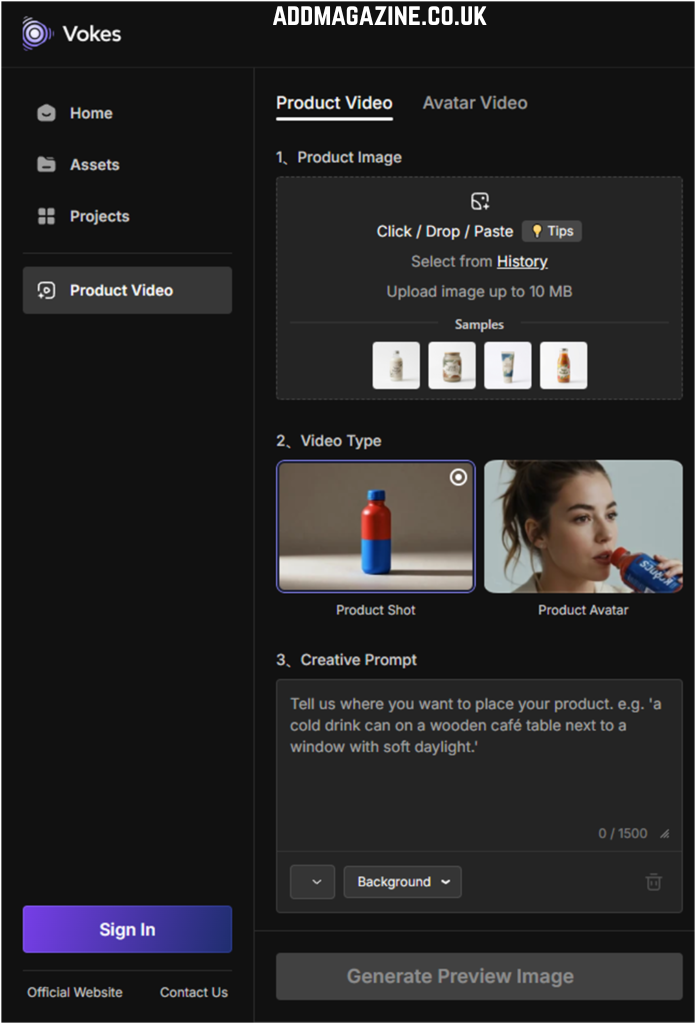
Leading industry tools are no longer confined to static processing but are advancing towards multi-modal generation. For instance, advanced platforms like [Vokes AI] have demonstrated the ability to integrate background replacement, image upscaling, and complex “Image-to-Video” generation within a single workflow. This means marketers can simply upload a basic white-background product image, and algorithms can generate a promotional video of that product situated in a specific lifestyle scenario, significantly expanding the utility of a single asset.
Core Technologies: From Static Pixels to Dynamic Lighting
The core competitiveness of AI Product Photography lies in its precise control over lighting consistency and its ability to predict dynamic trends.
- Adaptive Scene Blending: Utilizing Diffusion Models, AI automatically adjusts surface reflections and shadow angles when replacing backgrounds. This ensures the product blends perfectly with the new environment, eliminating the “floating” or artificial look often associated with traditional photo compositing.
- Image-to-Video Generation: This stands as a disruptive technological breakthrough. Algorithms analyze the depth information of a static image to predict object motion or parallax effects. Creators can transform a static product photo into a short video with cinematic camera movements (such as pans or zooms) or create 360-degree showcases without expensive video shoots. This capability is critical for enhancing click-through rates (CTR) in social media advertising.
Strategic Advantages: Data-Driven Efficiency and Agility
Compared to traditional photography workflows, incorporating AI-driven tool systems offers enterprises significant improvements in marginal utility:
- Optimization of Cost Structure: By eliminating expenses related to location rentals, model hiring, and extensive post-production outsourcing, qualitative assessments suggest that AI generation solutions can reduce the production cost per image to a fraction of traditional methods.
- Extreme Agility: When facing seasonal promotions (e.g., Black Friday) or emerging trends, brands no longer need to reorganize physical shoots. Through AI Product Photography tools, design teams can place the same product into snowy landscapes, beach settings, or futuristic backgrounds within minutes—a level of flexibility that physical photography simply cannot match.
Practical Applications and Success Indicators (Use Cases)
Theoretical superiority must ultimately be validated through real-world scenarios. The following cases illustrate how diverse organizations leverage AI Product Photography to overcome operational bottlenecks and optimize performance metrics.
Use Case 1: Leveraging Enterprise Marketing and E-Commerce for Enhanced Conversion Rates
A mid-sized Direct-to-Consumer (DTC) jewelry brand faced a challenge: their social media ad creative was fatiguing too quickly. Traditional static images on white backgrounds were underperforming on video-dominant platforms like TikTok and Instagram, resulting in unsustainable customer acquisition costs.
- The Solution: The marketing team integrated an AI visual workflow. They first batch-processed standard catalog images into lifestyle shots featuring models. Subsequently, they utilized the “Image-to-Video” feature of [Vokes AI] to transform these static assets into 15-second dynamic videos with cinematic motion.
- The Outcome: A/B testing revealed a significant increase in Click-Through Rate (CTR) and engagement depth for the AI-generated video assets compared to static counterparts. Furthermore, by eliminating physical video shoots, the time-to-market for new collections was drastically reduced, allowing the brand to respond rapidly to emerging trends.
Use Case 2: Empowering Professional Creators and Agencies to Scale Their Production
A global advertising agency was tasked with delivering promotional materials for a consumer electronics product tailored to various regional aesthetics. Relying on manual retouching for hundreds of variations was both time-prohibitive and prone to inconsistency.
- The Solution: The design team leveraged the batch-processing capabilities of AI Product Photography. By setting different background prompts, the AI automatically generated product showcases featuring Japanese minimalism, American urban street style, and European vintage aesthetics.
- The Outcome: Delivery efficiency increased exponentially. Crucially, the AI automatically corrected lighting and shadows between the product and the diverse backgrounds, ensuring a high level of consistency and professionalism. This freed designers to focus on creative strategy rather than repetitive execution.
Use Case 3: Education & Training (Visualizing Complexity)
An online STEM education platform selling physical learning kits found that static images and text failed to convey product complexity, leading to an overwhelming volume of pre-sales inquiries.
- The Solution: The platform used AI technology to convert existing static images of the kits into 360-degree rotating views and dynamic disassembly demonstrations.
- The Outcome: Dynamic product presentation significantly lowered the barrier to understanding. Internal data indicated a marked decrease in page bounce rates and a downward trend in returns caused by visual misunderstanding.
Future Trends: The Trajectory of AI in Visual Commerce
Looking ahead, AI Product Photography will serve not merely as an efficiency tool, but as a force reshaping how users interact with digital merchandise.
- Hyper-Personalization: E-commerce interfaces will move away from a “one-size-fits-all” approach. AI will generate product backgrounds or video showcases in real-time based on a user’s browsing history and aesthetic preferences.
- Seamless VR/AR Integration: As algorithms improve, the ability to infer 3D structures from 2D images will strengthen. This positions current AI Product Photography tech as the infrastructure for future virtual try-ons and metaverse shopping, significantly lowering 3D modeling costs.
- Video Dominance: With the maturation of “Automated product videography,” static images will see a reduced share in e-commerce displays, making fully dynamic, highly interactive visual streams the industry standard.
Conclusion
In summary, the rise of AI Product Photography marks a new era in commercial visual content production. It shatters the physical limitations of traditional photography regarding cost, time, and creativity, offering brands a solution that is both scalable and customizable.
For businesses aiming to maintain a competitive edge, embracing this technological trend is no longer optional—it is a strategic imperative. Whether by utilizing all-in-one tools like [Vokes AI] to transition rapidly from static imagery to video, or by optimizing existing content supply chains, organizations that master AI visual productivity will command the initiative in the future attention economy.
FAQ
Q1: Who benefits most from adopting AI Product Photography tools?
A: It is suitable for almost any industry showcasing physical products, particularly e-commerce sellers, DTC brands, advertising agencies, and social media marketing teams requiring high volumes of visual assets.
Q2: Is professional photography or video editing skill required to use tools like Vokes AI?
A: No. These tools are designed to lower the professional barrier. Users typically only need to upload an image and select templates or prompts; the AI algorithms automatically handle lighting, perspective, and motion effects.
Q3: Are there copyright issues with AI-generated images and videos?
A: Most mainstream AI platforms grant commercial usage rights to paying users. However, it is recommended to carefully review the specific platform’s Terms of Service (ToS) before use, especially regarding ownership of generated content.