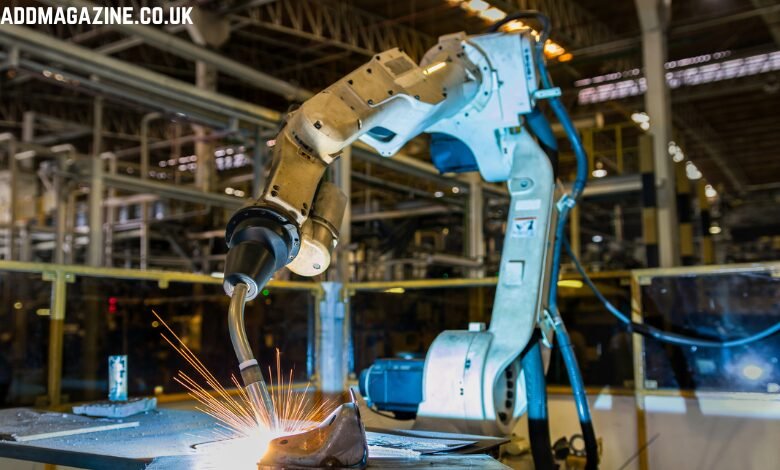
The advent of robotic welding has transformed the manufacturing landscape, significantly elevating levels of precision, productivity, and safety within the workplace. As industries strive for faster production rates while upholding stringent quality standards, the integration of automated welding systems has become essential. This innovative technology not only streamlines processes but also minimizes human error, ensuring consistent and high-quality outputs that meet the demands of modern manufacturing.
1. Accuracy and Uniformity of Welding:
Robotic welding machines provide superior precision and the ability to have programmed paths with low deviation. Robots are able to provide consistency in the quality of the weld in mass production, unlike manual welding. This accuracy minimizes errors and wastage. The structural integrity and the ability to achieve products of high standards in line with industry standards are enhanced by consistent welds, and therefore, welding via robotics is very favourable in high-volume manufacturing plants.
2. Increased Production Speed
Speed is one of the largest benefits of welding via robotics. Robots will be able to work around the clock without getting tired, and this will boost productivity. The speed of the welding process can assist manufacturers with deadlines and high volumes of manufacturing. This efficacy further saves on labor expenses and enhances the general performance of operations, and thus, welding via robotics is a cost-effective long-term investment.
3. Improved Workplace Safety
Robotic welding is a safe method of welding as it helps lower the exposure of humans to heat, fumes, and dangerous materials. Monotonous and hazardous welding work is done in automated systems, reducing the chances of workplace injuries. This enables the talented employees to concentrate on close oversight, quality, and streamlining of the system instead of direct contact with risks.
4. Robotic welding is important in the following industries:
Welding via robotics is also relied upon in industries that have high requirements, like automotive, construction, aerospace, and heavy equipment production. These industries need robust, uniform welds that will guarantee the longevity and safety of the product. Welding promotes sophisticated designs and high-strength usage in varied sectors.
5. Best Long-term Benefits of Manufacturing:
Welding via robotics significantly enhances the overall quality of manufactured products by delivering consistent and precise welds, which reduces the likelihood of defects. This advanced technology also decreases downtime by streamlining production processes, allowing manufacturers to maintain higher operational efficiency. As a result, companies can scale their production capabilities more effectively, adapting to changes in demand without compromising on quality.
Manufacturers benefit from access to reduced errors, as robotic systems are programmed for accuracy, leading to predictable outcomes that help with planning and resource allocation. Additionally, the use of robotic welding promotes sustainability in operational costs, as these systems typically require less energy and materials compared to traditional welding methods.
As technology continues to evolve, welding via robotics is poised to play a critical role in shaping the future of efficient and safe industrial production. With innovations such as artificial intelligence and machine learning being integrated into welding systems, the potential for further improvements in performance, safety, and productivity is tremendous, making it an essential component of modern manufacturing.