Marine operations depend on secure mooring systems that maintain vessel position under varying environmental conditions. When equipment fails or procedures prove unreliable, the resulting vessel drift creates safety hazards, operational delays, and potential damage to both vessels and dock infrastructure. Recent testing has revealed significant differences in knot performance that directly impact mooring reliability, particularly in commercial and industrial marine applications where consistent holding power determines operational success.
Professional mariners have traditionally relied on established knot-tying practices, often without understanding the mechanical principles that govern knot strength and reliability. This knowledge gap becomes problematic when operations require documented performance standards or when environmental conditions exceed normal parameters. Understanding how different knots perform under controlled testing conditions provides operators with the information needed to make informed decisions about mooring procedures.
Understanding Knot Strength Testing Methodology
Systematic knot testing requires controlled conditions that replicate real-world loading scenarios while eliminating variables that could skew results. Professional testing protocols measure both initial breaking strength and progressive failure patterns to determine how knots behave under sustained loads. The testing process involves securing identical rope samples in standardized configurations, then applying gradually increasing tension until failure occurs.
Modern top knot mooring lines undergo rigorous evaluation to establish baseline performance characteristics before knot testing begins. This approach ensures that any strength reduction can be attributed to the knot itself rather than variations in rope construction or material properties. Testing facilities use hydraulic systems to apply consistent loads while monitoring equipment records both the maximum load achieved and the manner of failure.
Load Application and Measurement Protocols
Proper testing requires steady load application at predetermined rates to avoid shock loading that could produce misleading results. Professional testing facilities typically apply loads at rates between 10 and 20 percent of anticipated breaking strength per minute, allowing the knot structure to respond gradually to increasing stress. This methodology reveals how knots redistribute internal forces and identifies the specific failure points that determine ultimate strength.
Electronic load monitoring systems provide precise measurement of both peak loads and the load history leading to failure. This data proves particularly valuable when evaluating knots intended for dynamic loading conditions, where understanding the complete strength curve becomes more important than simply knowing the breaking point. Marine applications frequently involve cyclic loading that can cause progressive weakening, making comprehensive load data essential for practical applications.
Environmental Factor Considerations
Laboratory testing necessarily involves controlled conditions that may not fully represent field applications, particularly regarding moisture, temperature, and contamination effects. Wet rope generally exhibits different knot behavior than dry rope, with some knots becoming more secure when wet while others may slip more readily. Salt exposure, common in marine environments, can also affect both rope characteristics and knot holding power over time.
Testing protocols often include both dry and wet conditions to establish performance ranges that operators can expect in actual use. Temperature variations affect rope flexibility and can influence how effectively knots grip under load, particularly with synthetic rope materials that may become stiffer in cold conditions or softer when heated by solar exposure.
Top Knot Performance Analysis
The top knot demonstrates consistent performance characteristics that make it particularly suitable for applications requiring reliable holding power combined with reasonable ease of untying after loading. Testing reveals that properly tied top knots typically retain approximately 75 to 80 percent of the rope’s original breaking strength, placing them among the more efficient knots for load-bearing applications. This efficiency rating reflects the knot’s ability to distribute stress across multiple wraps and contact points.
Critical to the top knot’s performance is its self-tightening behavior under load, where increasing tension causes the knot structure to compress and grip more securely. This characteristic provides operational advantages in applications where loads may vary significantly, as the knot adapts to maintain holding power across different stress levels. However, this same self-tightening tendency can make top knots more difficult to untie after heavy loading compared to some alternative configurations.
Failure Mode Characteristics
When top knots do fail under testing conditions, the failure typically occurs through rope breakage rather than slippage, indicating that the knot structure successfully transfers load to the rope material itself. This failure mode provides operators with confidence that properly tied top knots will maintain their holding power up to the practical limits of the rope system. The predictable nature of this failure mode also means that operators can rely on rope specifications when calculating safe working loads.
Progressive loading tests show that top knots maintain their holding power consistently as loads increase, without the sudden grip loss that characterizes some other knot types. This behavior proves particularly valuable in dynamic loading situations where maintaining consistent holding power prevents shock loads from developing in the mooring system.
Bowline Knot Strength Evaluation
The bowline represents one of the most widely recognized knots in marine applications, earning its reputation through centuries of reliable service in sailing and commercial vessel operations. Testing data indicates that properly tied bowlines typically achieve strength retention rates between 70 and 75 percent of base rope strength, making them reasonably efficient for most mooring applications. The knot’s popularity stems largely from its combination of adequate strength with exceptional ease of untying, even after significant loading.
Bowline construction creates a secure loop that maintains its shape under load without constricting, a characteristic that proves valuable when the knot must be untied quickly or when the loop needs to maintain clearance around hardware. Unlike knots that rely primarily on friction, the bowline’s strength comes from the mechanical advantage created by its internal geometry, where the working end bears against the standing line in a configuration that becomes more secure as load increases.
Load Distribution Patterns
Internal stress analysis reveals that bowlines distribute load across several contact points within the knot structure, reducing the concentration of stress that can cause premature failure in other knot types. The characteristic loop formation spreads tension across both the working end and the standing line, creating multiple load paths that contribute to overall knot reliability. This distribution pattern explains why bowlines maintain consistent performance across varying load levels.
The bowline’s ability to maintain loop integrity under load provides significant operational advantages in applications where hardware alignment matters. Unlike knots that may shift position or change shape under stress, properly tied bowlines preserve their original configuration, ensuring that attachment points remain properly positioned throughout the loading cycle.
Untying Characteristics After Loading
Perhaps the most significant operational advantage of the bowline lies in its retained ease of untying after heavy loading, a characteristic that sets it apart from many higher-strength alternatives. The knot’s internal geometry prevents the extreme compression that can make other knots virtually impossible to untie by hand after loading. This feature proves particularly valuable in applications where quick release may be necessary for safety or operational reasons.
Field experience confirms that bowlines can typically be untied without tools even after loading to significant percentages of their breaking strength, provided the initial knot was properly dressed and tightened. This reliability in both holding and releasing makes the bowline a preferred choice for applications where operators cannot predict whether mechanical assistance will be available for knot removal.
Cleat Hitch Performance Data
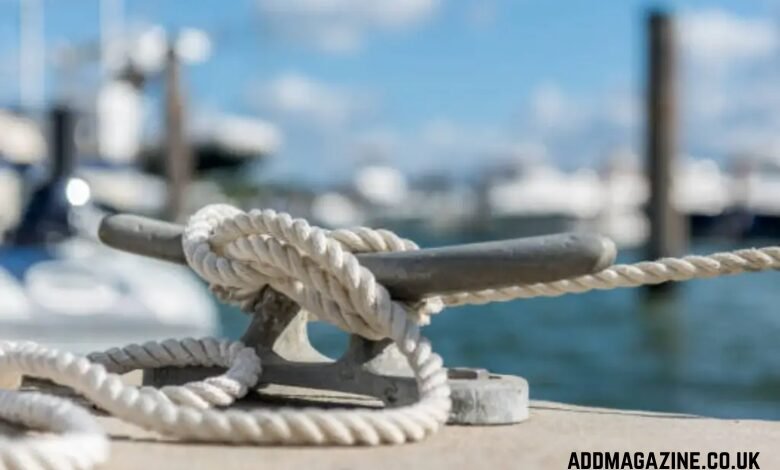
The cleat hitch operates on fundamentally different principles than traditional knots, relying on the mechanical advantage provided by cleat hardware rather than internal knot geometry alone. Testing results show that properly executed cleat hitches can achieve holding power equivalent to 85 to 90 percent of base rope strength when used with appropriately sized cleats, making them among the most efficient methods for securing mooring lines. This high efficiency reflects the cleat’s ability to distribute load across multiple contact surfaces while providing mechanical advantage through its horn configuration.
Cleat hitch reliability depends heavily on proper technique, particularly in the wrapping sequence and final securing method used to prevent slippage. The standardized cleat hitch technique involves specific wrapping patterns that maximize contact area while ensuring the line feeds properly around the cleat horns. Deviation from established technique can significantly reduce holding power or create situations where the hitch may slip under load.
Hardware Dependency Factors
Unlike knots that rely solely on rope characteristics, cleat hitches require properly sized and mounted hardware to achieve their rated performance. Cleat size must be appropriate for the rope diameter being used, with insufficient cleat size leading to reduced contact area and compromised holding power. Similarly, cleat mounting must be adequate to handle the expected loads without hardware failure or movement that could affect the hitch’s integrity.
Testing reveals that cleat hitches perform most reliably when the cleat length exceeds the rope diameter by a factor of at least eight to one, providing sufficient bearing surface for proper load distribution. Inadequately sized cleats create stress concentrations that can lead to both reduced holding power and accelerated rope wear, particularly in applications involving repeated loading cycles.
Operational Advantages and Limitations
The cleat hitch offers significant advantages in applications where rapid securing and releasing of mooring lines is required, as the technique can be executed quickly by trained operators without the precision required for complex knot tying. This speed advantage proves particularly valuable in commercial operations where vessel turnaround time directly affects operational efficiency. The visual nature of cleat hitch inspection also allows supervisors to quickly verify that lines are properly secured.
However, cleat hitch effectiveness requires access to appropriate hardware, limiting its application compared to knots that can be tied around various attachment points. The technique also demands consistent execution to maintain reliability, as variations in wrapping sequence or final securing method can significantly affect performance. Training programs must emphasize proper technique to ensure that operators can execute reliable cleat hitches under varying conditions.
Comparative Analysis and Practical Applications
Direct comparison of testing results reveals distinct performance profiles that make each option suitable for different operational requirements. Top knots provide excellent holding power with moderate ease of untying, making them appropriate for semi-permanent mooring applications where maximum security is required. Bowlines offer the best balance of adequate strength with reliable untying capability, making them ideal for temporary moorings or situations where quick release may be necessary.
Cleat hitches achieve the highest holding power when proper hardware is available, making them the preferred choice for high-load applications or situations where maximum security is required. However, their hardware dependency limits their versatility compared to knot-based solutions that can be adapted to various attachment points and situations.
Selection Criteria for Specific Applications
Choosing the appropriate securing method requires careful consideration of operational requirements, environmental conditions, and available equipment. Applications involving sustained high loads with infrequent adjustment favor top knots or cleat hitches, which provide maximum holding power at the cost of more difficult removal. Temporary mooring situations where frequent tying and untying is expected benefit from bowline selection, which prioritizes ease of handling over maximum strength.
Environmental factors also influence selection decisions, particularly regarding exposure to weather, salt water, and temperature variations. Some knot types perform more consistently across varying conditions, while others may be more susceptible to environmental effects that could compromise their reliability. Understanding these performance variations allows operators to select methods that will maintain effectiveness throughout the expected service conditions.
Conclusion
Testing data clearly demonstrates that each mooring method offers distinct advantages that align with specific operational requirements. Top knot mooring lines provide exceptional holding power and self-tightening characteristics that make them ideal for applications requiring maximum security. Bowlines deliver the best combination of adequate strength with reliable untying capability, making them versatile choices for varied applications. Cleat hitches achieve the highest holding power when proper hardware is available, though they require consistent technique and appropriate equipment.
The selection decision ultimately depends on balancing holding power requirements against operational convenience and environmental factors. Operators who understand these performance characteristics can make informed choices that optimize both safety and efficiency in their specific applications. Regular training and technique verification ensure that chosen methods perform as expected when conditions demand reliable mooring system performance.