As the fashion industry evolves, fabric selection has become more than a technical decision, it is now a defining element of brand identity. Today’s consumers are increasingly informed and intentional. They look beyond silhouettes and seasonal trends. They want comfort that lasts, performance that supports their lifestyle, and materials that reflect environmental awareness.
For fashion brands navigating this shift, understanding modal fabric offers both creative and strategic opportunity. It is not simply another textile option, it is a material that aligns with the growing demand for versatility, longevity, and mindful production.
What Is Modal in Fabric?
Modal is a regenerated cellulose fiber made from the pulp of beech trees. While it belongs to the rayon family, it undergoes a more advanced spinning and processing method that enhances its strength, softness, and durability. This refinement results in fibers that are smoother and more resilient than traditional viscose.
When brands incorporate modal in fabric, they gain access to a textile that blends a luxury hand-feel with practical performance. It has the fluidity of silk, the comfort of cotton, and the durability needed for modern, everyday wear.
For design teams and product developers, modal presents a rare balance: it supports both emotional appeal, how a garment feels and drapes, and functional reliability, how it performs over time.
Why Modal Matters in Today’s Market
The shift toward intentional wardrobes has reshaped consumer expectations. Shoppers are building collections of versatile staples rather than chasing fast-moving trends. They want garments that can transition from work to travel to leisure without sacrificing comfort or polish.
Modal responds directly to this demand.
Its softness encourages repeat wear. Its durability supports long-term use. Its drape enhances minimalist and contemporary silhouettes. For brands positioning themselves around quality and longevity, modal becomes an asset that strengthens both storytelling and customer loyalty.
Modal Fabric Benefits for Fashion Brands
Understanding the core modal fabric benefits helps clarify why it has become increasingly popular across premium and conscious fashion segments.
- Soft, smooth texture
The silky smooth texture of modal immediately enhances perceived value. When customers touch a garment made from modal fabric clothing, they notice the softness right away. That first tactile impression often influences purchasing decisions, especially in categories like basics, loungewear, and layering pieces.
- Durability and Shape Retention
Modal is engineered to resist pilling and shrinkage. It maintains its structure even after repeated washing, reducing the likelihood of returns due to fit distortion or fabric wear. For brands, this translates into stronger product performance and higher customer satisfaction.
- Breathability and Moisture Management
Modal fibers allow air to circulate efficiently and absorb moisture effectively. This makes the fabric ideal for everyday essentials and travel-inspired collections where comfort across varying climates is essential. Breathability also positions modal well within hybrid workwear categories that prioritize ease without compromising appearance.
- Excellent Drape
One of the most design-friendly characteristics of modal in fabric is its natural drape. It falls fluidly and flatters a wide range of body types. Designers can achieve clean lines without stiffness.
- Superior Color Retention
Modal holds dye exceptionally well. Garments maintain vibrancy and depth of color even after multiple washes. This longevity supports a brand’s commitment to quality while reinforcing the idea of investing in fewer, better pieces.
Together, these qualities improve both the customer experience and the overall product lifecycle — two metrics that matter deeply in today’s fashion ecosystem.
Modal Eco Friendly Considerations
Sustainability remains a central conversation in fashion, and sourcing decisions play a significant role in shaping a brand’s environmental footprint.
While no textile is entirely impact-free, responsibly produced modal eco friendly options offer meaningful advantages. Beech trees, the primary raw material for modal, grow quickly and typically do not require artificial irrigation. This reduces water dependency compared to conventional cotton farming.
Many modal producers also operate closed-loop systems. In these systems, solvents used during fiber processing are captured and reused rather than released into the environment. This significantly lowers chemical waste and emissions.
However, transparency is key. For brands prioritizing sustainability, vetting suppliers and ensuring certifications are essential steps. The environmental credibility of modal depends on responsible sourcing and manufacturing practices.
When approached thoughtfully, modal can serve as one of the more conscious choices within regenerated fibers.
Applications in Modern Collections
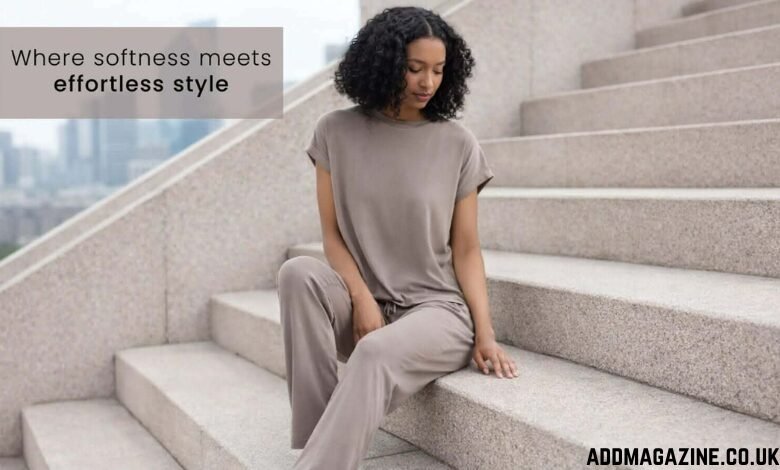
Modal’s adaptability makes it particularly attractive for brands building essential-focused lines or capsule wardrobes. It integrates seamlessly across multiple categories, including:
- Loungewear and comfort-driven sets
- Casual and transitional dresses
- Elevated everyday T-shirts
- Travel-friendly staples
- Lightweight layering pieces
Its softness and fluidity support minimal design aesthetics, while its durability ensures garments remain relevant season after season.
For brands seeking to reduce SKU overload and focus on versatile core products, modal offers a reliable foundation fabric.
Case Study in Thoughtful Integration
Brands like Reistor demonstrate how modal can be integrated strategically rather than opportunistically. Their modal collection centers on timeless silhouettes, fluid tailoring, and reduced waste production models. Instead of introducing rapid seasonal turnover, the focus remains on pieces that can be styled repeatedly and worn across changing months.
This approach strengthens brand coherence. Modal is not treated as a trend but as a material aligned with long-term values: comfort, longevity, and mindful design.
Building a Cohesive Modal Collection
For fashion brands looking to incorporate modal successfully, a strategic framework is essential:
- Prioritize timeless design. Modal performs best when paired with silhouettes meant to last beyond one season.
- Educate customers. Highlight modal fabric benefits clearly in product descriptions and marketing narratives.
- Emphasize tactile storytelling. Softness and drape should be central to brand communication.
- Align sourcing with sustainability goals. Transparency builds trust and reinforces brand positioning.
- Design for versatility. Create pieces that can transition across occasions and climates.
When modal is paired with intentional storytelling and thoughtful design, it evolves from being simply a fabric choice to becoming part of a brand’s core identity.
In a fashion landscape increasingly shaped by conscious consumption, modal offers something powerful: a material that feels luxurious, performs reliably, and supports a more considered way of dressing. For brands willing to approach it strategically, modal is not just relevant — it is foundational.