
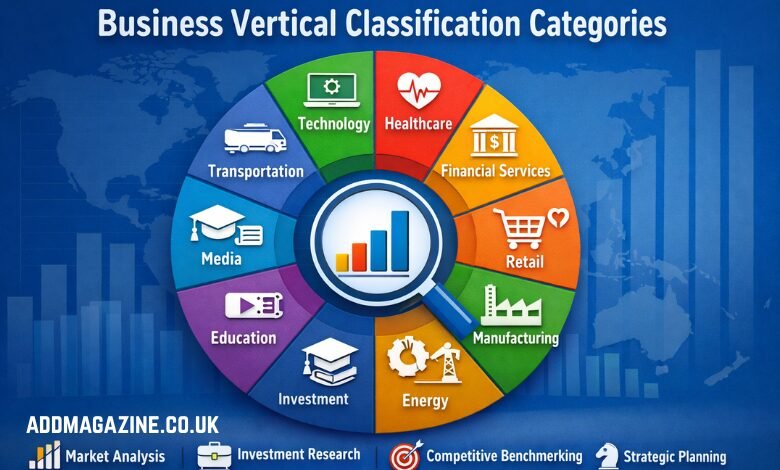
In a world where markets are increasingly complex and diverse, businesses, investors, and analysts need clear frameworks to navigate the terrain. One such framework is business vertical classification, a system that organizes companies, products, and services into distinct categories based on shared characteristics, customer needs, and market functions. This classification serves as a vital tool for simplifying the otherwise overwhelming nature of modern industries. It allows stakeholders to make more informed decisions, create effective strategies, and identify emerging opportunities.
What is Business Vertical Classification?
Business vertical classification refers to the practice of organizing industries, companies, and services into specific categories based on their core functions and the markets they serve. It is not just an academic exercise; it is a practical approach used across sectors to enhance clarity, performance, and strategic direction. This classification helps to eliminate ambiguity and creates a common language for business leaders, analysts, and stakeholders to discuss market dynamics.
Vertical classification is widely adopted by businesses, governments, and digital platforms for a variety of purposes, including market analysis, investment research, and competitive benchmarking. By grouping businesses that operate in similar ways, the classification enables better decision-making, optimized resource allocation, and improved performance measurement. This system is instrumental for companies looking to identify risks, opportunities, and areas for improvement.
The Importance of Vertical Classification in Market Analysis
Market analysis is a critical function in business, helping stakeholders understand trends, customer behaviors, and competitive forces. Business vertical classification simplifies this task by organizing companies into groups with shared operating models. Without this classification, it would be difficult to compare companies that serve different market segments or operate under varying conditions.
In addition to simplifying market analysis, vertical classification also plays an essential role in other business functions. For example, when businesses target new markets, they use vertical categories to identify which industries are most aligned with their products or services. Similarly, governments and regulatory bodies use vertical classification to create policies and regulations that cater to specific industries. Digital platforms, including search engines and analytics tools, also rely on these categories to optimize content and deliver relevant search results.
Key Business Verticals
While there are many variations of vertical classification depending on the industry, here are some of the most prominent business verticals that are widely recognized and used:
Technology Vertical
The technology vertical includes businesses that develop, design, and distribute digital products and services. This vertical covers a wide range of industries, from software development to hardware manufacturing, as well as emerging technologies like artificial intelligence, blockchain, and the Internet of Things (IoT). As technology continues to advance at a rapid pace, this vertical keeps expanding, making it one of the most dynamic and important sectors in the global economy. Companies like Apple, Microsoft, and Google all fall under this vertical.
Healthcare Vertical
The healthcare vertical encompasses businesses focused on improving human health, well-being, and medical outcomes. This vertical includes hospitals, pharmaceutical companies, medical device manufacturers, and insurance providers. With the growing demand for healthcare services, especially in the wake of global health challenges like the COVID-19 pandemic, the healthcare vertical is an ever-expanding sector. Companies in this vertical play a critical role in delivering services, products, and technologies that address the health needs of populations worldwide.
Financial Services Vertical
The financial services vertical refers to institutions and companies that manage money, transactions, and risk. This encompasses financial institutions like banks, insurance providers, investment firms, and emerging fintech startups. Financial institutions help individuals and businesses manage assets, loans, investments, and insurance policies. With the rise of digital banking and cryptocurrencies, the financial services vertical continues to evolve, offering new and innovative solutions to manage wealth and transactions.
Retail Vertical
Retail involves businesses that connect products directly with consumers. This occurs via brick-and-mortar stores, online platforms, or a blend of both methods. Retailers offer a wide range of products, including food, electronics, apparel, and various other goods. This sector is highly competitive, as companies constantly innovate to meet changing consumer preferences and expectations. Retail businesses are adopting digital strategies to stay relevant, with online platforms like Amazon and traditional giants like Walmart falling under this vertical.
Manufacturing Vertical
The manufacturing vertical includes companies that transform raw materials into finished goods. This can range from food and beverage production to electronics, automotive, and textiles. The manufacturing sector plays a crucial role in the global supply chain and is central to the economy of many nations. As global demand for products increases, the manufacturing vertical continues to innovate in areas like automation, robotics, and sustainable practices.
Energy Vertical
The energy vertical supports the generation, distribution, and sustainability of power. This includes companies involved in traditional energy sources like oil and gas, as well as renewable energy sectors such as solar, wind, and hydropower. With a growing emphasis on sustainable and clean energy, this vertical is undergoing significant transformations, with businesses investing in green technologies and moving toward environmentally-friendly solutions.
Real Estate Vertical
The real estate vertical includes businesses involved in property development, ownership, management, and investment. This includes residential, commercial, and industrial properties. Real estate companies also play an important role in infrastructure development and urban planning. This vertical is closely linked with economic development and urbanization, and fluctuations in real estate markets can have significant impacts on the economy.
Education Vertical
The education vertical encompasses businesses and institutions that provide knowledge, skills, and professional development. This includes K-12 schools, universities, online learning platforms, and corporate training services. With the increasing need for lifelong learning and the rise of e-learning, the education sector is growing rapidly and adapting to new technological advancements. The education vertical is vital for empowering individuals and driving societal progress.
Media Vertical
The media vertical is responsible for delivering content to global audiences. This includes traditional media, such as television and newspapers, as well as digital media platforms like social media, streaming services, and news websites. The rise of digital platforms has revolutionized how content is created, consumed, and shared. This sector keeps evolving by introducing fresh formats, interactive features, and novel ways to engage audiences.
Transportation Vertical
The transportation vertical involves businesses that facilitate the movement of people and goods. This includes airlines, railways, shipping companies, and ride-sharing platforms like Uber. As globalization and e-commerce continue to grow, transportation companies are under increasing pressure to provide faster, more efficient services. Innovations in autonomous vehicles, electric transportation, and logistics technology are transforming this sector.
The Evolution of Hybrid Verticals
In today’s fast-paced economy, the lines between traditional business verticals are becoming increasingly blurred. Hybrid verticals, which combine elements of multiple industries, are emerging as businesses adapt to new technologies and customer needs. For example, the integration of technology into healthcare has given rise to the health tech vertical, while financial services are increasingly overlapping with technology through the rise of fintech. These hybrid verticals allow businesses to target new customer bases and leverage multiple revenue streams.
Why is Business Vertical Classification Important?
Business vertical classification provides structure in an increasingly complex economy. By grouping businesses with similar goals and operations, vertical classification makes it easier to identify opportunities, risks, and trends. This framework facilitates:
- Market Research: Vertical classification helps businesses identify gaps in the market and trends that could impact their industry.
- Investment Strategies: Investors use vertical classification to identify profitable sectors and evaluate investment risks based on industry performance.
- Competitive Analysis: By grouping companies in similar industries, businesses can benchmark performance and identify best practices.
- Regulation and Policy Making: Governments and regulators use verticals to craft policies that support industry-specific needs.
Conclusion
In conclusion, business vertical classification categories provide a clear framework that helps businesses, investors, analysts, and governments make informed decisions. By grouping companies based on shared characteristics and functions, vertical classification enhances market clarity and reduces ambiguity. As industries continue to evolve, understanding business verticals will become even more crucial for staying competitive, identifying new opportunities, and developing effective strategies for growth.