
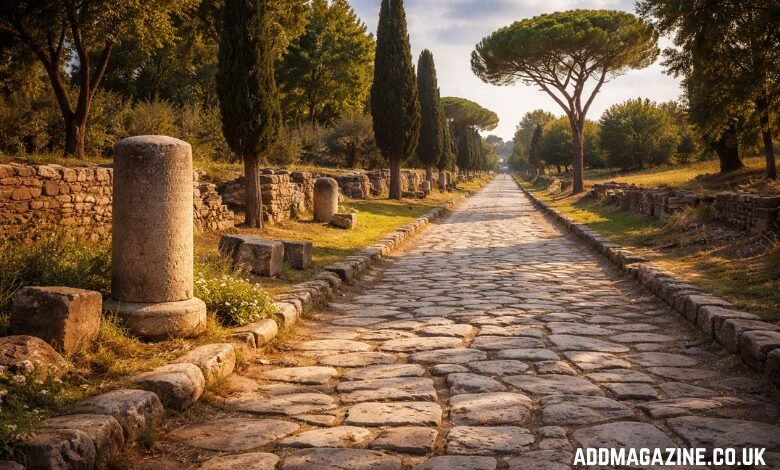
The term Cesta Roman translates to “Roman Road,” referring to the extensive network of roads constructed by the Romans throughout their empire. The word cesta itself is derived from Latin, the language of the Romans, where “cesta” simply means “road” or “path.” The Roman road system, or viae in Latin, is often considered one of the greatest achievements in ancient engineering and transportation, having played a pivotal role in the Roman Empire’s expansion, administration, and military strategy.
The Significance of Cesta Roman
The Roman road system, Cesta Roman, wasn’t just a random assortment of paths. It was a highly organized, meticulously planned, and strategically constructed network that spanned across vast distances. These roads allowed the Romans to establish control, maintain power, and facilitate communication throughout the enormous territories they ruled. By connecting cities, military posts, trade hubs, and other essential locations, the Roman roads served as the backbone of the empire’s infrastructure.
While the term Cesta Roman refers to the road system, the reality of these roads goes far beyond simple pathways. They were engineered with a level of sophistication that is still admired today. Roman roads were more than just routes for travelers; they were symbols of Roman strength, discipline, and their understanding of logistics and military strategy.
A Vast and Intricate Network
At its height, the Roman road network stretched for over 400,000 kilometers (around 250,000 miles), with approximately 80,000 kilometers (50,000 miles) of these roads paved. This vast expanse made the Roman road system the largest engineered transportation grid in the ancient world. These roads were not confined to Italy but spread across the empire, extending from Britain in the northwest to North Africa in the south, and from Spain in the west extending into parts of the Middle East to the east.
This expansive network was key to the empire’s ability to maintain its far-reaching power. The roads allowed for the rapid movement of military forces, the swift delivery of messages, and the efficient transport of goods. In addition to facilitating Roman control over such a large territory, the roads also promoted trade and cultural exchange, enabling goods, people, and ideas to move more easily across the empire.
Construction and Design: A Masterclass in Engineering
The Romans approached road construction with a level of precision and planning that was unparalleled in their time. Roman engineers understood that roads had to endure the wear and tear of constant use, harsh weather conditions, and military activity. The design of Cesta Roman roads reflected this understanding, with a focus on durability, efficiency, and functionality.
The process of constructing a Roman road began with surveying. Roman engineers, or agrimensores, would carefully plan the route using tools such as the groma, a surveying instrument that allowed for precise measurements. The goal was to create the most direct path between key locations, cutting through obstacles like hills and rivers where necessary. In some cases, the Romans constructed tunnels through mountains and built bridges over rivers, showcasing their advanced engineering capabilities.
Once the route was planned, the actual construction began. Roman roads were typically built in several layers. The first layer consisted of large stones, gravel, or sand, which provided a stable base. On top of this base layer, smaller stones and gravel were laid for drainage. The topmost layer was made of tightly fitted paving stones or concrete, creating a smooth and durable surface for travel. This multi-layered construction process ensured that Roman roads could withstand the rigors of time and use, and many of these roads are still visible and used today.
Key Features of Roman Roads
Roman roads were constructed with a number of distinct features that helped them stand the test of time. Some of the most notable features include:
- Milestones and Road Markings: Roman roads were often marked with milestones that indicated distances between major cities or military camps. These markers not only helped travelers navigate but also symbolized Roman authority over the land. The milestones often included inscriptions that indicated the distance from the nearest major city or imperial capital, as well as the name of the reigning emperor.
- Curved and Banked Design: Roman roads were designed with a slight curve or banking to facilitate water drainage. The crown shape, or convexity, of the road helped to direct rainwater off the surface, preventing erosion and ensuring the road’s longevity. This clever design feature helped maintain the structural integrity of the roads over time.
- Rest Stations and Posthouses: Roman roads were dotted with mutationes (rest stations) and mansiones (posthouses), where travelers could rest, eat, and change horses. These stations were essential for long-distance travel and helped ensure that the road network remained efficient and functional.
- Standardized Widths: The width of Roman roads varied depending on their use, but there was a general consistency in their construction. Military roads, for example, were built wider to accommodate the movement of troops and heavy wagons, while other roads might be narrower. However, the roads were always constructed to a standard that allowed for smooth, consistent travel.
- Bridges and Tunnels: Roman engineers were skilled in building bridges and tunnels to overcome natural obstacles. Some of these structures, like the Pont du Gard in France, are still standing today, showcasing the remarkable durability and ingenuity of Roman construction.
The Role of Cesta Roman in the Roman Empire
The Cesta Roman road system was instrumental in the success and expansion of the Roman Empire. The roads played several vital roles in the empire’s ability to govern and control its vast territories:
- Military Movement: The Roman military was one of the most powerful forces in the world, and the road system allowed for the rapid movement of troops. Legions could quickly be mobilized to respond to threats, quell uprisings, and maintain order throughout the empire. The roads allowed the Roman army to move efficiently and decisively, ensuring the empire’s stability and security.
- Trade and Commerce: Roman roads also facilitated trade and commerce across the empire. Merchants could transport goods such as grain, wine, olive oil, and luxury items along these roads, contributing to the prosperity of the Roman economy. The roads helped connect cities and regions, enabling the free flow of goods and services.
- Cultural Exchange: The movement of people, ideas, and cultures was made possible by the Roman road network. As Romans traveled along these roads, they spread Roman culture, language, and traditions to the far corners of the empire. The roads also enabled the spread of Christianity and other ideas, helping to shape the cultural landscape of Europe and beyond.
The Enduring Legacy of Cesta Roman
The influence of Cesta Roman can still be seen in modern transportation systems. Many of the major highways in Europe, the Middle East, and North Africa follow the same routes established by the Romans. The principles of Roman road construction, such as the use of durable materials, efficient design, and careful planning, continue to guide the construction of modern roads and highways.
Roman roads also left a lasting impact on the way we think about infrastructure. The idea of roads as essential connective tissue for cities, regions, and nations is a legacy that has endured for centuries. The Roman road network not only facilitated the expansion of an empire but also set the foundation for the global transportation systems we rely on today.
Conclusion
Cesta Roman, or the Roman road system, represents one of the most significant engineering feats in history. The roads not only served as the physical foundation for the Roman Empire’s expansion but also symbolized the empire’s commitment to efficiency, durability, and control. The Roman roads facilitated military movement, trade, cultural exchange, and communication, contributing to the empire’s success and longevity. Today, their influence can still be seen in modern infrastructure, demonstrating the enduring legacy of Roman engineering and their understanding of the importance of connectivity and mobility.