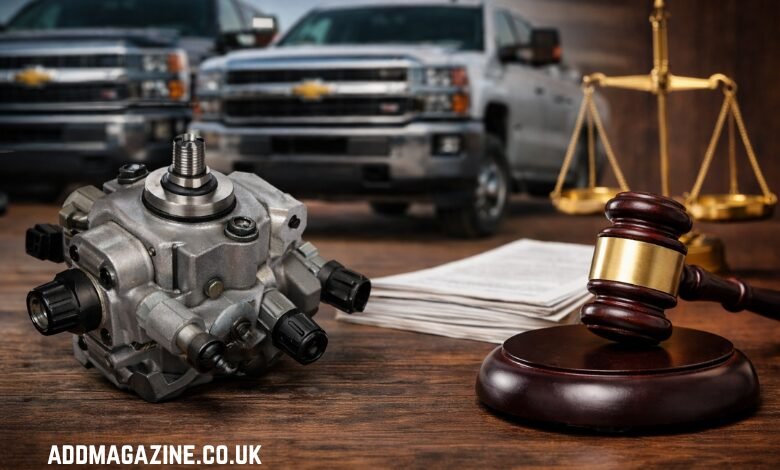
The CP4 fuel pump Silverado Sierra lawsuit refers to legal actions involving Chevrolet Silverado and GMC Sierra heavy‑duty diesel trucks that were delivered with a specific high‑pressure fuel pump known as the CP4. Owners of these trucks report widespread and premature failures of the fuel pump, linking these failures to extensive damage to fuel system components and expensive repair bills. The litigation seeks financial recovery for vehicle owners and addresses questions about design decisions, disclosure of known issues, and the responsibilities of manufacturers when a component fails repeatedly.
The lawsuit draws attention because it implicates two major players: General Motors (GM), which manufactured the trucks, and Bosch, the supplier of the CP4 pump. The actions brought forward include class action claims and individual consumer complaints. These claims take issue with the design and deployment of the CP4 pump, which critics say is not suitable for the fuel conditions typical in the United States. The line of argument in the lawsuit is that this component fails more often than it reasonably should and that GM did not sufficiently warn consumers of the risk.
The following sections explain the technical nature of the CP4 fuel pump, how failures occur, which model years are affected, the development of the lawsuit, what plaintiffs are seeking, and what the outcomes have been so far. They also describe practical implications for owners who experience or fear CP4 failures.
What Is the CP4 Fuel Pump?
Diesel engines rely on a high‑pressure fuel pump to deliver fuel to the engine’s injectors at the precise pressures needed for combustion. In the case of certain Chevrolet Silverado and GMC Sierra trucks, GM chose the Bosch CP4 pump for this role. The CP4 is a third‑generation pump used across various diesel platforms. It is compact and can generate high levels of pressure required by modern diesel engines.
In a fuel system, the high‑pressure pump draws fuel from the tank, pressurizes it, and sends it to the fuel rail and injectors. Diesel engine performance and emissions depend heavily on stable and consistent fuel pressure. The CP4 pump was selected to meet these performance demands while fitting within the physical and regulatory constraints of heavy‑duty truck design.
A fundamental problem with the CP4 design, according to many owners, is that it exhibits high sensitivity to fuel lubricity. Diesel fuel in the United States is refined to have very low sulfur content, which reduces lubricity compared to fuel used in some other markets. Lubricity is the ability of the fuel to provide a protective film on moving components. Inadequate lubricity can accelerate wear within the pump.
Owners and technicians report that metal wear inside the CP4 pump leads to contamination of the fuel system. Metal particles released from wear circulate into downstream components, including fuel rails, lines, and injectors. These metal particles can damage these components, leading to a chain reaction of failures.
How and Why Failures Occur
The failure pattern documented by mechanics and vehicle owners usually begins with internal wear of the CP4’s components. Wear can lead to loss of pressure, poor engine performance, or stalling. In many cases, the pump seizes, and fragments of metal contamination spread through the fuel system.
Several factors contribute to failure:
- Fuel Lubricity: As noted above, U.S. diesel fuel often lacks the level of natural lubricity that the CP4 pump requires. Low lubricity means moving parts in the pump experience greater friction and wear.
- Design Sensitivity: The CP4 pump design places high demand on tight tolerances and precision surfaces. Any deviation, contamination, or abrasion can quickly accelerate wear.
- Contamination: Water, particulates, or other forms of fuel contamination will accelerate internal wear. Even very small particles of metal generated within the pump can damage injectors and other components.
- Pressure Requirements: Modern diesel engines require high fuel pressures to meet emissions and efficiency targets. These pressures increase mechanical stress on the pump.
When the pump fails, owners often find that the damage extends beyond the pump itself. Fuel injectors may fail, fuel lines and rails become contaminated, and in some cases the fuel tank must be cleaned or replaced. This wide scope of damage is a major concern for owners because repair costs escalate rapidly.
Trucks Affected by the Issue
The primary models affected by CP4 fuel pump failure are heavy‑duty Chevrolet Silverado 2500HD and 3500HD and GMC Sierra 2500HD and 3500HD trucks built with the 6.6‑liter Duramax diesel engine. The most commonly reported model years include trucks manufactured between approximately 2011 and 2016. However, complaints extend into later years where the CP4 pump continued to be installed in some configurations.
Not every truck equipped with a CP4 pump will necessarily experience failure, but statistically the failure rate reported by owners and independent technicians over time is considered higher than what consumers expect for a heavy‑duty diesel component. Because these are work vehicles often used for towing, hauling, and commercial activities, a sudden failure can mean significant disruption.
Importantly, some owners report multiple failures over a vehicle’s lifespan, where a pump replaced under warranty fails again after the warranty period. Others report failure shortly after the warranty expires. These patterns contribute to the perception that the problem is systemic rather than isolated.
Legal Basis of the Lawsuit
The CP4 fuel pump lawsuit is grounded in several legal theories typically used in defective product and consumer protection litigation. These include:
- Breach of Warranty: Plaintiffs claim that GM violated express or implied warranties by selling vehicles with components that were unfit for their intended use or that would fail prematurely.
- Failure to Warn / Failure to Disclose: These claims argue that GM knew or should have known about the risk of CP4 pump failure and did not adequately inform buyers of that risk.
- Consumer Protection Violations: Some owners argue that GM’s marketing of the trucks misled or omitted material information about the reliability of the fuel system.
- Product Defect Claims: Plaintiffs allege the pump itself is defective by design or that GM’s decision to use the CP4 without sufficient testing in U.S. fuel conditions was negligent.
The actions typically involve individuals or groups of owners filing in state or federal courts. In some cases, lawsuits seek to form a class for common claims. In others, owners pursue individual claims for their own repair costs.
A key part of many claims is the argument that GM should have anticipated the high failure rate based on internal testing or early warranty data and should have redesigned the system or substituted a different pump before widespread deployment.
Development of the Lawsuits
The first legal actions appeared after mounting complaints by owners on forums, social media, and service shop reports. Initial claims were individual repair claims under warranty. However, as failures continued and evidence of widespread issues accumulated, attorneys began filing suit in a more organized way.
Some filings sought class certification, meaning they would represent a large group of owners with similar claims. Others remained individual because of differences in purchase dates, geographic fuel quality, warranty status, and specific damages.
Several trends emerged over time:
- Service Records: Plaintiffs often include copies of repair orders, technician diagnoses, and parts failure codes in their claims to document the pattern of failures.
- Technical Analysis: Expert reports in the litigation examine fuel pump failures and assess design specifications, fuel tolerance, and failure mechanisms.
- Settlement Negotiations: In some jurisdictions, GM entered into settlement talks to resolve claims without trial. Settlements typically involve reimbursement programs for qualifying repairs.
- Non‑Settlement Litigation: Where settlements did not occur, cases continued through pre‑trial motions, discovery, and in rare instances toward trial.
Each lawsuit’s status varies widely based on geography, court, model year, and specific allegations.
What Plaintiffs in the Lawsuit Are Seeking
Owners who participate in the lawsuit typically seek compensation for:
- Repair Costs: Reimbursement for out‑of‑pocket repair expenses related to CP4 pump failures and related component damage.
- Replacement Costs: Costs associated with replacing the fuel pump and any downstream components damaged by the failed pump.
- Diminished Value: Some claims request compensation for reduced vehicle value due to the defect.
- Attorney Fees: Many consumer protection statutes allow plaintiffs to recover attorney fees if successful.
Compensation differs between settlements and court judgments. Some settlement programs have specific requirements for documentation and proof of failure. Others cover only certain model years or failure timeframes.
Importantly, not all owners qualify for every settlement. Eligibility often depends on whether the owner filed a claim within prescribed deadlines and whether the failure meets defined criteria.
Outcomes and Settlements to Date
Where settlements have been reached, they typically involve:
- Reimbursement Programs: Owners who incurred documented repair costs can submit claims for reimbursement up to set limits.
- Extended Warranty Programs: Some settlements extend warranty coverage for the CP4 pump for a defined period.
- Claim Deadlines: Settlements often include deadlines for filing claims; missing those deadlines may forfeit an owner’s eligibility.
Documentation requirements for settlements tend to be strict, including proof of repair, parts invoices, and maintenance records.
In many jurisdictions, GM has not admitted wrongdoing as part of settlement negotiations. Instead, settlements resolve claims without a finding of liability. Owners participating in settlements release GM from further claims related to the CP4 issue for the covered period or model years.
Where cases have not settled, litigation continues. Some owners have pursued independent lawsuits when they did not qualify for a class settlement or when they disagreed with the terms.
Practical Impact on Truck Owners
For owners, the CP4 issue presents several practical challenges:
- Unexpected Costs: Repair costs for a CP4 failure can range from a few thousand dollars to significantly more when multiple fuel system components are damaged.
- Vehicle Downtime: Trucks out of service for fuel system repairs disrupt work, schedules, and income for owners who use their vehicles commercially.
- Resale Value Concerns: A known issue can affect resale value even if a specific truck has not yet experienced failure.
- Documentation Burden: Owners must compile service records, repair invoices, and other documentation to support claims.
Not all owners experience failure, but the potential for failure increases concern among long‑term owners. Some owners preemptively replace or upgrade the pump based on technician recommendations.
What Affected Owners Can Do
Owners facing failure or concerned about the CP4 pump have several options:
- Check Warranty Coverage: Determine whether any existing warranty or extended warranty covers the repairs.
- Contact GM: Owners may file claims directly through GM’s customer assistance or warranty department.
- Know Settlement Status: Review current settlement programs and eligibility requirements in the relevant jurisdiction.
- Consult a Lawyer: Owners uncertain about their rights or eligibility for claims may consult attorneys experienced in auto defect litigation.
- Maintain Records: Preserve all invoices, service orders, and correspondence relating to fuel system work.
Conclusion
The CP4 fuel pump Silverado Sierra lawsuit reflects broad dissatisfaction among diesel truck owners over repeated failures of a critical fuel system component. The legal actions seek financial recovery for repair costs and challenge decisions made by GM and its parts suppliers. While settlements provide relief for some, litigation continues in various forms. For truck owners, understanding the issue, monitoring legal developments, and organizing documentation remain key steps in addressing the impacts of CP4 failures on vehicle performance and ownership costs.