
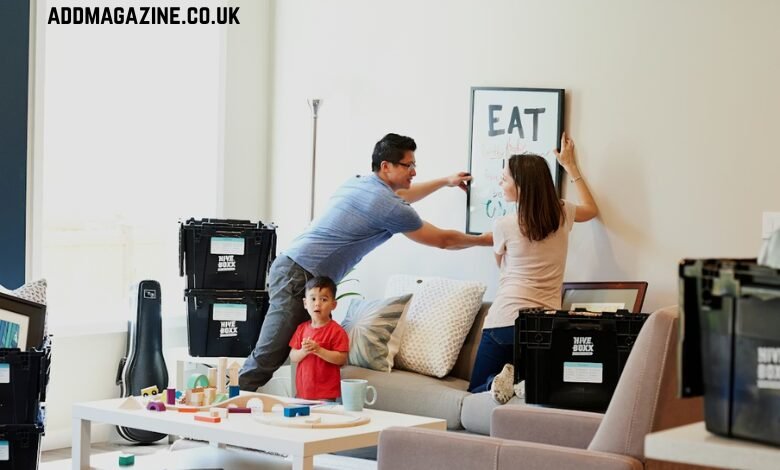
The average person needs roughly 74 days to feel really at home following a relocation. Which might be comforting or upsetting depending on the day.
Thus, the question of how to design a new home after relocating is worth thinking through properly. Because this is one of those rare moments when you’re not working around ten years of accumulated compromises. You get to start fresh. That’s rarer than it sounds.
The Temptation to Do Everything at Once
Resist it. Seriously. The urge following a relocation is to make the place seem like home as soon as possible: order a couch, get lighting, and paint something. And then you’re left with six half-finished rooms, a furniture retailer’s return cargo, and a wall color that looked great on a sample but looks horribly wrong at 7 p.m. under artificial lighting.
Pick one room. Finish it. Then move on. Put the furniture in the right place, adjust the lighting, choose a color, and stay with it.
This applies particularly to homes with architectural character with original moldings, high ceilings, and old floors. Clients coming through movers Greenwich CT often end up in exactly those kinds of properties: Fairfield County has a lot of older housing stock with bones that already make a statement. Working with that rather than against it is a design decision in itself.
Choose The Color
The gray-everything war is over. Instead, warmer colors like caramel, terracotta, clay, and subdued greens that read like sage or moss are taking its place.
Color drenching is another popular trend in 2026, with one tone applied to walls, ceilings, and trim. That sounds excessive. In practice, using the proper hue helps a space seem completed in a manner that would be difficult to create otherwise. The ceiling, particularly. Painting it the same color as the walls is dangerous but appears apparent once completed.
Little Things That Have a Real Impact
A few things, in no particular order:
- Lighting is doing more work than the furniture in most rooms. A sofa can be fine. The wrong overhead light will make everything look wrong regardless
- Mixing materials (wood, stone, linen, metal) reads better than a matched set and is easier to update piece by piece over time
Beyond that, there’s a version of interior design advice that gets passed around endlessly about biophilic elements and natural textures and organic forms. And it’s not wrong, exactly, it just tends to be stated as though it’s a checklist. An actual plant in an actual corner of a room does something that a styled product photo doesn’t convey. The feel of stone surfaces differs from that of laminate. These things are important in a sense that is difficult to define yet clear while standing in space.
The Layer That Takes the Longest
A room isn’t really finished when the furniture is placed and the paint is dry. It’s finished when it accumulates the personal layer – a book left on a table, something on the wall that came from somewhere, a lamp that was a considered choice rather than a stand-in.
That part doesn’t take place over the weekend. Sometimes it takes months. It’s irritating if you want the house to feel like yours immediately, but that’s just the way it is. The rooms that were built gradually create the idea that someone really lives there.