
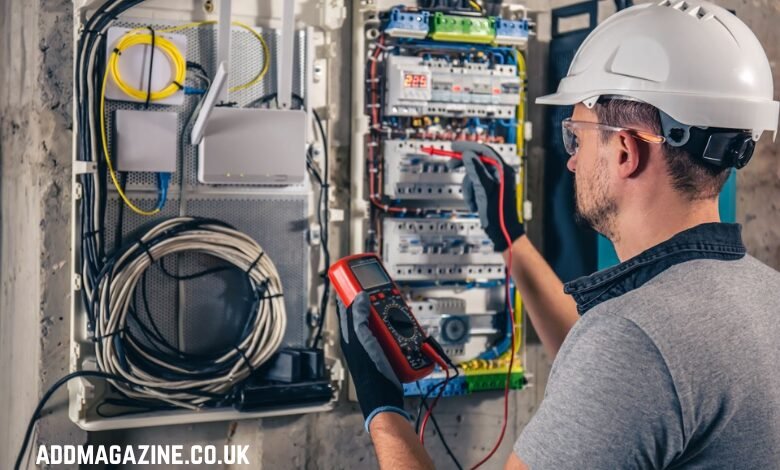
In the capital, property owners prioritise electrical safety both legally and practically. The accepted method of verifying that an electrical installation on a property is secure, complies with regulations, and is suitable for ongoing use is an EICR London inspection. Maintaining current electrical safety documentation is crucial for protecting tenants and adhering to UK regulations, regardless of your status as a landlord, managing agent, business owner, or freeholder.
Electrical systems are frequently more stressed in London, where properties range from modern apartment complexes and high-demand commercial spaces to historic conversions. A professional evaluation of wiring, consumer units, circuits, and fixed electrical equipment is provided by an Electrical Installation Condition Report (EICR), which identifies hazards before they become failures, fires, or enforcement actions.
What Is an EICR and Why It Matters
A formal inspection and test of a property’s fixed electrical installation is called an EICR. It determines whether the system is safe to continue operating and finds any flaws that might be dangerous.
The report:
- Confirms overall electrical safety
- Identifies damage, deterioration, or non-compliance
- Highlights fire and shock risks
- Classifies issues by severity (C1, C2, C3)
- Provides clear recommendations for remedial work
An EICR is not only best practice for London businesses and landlords, but it is also a fundamental compliance requirement that proves duty of care.
Electrical Safety and Landlord Legal Responsibilities
It is legally required of landlords to make sure that electrical installations in rental properties are secure. Councils, letting agents, insurers, or tenants may request this obligation, which is typically demonstrated as part of a larger Landlord Safety Certificate London compliance portfolio.
Electrical safety duties typically include:
- Arranging an EICR at required intervals
- Providing the report to tenants or managing agents
- Completing any remedial works within set timeframes
- Retaining records for inspection or enforcement purposes
Failure to comply can result in fines, enforcement notices, rent repayment orders, and invalidated insurance cover—particularly in London boroughs with active housing enforcement teams.
Electrical Safety Certificate London – When Is It Required?
An Electrical Safety Certificate London is generally required:
- Every 5 years for rental properties
- At change of tenancy (if required)
- After significant electrical alterations
- When requested by local authorities or insurers
The frequency of inspections for commercial properties is determined by the risk profile, building use, and occupancy levels. Due to increased electrical demand and public access, offices, stores, restaurants, and mixed-use buildings frequently need more frequent inspections.
What an EICR Inspection Covers
A professional EICR London inspection is thorough and methodical. It typically includes:
Fixed Wiring and Circuits
In order to detect wear, damage, or unsafe connections, cables, sockets, switches, and circuit integrity are evaluated.
Consumer Unit (Fuse Box)
RCDs, circuit breakers, earthing, bonding, and general configuration are all inspected.
Earthing and Bonding
Confirming that there is sufficient bonding and earthing on the property to lower the chance of electric shock.
Overloading and Fire Risk
Evaluation of circuit loading and signs of overheating that could lead to electrical fires.
Compliance with Current Standards
While older installations are not automatically condemned, the system must be safe for continued use and suitably protected.
Understanding EICR Codes (C1, C2, C3)
Your EICR will classify observations using standard codes:
- C1 – Danger Present
Immediate risk. Urgent action required. - C2 – Potentially Dangerous
Could become hazardous. Remedial work required. - C3 – Improvement Recommended
Not dangerous but falls short of current standards.
A satisfactory report means no C1 or C2 issues are present. Unsatisfactory reports require corrective action within specified timeframes.
Residential vs Commercial EICR London
Residential Properties
Tenant safety, fire safety, and adherence to landlord rules are the main concerns of EICRs. Houses, apartments, and HMOs all need customised evaluations based on occupancy and layout.
Commercial Premises
Higher electrical loads, equipment use, employee exposure, and public access are all taken into account by commercial EICRs. More thorough testing and documentation are frequently needed in offices, retail establishments, and hospitality venues.
Recognising these variations guarantees that the inspection accurately depicts the building’s actual use.
How Often Should an EICR Be Renewed?
Typical guidance includes:
- Every 5 years for rental properties
- At change of tenancy if required
- Every 3–5 years for commercial premises
- After major electrical work or damage
Regular inspections help identify issues early, reducing repair costs and disruption.
Why Electrical Safety Is Especially Important in London
London properties often face:
- Ageing electrical installations
- Converted layouts with increased demand
- High tenant turnover
- Mixed residential and commercial use
- Greater scrutiny from local authorities
An up-to-date EICR London report provides reassurance that electrical risks are controlled and documented, protecting both occupants and property owners.
Choosing a Professional EICR Provider
When selecting an EICR provider, look for:
- Qualified and experienced electricians
- Clear, easy-to-understand reports
- Transparent pricing with no hidden costs
- Fast turnaround times
- Support with remedial works if required
Avoid low-quality, checklist-only inspections that may not stand up to scrutiny during enforcement or insurance reviews.
Conclusion
In the capital, electrical safety is an essential component of property compliance. An EICR London assessment offers protection, clarity, and legal assurance through regular inspections and comprehensive reporting. It provides a solid basis for responsible property management when paired with more comprehensive compliance records like a Landlord Safety Certificate London.