Before we start, let me ask you a question – How much data do you think is accurate in our electronic health record systems?
Well, the numbers will surprise you. You see, a study by JAMA Network stated that almost half of all records in the EHR systems might have errors. Now, these errors are related to medication lists, clinical entries, and, at times, even patient identification errors.
This clearly showed that the healthcare practices and their documentation process do not have quality, and these inaccuracies are normal. Now, in an ideal situation, data can be a game-changer for any practice, but incomplete and inconsistent data and records show why healthcare providers struggle with providing quality care.
Upon investigating deeper, one thing became clear: off-the-shelf EHR software solutions are to blame for this. You see, these systems have rigid workflows, which makes it difficult to ensure consistency in data entries.
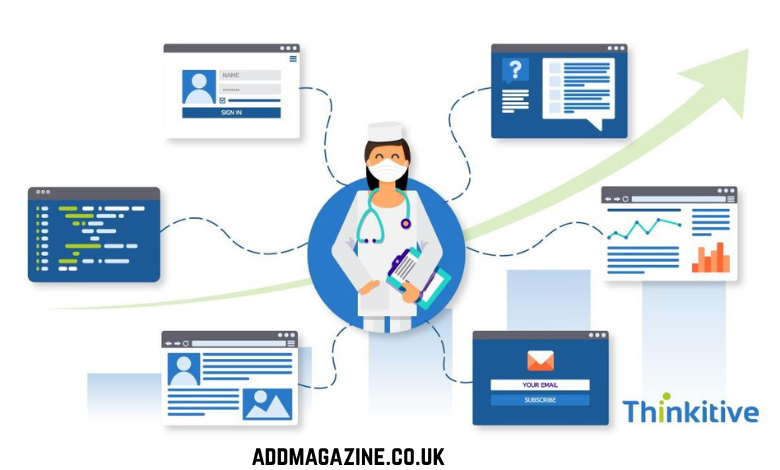
Tired of these inefficiencies of their off-the-shelf EHR systems, many healthcare practices are turning their heads to Electronic Health Records Software development to improve patient data accuracy.
And for good reasons. Custom EHR software can easily align itself with that of your practice and bring a level of convenience and ease in healthcare data management.
But the main question that you might get here is – How does custom EHR software improve patient data accuracy?
Why Standard EHR Systems Lead to Data Errors
Before we look into the intricacies of custom EHR software and how it improves clinical documentation accuracy, let’s first try to understand why standard EHR systems lead to data errors.
On that note, here are some of the reasons why standard EHR systems lead to data errors:
- Workflow Mismatch: Standard EHR systems are developed with a one-size-fits-all approach. Due to this, clinicians are forced into templates that don’t reflect real care delivery or data capturing. For instance, suppose you require data on bone density, but there is no data field that describes this need of yours. Hence, workflow mismatch leads to data errors.
- Manual Data Entry: Another problem with standard EHR systems is the manual data entry practice. Due to this, repetitive typing and data entry practices become a norm. These practices increase the risk of omission and typos, which make a significant part of data entry errors in EHR.
- Data Silos: Labs, imaging, and pharmacy systems need to be integrated into your EHR system for various care delivery processes. However, standard EHR systems have a limited scope of customization and integration. This increases the chances of creating isolated data fields, as these systems simply don’t sync properly.
- Inconsistent Records: EHR systems have a rigid infrastructure, and since they are not synced across the systems, there are chances of inconsistent record entries. This leads to the creation of multiple versions of the same patient records. In this way, maintaining continuity of care becomes very difficult.
How Custom EHR Software Improves Data Accuracy
Now, coming to the core of this blog, here are some of the features, functionalities, and other technical aspects of custom EHR software that help you in improving clinical documentation accuracy.
- Workflow-Native Data Capture: The major advantage you get with custom EHR software is that you can curate the workflows of the software with respect to the needs of your data capturing. This way, your providers have to enter the data naturally during patient consultation and at the start. This way, rework can be eliminated, and chances of accuracy also increase due to synchronization and automation.
- Specialty-Specific Templates: No matter the type of healthcare service you provide, you get the freedom to customize the EHR software with respect to your specialty. This way, you can remove the irrelevant fields and reduce additional noise from the systems. Furthermore, you get the freedom to record or fetch the data that is only required for you.
- Real-Time Validation: Errors in medication, CPT, and other codes, and conflicting entries across various systems, can be validated in real-time with custom EHR software. Meaning, you make your EHR software the only source of truth for your data.
Role of Automation & Smart Technologies
When it comes to improving accuracy with custom EHR software, you cannot ignore the role of automation and other smart technologies like interoperability, integration, etc.
On that note, let’s see the role of automation and smart technologies in improving clinical documentation accuracy:
First things first, with automation, your staff members only have to enter the data into the system once. This way, everything that has the same data fields gets auto-filled. With auto-population, certain data related to demographics and patients’ medical history can be consistent across the system.
Other than that, with intelligent prompts, you can ensure that all the documentation aspects of care can be easily filled out with just one comment. These prompts can be excellent tools in creating notes and other time-consuming documentation processes.
On top of that, achieving interoperability with custom EHR software becomes much easier. This way, your system can easily communicate and connect with disparate healthcare systems like labs, pharmacies, etc., using modern interoperability standards like FHIR and HL7.
Due to this, your system can seamlessly exchange information with these systems. Other than that, you providers can be a little relieved as most of the manual and time-consuming processes that are based on memory, handwritten notes, and re-entries will be automated.
Key Advantages of Accurate EHR Data for Healthcare Providers and Patients
I should not be the one telling you this, but everybody needs a reminder once in a while, right? On that note, here are some benefits your practice gets while maintaining clinical documentation accuracy:
- Fewer Errors: With automation and synchronization of data, consistency in data across the systems can be ensured. By removing the errors section from the data, there are very few chances of your provider mankind and clinical errors. Ultimately, this will lead to better treatment decisions and holistic care.
- Improved Care Coordination Across Providers: Furthermore, with instant access to content and a synchronization feature acting in the background, you can ensure the entire care team is on the same page and working towards the same goal. This way, care coordination between team members is ensured, and better decisions are made.
- HIPAA Compliance: Ensuring your custom EHR software maintains HIPAA Compliance
- is critical. Accurate, secure, and consistent patient data supports both legal obligations and patient trust, preventing breaches and maintaining confidentiality.
One of the major advantages you get with a custom EHR software is that it increases patient trust and engagement as you increase transparency in systems. Furthermore, with features like a patient portal, you give your patients control over their health, which directly improves their engagement in their care journey.
Conclusion: Accuracy Starts with the Right EHR Strategy
Quality in care is directly proportional to care quality. Furthermore, if you’ve made it this far, then it is your right to know that patient data accuracy is a care-quality issue and not a technical issue. And don’t risk the integrity of your practice by adopting generic systems.
This system not only fails to reduce the margin of errors but also the chances of it creating risks can be quite enhanced. So, if you’re thinking of improving the quality of care in your practice, then this is the right time to make a shift with custom EHR software.
And understand that accuracy starts with the right EHR development strategy. On that note, click here to get your free consultation and assess your systems with us.
FAQs
- Why do many EHR systems struggle with data accuracy?
Many off-the-shelf EHR platforms are designed for broad use cases, not for the nuanced workflows of individual practices. This often leads to rigid data fields, excessive manual entry, copy-paste behavior, and poor system interoperability. When clinicians are forced to adapt their workflows to the software—rather than the other way around—data inconsistencies, incomplete records, and duplicate entries become common, directly impacting patient data accuracy.
- How does custom EHR software reduce documentation errors?
Custom EHR software is built around your clinical workflows, specialty requirements, and documentation standards. Aligning templates, data fields, and validation rules with real-world usage minimizes free-text errors and irrelevant inputs. Specialty-specific forms, smart defaults, and contextual prompts ensure that clinicians capture the right data at the right time, significantly improving clinical documentation accuracy.
- Can automation improve the accuracy of patient records?
Yes. Automation plays a critical role in modern electronic health records software development. Features such as auto-populated fields, real-time data validation, clinical decision support, and rule-based alerts reduce manual entry and human error. Automated data syncing across labs, devices, and external systems ensures that patient records remain consistent, up to date, and reliable—without increasing clinician workload.
- Does better EHR data accuracy help with billing and compliance?
Absolutely. Accurate patient data directly improves coding precision, claim acceptance rates, and audit readiness. Custom EHR software ensures structured, compliant documentation that aligns with billing requirements and regulatory standards. This reduces claim denials, supports value-based care reporting, and strengthens overall healthcare data management—while maintaining HIPAA and payer compliance.