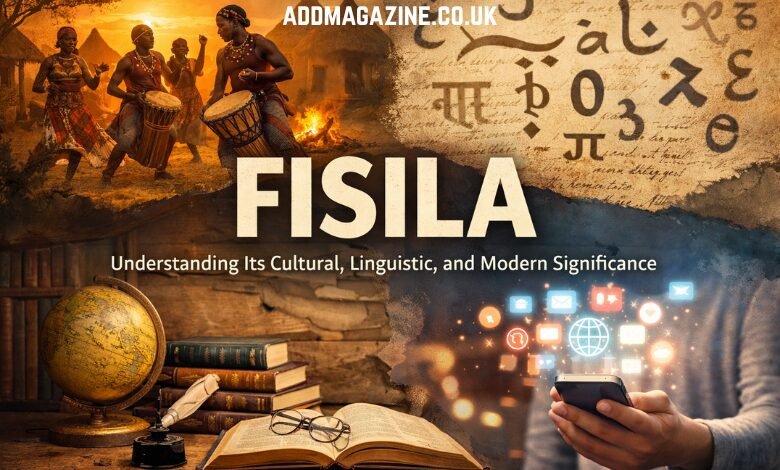
In the context of various languages, cultures, and disciplines, words often carry significant meanings that extend beyond their immediate definitions. “Fisila” is one such word that holds importance in a variety of contexts, whether cultural, linguistic, or historical. This article will explore the meaning of “Fisila,” its potential origins, and its uses in different settings.
What Is “Fisila”?
“Fisila” is not a term commonly encountered in mainstream discourse. Its usage can vary widely depending on the cultural or linguistic context in which it is found. It could be a word from a regional language, a historical reference, or even a modern term used in niche areas. To better understand the full scope of “Fisila,” we must examine its meaning in different languages and settings.
In some languages, “Fisila” could be a variant or derivative of other words that carry certain cultural connotations. In the context of specific cultures, it could be used to describe a family, a community, or even a personal trait, symbolizing unity or connection.
Origins of “Fisila”
The origins of “Fisila” are not easily traceable, as it may not be a globally recognized term. However, some research into its use in different regions could shed light on its linguistic roots. “Fisila” might be a local term, perhaps drawn from a dialect or a lesser-known language.
Given its phonetic structure, it’s possible that “Fisila” shares linguistic characteristics with words from Arabic or African languages, where terms often have meanings rooted in social or cultural practices. Words in these languages are frequently symbolic, capturing aspects of life, family, or philosophy. For example, in certain dialects, a similar-sounding word may refer to a familial relationship or a specific social role.
Fisila in Modern Contexts
While its historical and cultural relevance is important, “Fisila” also has contemporary applications. It might be used as a brand name, a term in modern popular culture, or even as a symbolic expression in literature.
As with many unique words, “Fisila” could be gaining recognition in various media and social settings, with people adopting it for its unique sound or its association with certain values or beliefs. In some modern contexts, “Fisila” might represent a concept such as peace, togetherness, or the importance of community. This could be the result of a creative interpretation of the term by a writer, artist, or influencer.
Fisila in Social Media and Pop Culture
In the realm of social media and pop culture, new terms often gain traction due to viral moments, memes, or the adoption of words by influencers. “Fisila” could have gained prominence in a specific group or community due to its use by popular figures or its connection to a trending topic. Social media platforms like Instagram, Twitter, or TikTok play a pivotal role in the dissemination of such words, which can take on new meanings or evolve quickly as they spread.
For example, a viral hashtag or a trending challenge could incorporate “Fisila,” thus recontextualizing its original meaning. Such adaptations are common, as words often shift in significance when they are adopted by online communities.
Fisila in Different Cultures
It is also worth considering how “Fisila” might fit into various cultural traditions. In certain societies, specific words may hold ritualistic or ceremonial meanings. In these contexts, “Fisila” could represent an important concept related to life events, such as birth, marriage, or death. For example, in some cultures, specific terms are used to signify respect for elders or to honor those who have passed.
If “Fisila” carries such cultural weight, it could be used in ceremonies, speeches, or stories passed down through generations. Even in modern contexts, the word could still hold significance in rituals, whether they are traditional or adapted for contemporary life.
Linguistic Significance of “Fisila”
Linguistically speaking, “Fisila” might serve as an example of how words evolve over time. In some cases, words with no inherent meaning can acquire significance through frequent usage, gaining popularity due to their simplicity, memorability, or association with a particular event or person.
The flexibility of language means that terms like “Fisila” can move between languages and cultures, shifting in meaning depending on context. This process is evident in the way slang words emerge, spread, and eventually become mainstream, only to fade out once their novelty wears off.
Potential Uses of Fisila
Given its versatility, “Fisila” could have numerous uses depending on the industry or discipline. Let’s explore some potential contexts:
- In Literature and Writing: Authors and poets may incorporate the word “Fisila” into their works to convey a specific emotion or concept. It could be used metaphorically to represent a journey, a connection, or an abstract idea.
- In Business and Marketing: As mentioned earlier, “Fisila” could become a brand name or product. In the marketing world, a catchy, unique word like “Fisila” has the potential to become part of a company’s identity, signaling a new product line or service offering.
- In Philosophy: In philosophical or spiritual contexts, “Fisila” could represent an abstract concept or a key element in a larger theory. It could be used to describe a state of being, a belief, or a philosophical principle.
- In Education: “Fisila” might be used in an academic context as a term to describe a specific process, technique, or learning model, particularly if it finds its way into specialized jargon. For example, it could be a term used in educational psychology to describe a stage of cognitive development or emotional growth.
Challenges in Understanding “Fisila”
One of the challenges in understanding “Fisila” lies in the absence of a clear, universally accepted definition. As it might be used differently in various contexts, it requires the reader to understand not only the literal meaning of the word but also its deeper connotations and uses within specific cultures or communities.
The evolving nature of language means that the meaning of “Fisila” could continue to change over time. As more people adopt the word, it may take on new forms or associations. The idea of fluidity in language, where words take on multiple meanings, is a common feature of linguistic study and highlights the adaptability of language in meeting the needs of those who use it.
Conclusion
The word “Fisila” offers an interesting case study of how words can acquire meaning and significance in various contexts. Its potential to span multiple areas, from culture to business, demonstrates the complexity and richness of language. Although “Fisila” may not be a widely recognized term, it has the potential to evolve and take on new meanings depending on where and how it is used.
Whether it serves as a cultural symbol, a modern trend, or a word in a specific discipline, “Fisila” represents the dynamic nature of language. As it continues to be explored, its significance will undoubtedly evolve, shaping how future generations understand and interact with the world around them.