
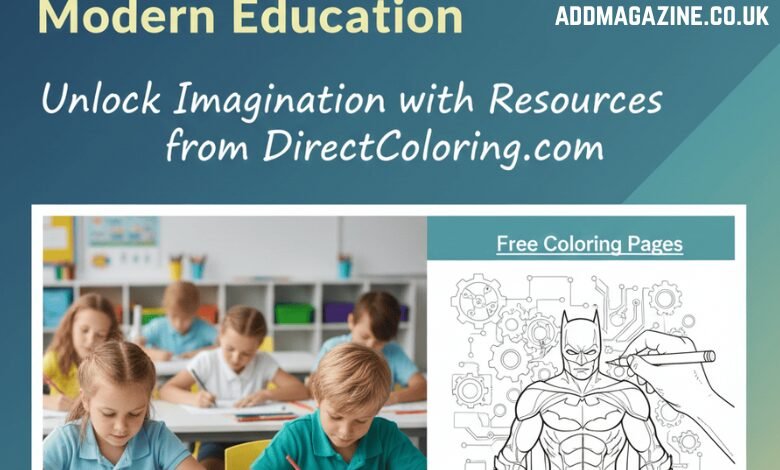
In classrooms and homes across the United States and beyond, educators are rethinking how creativity fits into modern learning. As academic pressure increases and screen time dominates daily routines, teachers and parents alike are searching for tools that support focus, emotional development, and imagination without sacrificing educational value.
One surprisingly powerful solution continues to stand the test of time: coloring pages.
Once viewed simply as a leisure activity for younger children, coloring pages are now widely recognized as effective educational resources. When thoughtfully designed and integrated into learning environments, they can support cognitive development, emotional regulation, and cross-curricular learning at multiple age levels.
The Educational Power of Coloring
Research in early childhood and primary education consistently shows that creative activities play a vital role in how children learn. Coloring, in particular, engages multiple areas of development simultaneously.
From a neurological perspective, coloring strengthens fine motor skills and hand–eye coordination. These skills are foundational for writing, drawing, and everyday classroom tasks. At the same time, choosing colors, following shapes, and completing images encourage decision-making and sustained attention.
Educators have also observed that coloring activities help students regulate emotions. In busy classrooms, coloring provides a calm, structured task that can reduce anxiety and improve focus-especially during transitions between lessons.
Why Free Resources Matter in Education
Accessibility is one of the biggest challenges in education today. Not all schools or families have equal access to paid learning materials, art supplies, or enrichment programs. This is where Free Coloring Pages play an important role.
Platforms such as Free Coloring Pages provide educators and parents with open-access resources that can be used immediately, without subscriptions or hidden costs. Printable coloring pages allow teachers to quickly supplement lesson plans, adapt materials for different learning levels, and support inclusive education.
For parents, free resources remove financial barriers while still offering meaningful educational engagement at home.
Coloring Pages as Cross-Curricular Tools
One of the most valuable aspects of coloring pages is their flexibility. They are not limited to art lessons alone. In modern classrooms, educators increasingly use coloring pages as cross-curricular tools that connect visual learning with core academic subjects.
Examples include:
- Language arts: Students color characters or scenes, then write short stories or descriptive paragraphs based on the images.
- Social studies: Themed coloring pages introduce historical figures, cultural symbols, or community roles.
- Science: Animal, environment, or anatomy coloring pages reinforce vocabulary and classification skills.
- Social-emotional learning: Coloring supports mindfulness, emotional expression, and classroom well-being.
This adaptability makes coloring pages especially valuable in differentiated instruction, where students learn at varying paces and through different modalities.
Popular Culture as a Gateway to Learning
One of the most effective ways to engage students is by connecting learning materials to their existing interests. Popular culture characters often serve as familiar entry points that capture attention and motivate participation.
Superhero-themed materials, for example, can transform routine activities into engaging learning experiences. Batman Coloring Pages offer more than entertainment-they can be used to explore themes such as responsibility, ethics, problem-solving, and storytelling.
When students color familiar characters, they are more likely to stay focused and emotionally invested in the task. Teachers can then extend the activity into discussions about narrative structure, character traits, or moral choices, blending creativity with critical thinking.
Supporting Diverse Learners
Inclusive education requires tools that accommodate different learning needs and abilities. Coloring pages naturally support this goal.
For students with learning differences, coloring offers a low-pressure way to participate without fear of failure. The activity can be adapted easily-using simpler designs for younger learners or more detailed illustrations for older students.
For English language learners, visual materials help bridge language gaps. Coloring pages paired with vocabulary lists or storytelling prompts support language acquisition in a non-intimidating format.
The Role of Coloring at Home
Education does not stop at the classroom door. At home, coloring pages help parents reinforce learning in relaxed, supportive environments.
Many families use coloring as a screen-free activity that encourages quiet focus after school. Parents often report that coloring sessions lead to natural conversations, storytelling, and emotional expression-valuable moments that strengthen parent–child relationships.
When parents have access to free, high-quality printable resources, they are better equipped to support learning without needing formal teaching experience.
Digital Convenience, Analog Benefits
While coloring itself is an analog activity, digital platforms have made access easier than ever. Printable PDFs allow educators to prepare materials quickly, whether for in-person classrooms, homework packets, or homeschooling environments.
This combination of digital access with hands-on engagement aligns well with modern educational needs. It allows flexibility while preserving the developmental benefits of tactile learning.
Preparing Students for Creative Futures
Creativity is increasingly recognized as an essential skill for the future workforce. Problem-solving, adaptability, and visual thinking are all rooted in creative development.
Coloring pages may seem simple, but they nurture the foundational skills behind these competencies. By encouraging creativity from an early age, educators help students build confidence in their ideas and their ability to express them.
In this sense, coloring is not a distraction from academic goals-it is a pathway toward more holistic education.
Conclusion
As education continues to evolve, the value of creative, accessible learning tools becomes clearer. Coloring pages represent a unique intersection of art, education, and emotional development.
With the availability of free, printable resources and engaging themes drawn from popular culture, coloring pages are proving their relevance in modern classrooms and homes alike. They support diverse learners, enrich lesson plans, and remind us that learning can and should be creative.
In a world where education often feels rushed and overstimulated, the simple act of coloring offers something essential: time to focus, imagine, and grow.