At first glance, pole dance shoes may seem simple – pick a nice-looking pair and start dancing. In reality, it’s not that straightforward. One style requires more support, another calls for lightness, and a third demands a strong visual impact on stage or on camera. It quickly becomes clear that the same pair of strips won’t suit every situation. That’s why it’s better to choose pole dance shoes not just based on appearance, but with an understanding of where and how you dance. Let’s take a closer look at which styles suit which types of shoes best.
Why One Pair Doesn’t Suit Everything
Because pole dance includes different disciplines, each with its own footwear requirements. You can’t simply choose one pair and expect it to work equally well for everything.
For example, in pole sport, dancers often perform barefoot or in half-sole shoes. The focus there is on tricks, strength, grip, and body control. Strips are simply not needed in that context.
However, when it comes to exotic pole or more choreographic styles, it’s a completely different story. Here, heel height, platform, foot support, how the shoes look in motion, and how they perform during floorwork all matter. In these styles, strips are not just an accessory—they are part of the dance and the overall look.
There are also differences within strips themselves. In some cases, sandals are more comfortable; in others, more support is needed, so dancers choose boots or thigh-high boots. That’s why one pair doesn’t work for everything—because pole dance itself is not a single, uniform style.
Which Strips Suit Which Style Best
Here, it’s better to choose based on the dance itself rather than simply thinking, “these look nice, I’ll take them.”
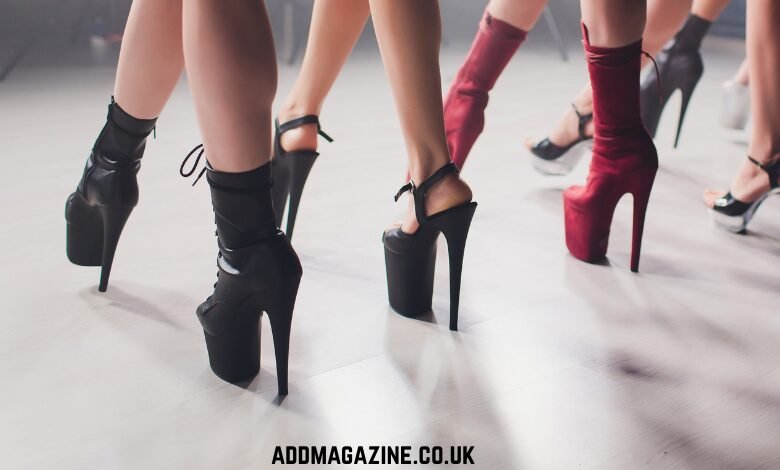
For exotic pole, dancers most often choose sandals or ankle boots. They create that striking silhouette and work especially well in:
- transitions;
- wave movements;
- floorwork.
Overall, they support the style effectively. In terms of colour, black or red pairs are most common—they look confident, bold, and work well with most looks. As for materials, glossy faux leather is often preferred, as it stands out more visually and creates a strong accent.
If you’re leaning more towards pole art, there’s much more flexibility. In this style, not only the dance but the entire concept matters. So sandals, court shoes, or ankle boots can all work, depending on the idea behind the routine. There’s also more freedom with colour. In addition to black, popular choices include:
- beige;
- burgundy;
- white;
- pink and other shades.
However, it’s important to consider the full look. For example, if the routine is soft and “angelic”, pink ankle boots might look perfect, whereas a black pair could feel out of place and disrupt the overall image.
If the routine involves a lot of floorwork and ground-based choreography, dancers often opt for boots or ankle boots. They are more closed, provide better support, and tend to feel more stable in movement. In terms of materials, many prefer matte faux leather, as it looks more understated and feels more structured overall. Colours are usually more basic—black, beige, and sometimes burgundy.
If the shoes are intended for shoots, stage performances, videos, or bold looks, you can go for more daring options. Thigh-high boots, striking sandals, bright colours, glossy finishes, and transparent details all work well here. But again, much depends on the overall concept. Sometimes a simple black pair works best, while in other cases the entire routine is built around a standout pair.
There is one point that applies to all styles: whatever model you choose, the strips must provide secure support for the foot. How this is achieved depends on the design—through straps, lacing, a zip, or a combination of these.
That’s why in pole dance it’s important to look beyond appearance and consider how well the shoes support your foot in motion and how they match your chosen style.