There aren’t many purchases where you walk in knowing almost nothing and walk out having spent several months’ salary. An engagement ring is one of them. For most first-time buyers, this is a once-in-a-lifetime purchase, which means there’s no learning curve you either get it right or you don’t.
Hatton Garden makes that easier. It’s a small district in central London, known for having more jewellery specialists in one place than anywhere else in the country. You’re not browsing a department store or trusting a website photo. You’re talking to people who do this every day, often in family businesses that have been trading for decades.
This guide covers what you actually need to know before buying: how diamonds are graded, how to choose a style, and what to ask in the shop.
Understanding the 4Cs Before You Shop
The 4Cs, Cut, Colour, Clarity, and Carat are the standard way diamonds get graded. Every certified diamond has them on paper. The problem is most buyers either ignore them completely or try to optimise all four at once, which rarely works on a real budget.
Cut is the one that actually affects how a diamond looks to the naked eye. A well-cut stone reflects light properly; a poorly cut one tends to look flat, even if colour and clarity are strong. If you’re going to prioritise one C, this is it.
Colour refers to how much yellow or brown tint a diamond carries. Stones in the G to I range are near-colorless and significantly cheaper than D in most ring settings, the tint difference is hard to see.
Clarity covers internal flaws, called inclusions. Completely flawless diamonds exist but they’re priced accordingly. For most buyers, VS2 or SI1 is where the value actually is.
Carat is about weight, not visible size, though at larger differences, heavier stones do tend to look bigger. A one-carat diamond doesn’t look twice as big as a half-carat the visible size difference is smaller than most people expect.
On the natural vs. lab-grown question: lab-grown diamonds are chemically identical to natural ones and cost considerably less. Natural diamonds are rarer, and for many people that scarcity carries meaning. Lab-grown stones tend to resell for considerably less than natural diamonds, though the market continues to shift. That’s a personal call, and it’s better made before you’re standing in a showroom.
Selecting the Perfect Ring Design for Your Loved One
The style question trips people up more than the budget question, mostly because it feels subjective in a way that’s hard to research. There are really only a handful of settings that account for most of what you’ll see in Hatton Garden.
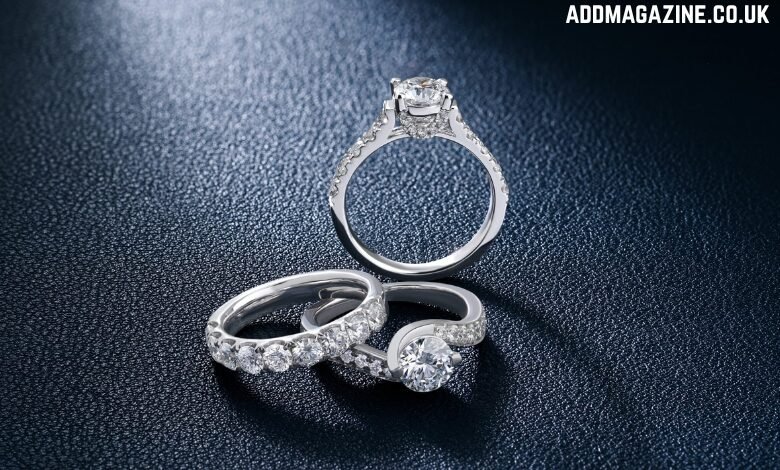
It’s the most classic option and tends to age well regardless of what’s fashionable. A halo setting surrounds the center stone with smaller diamonds, which makes the ring look larger and adds some sparkle. A trilogy has three stones, traditionally representing past, present, and future. Coloured gemstone rings, sapphire, emerald, ruby, are increasingly popular and often more distinctive than a diamond at the same price point.
Matching style to your partner is less about guessing their taste and more about paying attention to what they already wear. Someone who wears minimal, understated jewelry probably isn’t going to love a large halo. If you don’t know, a simple solitaire is rarely wrong.
Metal choice is worth thinking through too. Platinum is the most durable and holds prongs securely over time, but it’s heavier and more expensive. Yellow gold has had a strong comeback and sits better against warmer skin tones. Rose gold reads as romantic and slightly softer in feel. White gold looks similar to platinum at a lower price point but needs replating every few years as the rhodium coating wears off.
Setting a Budget Without Compromising on Quality
Hatton Garden works across a wider range of budgets than most people expect. Rings start around £1,500 and go well into five figures depending on the stone and setting. The middle range, somewhere between £3,000 and £6,000, is where most buyers land, and there’s a lot of choice in that space.
The thing that shifts at higher price points isn’t always size. It’s often the quality of the setting work, the precision of the prongs, how cleanly the band is finished. These aren’t things you notice in a photo, but you notice them in person, especially over years of daily wear.
Bespoke doesn’t automatically mean more expensive. Some jewellers in Hatton Garden will work with you on a custom design within a fixed budget, which can actually get you more for your money than buying something off the shelf. It takes longer, usually a few weeks, but if you have a clear idea of what you want, or if nothing in the cases is quite right, ask about a custom design within your budget.
The instinct to go bigger on carat and smaller on everything else tends to backfire. A larger stone with a weak cut or a poorly finished setting looks worse in person than a smaller, well-crafted ring. Most jewellers will tell you the same.
What to Expect During Your Hatton Garden Consultation
Walking into a specialist jeweller for the first time feels more formal than it is. Most consultations are straightforward conversations, you describe what you’re looking for, your budget, any ideas you already have, and the jeweller works from there.
Seeing rings in person changes things. Stones look different under real lighting, and weight only makes sense when you’re holding something.
Rennie & Co stands out as a renowned Hatton Garden engagement ring specialists, especially for those seeking natural diamonds and custom designs. A consultation there doesn’t feel rushed, you can look, ask questions, and leave without committing to anything.
Questions to Ask Your Jeweller Before You Buy
Certification matters. A GIA-certified diamond has been graded by an independent lab. Ask to see the certificate and confirm the number matches the stone. Some stones carry certificates from less rigorous labs, and the grades can be inflated. Ask which lab certified the stone before assuming the paperwork means much.
Ask about resizing before you buy. If you don’t know the size, ask the jeweller, most have heard this question before and can help. Most rings can be sized up or down by one or two sizes without any structural issue. More than that depends on the design, certain settings, particularly pavé bands with stones running around the shank, are harder to resize without disrupting the stones. If you’re not certain of the size, find out what the adjustment policy is before you buy.
Most people only think about aftercare once a prong gets loose or the ring needs cleaning. Ask whether the jeweller offers a cleaning service and what the process looks like for repairs. A good specialist will stand behind the work they’ve done.
Conclusion
By the time you get to Hatton Garden, most of the hard thinking is already done.The visit itself tends to be less overwhelming than people expect. You look at rings, you ask questions, and something either feels right or it doesn’t. That part is harder to prepare for, and probably shouldn’t be over-prepared for.
If you’re not sure where to start, start by going. Most of the clarity comes from being in the room with the actual rings, not from more research.