
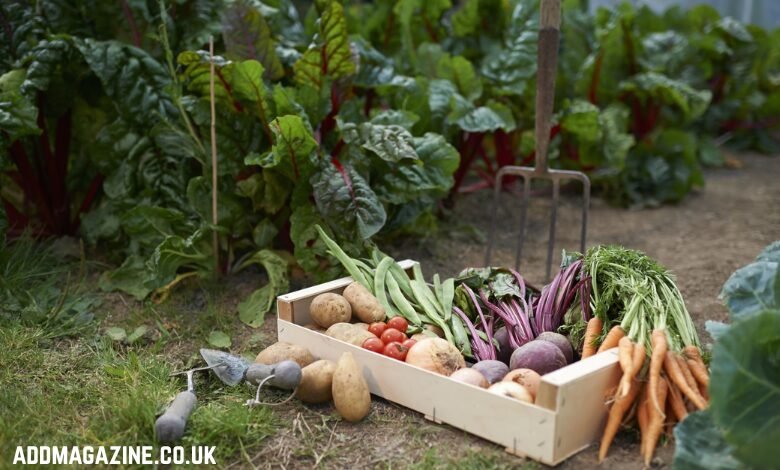
Picking veggies that you’ve grown with your own two hands provides an incredible sense of accomplishment that store-bought produce simply can’t match.
Plus, your grocery bills and carbon footprint will shrink as a result—a win on all fronts, really.
Reaping those rewards requires some planning, though, which is exactly why we’re here.
Assess Your Space
Even the smallest spot can become a bountiful garden if you prepare it carefully, whether it’s a modest balcony or an unused corner in your yard.
Start by measuring the area in question to narrow down your options for what you can cultivate.
Maximising limited space requires some clever plant pairing. Tomatoes and basil, for example, can grow happily side by side, increasing your yield without overcrowding.
This complementary duo also results in a more intense flavour and can even help keep aphids and whiteflies away from your garden.
Some varieties need a good 6 hours of sunshine a day, while others thrive in partial shade. So, take note of how the sun moves across your yard to choose the ideal spot for your edible flora.
You can download a specialised app to track the sun, or just wander around the place and jot down how bright it gets throughout the day.
Choose the Right Vegetables
Your vegetable selection will also depend on the local climate. The UK’s weather can throw you a curveball at any moment, which makes things even trickier when you’re working with limited space.
If you’ve never put your green thumb to the test, start with tomatoes, lettuce, and radishes. They grow rather quickly and without any fuss.
Of course, you have to take your taste preferences into account as well while assembling your edible collection.
Getting your timing right is also crucial. We strongly recommend choosing species with different harvest times.
It can’t hurt to consult reliable organisations, like the Royal Horticultural Society. They offer practical, location-specific recommendations to help UK-based gardeners perfect their growing schedule.
It offers you a wonderful opportunity to meet fellow plant lovers who can share valuable advice tailored to your situation.
Decide Between Seeds and Seedlings
Having decided which veggies you want, you now need to choose whether to grow them from seeds or seedlings.
Seeds are much cheaper if you’re keen to try different varieties, but they need lots of care and plenty of time to reach full maturity.
On the other hand, seedlings grow faster and tend to handle dodgy weather better. The downside is they’ll cost you more, and if you’re planning a huge patch, they can blow your budget pretty quickly.
Your choice ultimately boils down to your farming expertise, how much money you’re willing to spend, and whether you’re the patient type.
In any case, make sure you buy organic products from trusted online stores or reputable, local nurseries to guarantee fine quality.
Prepare Your Soil
Make sure your plants’ new home is ready to host them to give them the best chance at success.
Checking the pH level and nutrient concentration of your ground is the first step. A simple DIY testing kit will help you identify any deficiencies or imbalances.
Compost is your best ally for creating the perfect conditions for your greens to flourish. If needed, add some fertiliser, too, to supplement specific mineral shortages.
You can also throw in some humus-rich manure or peat moss to increase the soil’s fertility even more.
Heavy or claggy dirt is a sign of poor drainage. It’s actually a common problem. Raised beds are a fine solution for this conundrum, making future drainage and maintenance a piece of cake.
Plan Your Garden’s Layout
For the best results with minimal elbow grease, plan everything down to the last detail.
A visual reference will come in handy. So, sketch out a basic outline of how you envision the final plot to look. Make sure it accounts for how big your plants will get once they’re fully grown, and not just your currently available space.
When planting your seeds or seedlings, each veggie should have enough room to spread out as it develops. If you’re tight on ground space, move upwards.
Utilising vertical space is a smart strategy to avoid cramming everything in.
Additionally, position your plants by height so they all get enough sunshine. Place your tall crops in their own row towards the back so they don’t block the sunlight from reaching the shorter ones.
Lastly, clear some paths between the rows. This way, you can water, harvest, and look after your flora without trampling them.
Watering and Maintenance
The best time to water your greens is during the early morning or late afternoon when the sun is not too harsh.
A drip irrigation system can be your saving grace if you’re typically occupied during those times. It will deliver water directly to the roots, promoting robust development while minimising waste.
When leaves begin to poke out of the earth, start scattering mulch nearby.
Regular trimmings and checkups are also quite important for controlling excess growth and keeping ravenous pests at bay. If you spot any, don’t be too quick to reach for chemical pesticides.
A dash of neem oil will drive them away before they make your plot their personal buffet.
Ladybugs can also be your personal bodyguards against unwanted intruders. These spotted allies happily devour problematic insects. All you have to do is release them and let them do their thing.
If it’s all getting a bit much, calling on your local gardeners might be just what you need.
Harvesting and Storage
Pick too early, and you compromise the flavour. Leave it too late, and you risk losing the lot to rot or pests.
Every crop has its own rhythm. Tomatoes, for instance, will let you know they’re ready when they develop a rich, red hue and just the right firmness.
Once picked, how you store your haul will determine how long it lasts. Courgettes won’t keep like onions, and leafy greens wilt in warm kitchens. So, you must treat each veg on its own terms if you want it to last.
If you end up with a larger harvest than expected, preserve the surplus in jars to keep good food out of the bin. Sharing with friends and neighbours, or donating to your local food bank, is also a great way to reduce waste and pay it forward.
Conclusion
Not every vegetable will thrive in your little patch of the world, so choose wisely.
Take the time to get to know your flora. Learn their needs and the kind of conditions that bring out their best. The effort you invest now will pay off later in the most scrumptious ways.
With a little patience and a fair amount of digging, you’ll have a bright and colourful harvest to show for it. Just wait until you take that first snap of a freshly picked cucumber or taste the punch of flavour from your homemade pesto!