
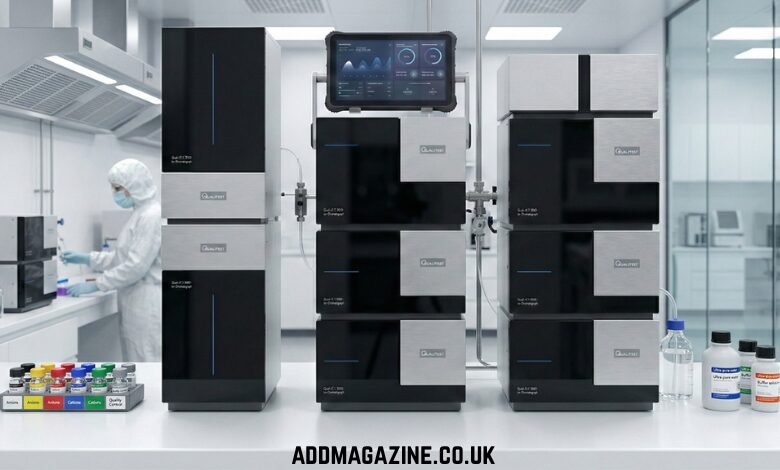
Water quality is the foundation of public health and industrial integrity. In environmental and municipal laboratories, the requirement for consistent detection of common inorganic ions, alongside the monitoring of trace-level contaminants, has never been higher. Whether analyzing the safety of municipal drinking water or assessing the environmental impact of industrial wastewater, laboratories need a method that is as precise as it is versatile.
Ion chromatography (IC) has emerged as the definitive tool for this task, offering a reliable method for separating and quantifying anions and cations with exceptional reproducibility. Unlike simpler titration or colorimetric methods, a modern Ion Chromatograph allows a lab to profile multiple ions in a single automated run, saving time while improving data accuracy. However, selecting the correct configuration for a water lab is a nuanced process that depends heavily on the specific ions of interest and the expected sample throughput. To help you navigate these choices, you can explore Ion Chromatograph options on WorldofTest to compare systems that align with your specific laboratory requirements.
Why Ion Chromatography Is a Core Tool for Water Testing
For any modern water laboratory, an Ion Chromatograph is more than just an instrument; it is a core capability. The primary reason for its dominance in water testing is its ability to perform multi-ion profiling. In a single injection, a lab can quantify half a dozen different anions or cations, providing a complete chemical fingerprint of the water sample. This is essential for routine monitoring—such as ensuring fluoride levels in drinking water are within safe ranges—as well as for trace-level checks for toxic byproducts like bromate.
The sensitivity of ion chromatography makes it indispensable for surface water and groundwater studies, where contaminants may be present at parts-per-billion (ppb) levels. Furthermore, its separation capability allows it to handle complex industrial effluents and wastewater matrices that would interfere with other analytical techniques. Because the method is inherently reproducible, it allows for long-term data trending, which is vital for environmental impact assessments and regulatory compliance.
Anions vs. Cations: What You Measure in Water and Why It Matters
In water testing, ionic species are generally divided into two categories: anions (negatively charged) and cations (positively charged). Most laboratories prioritize anion analysis because it covers the majority of regulated drinking water contaminants. However, cation analysis is equally critical for assessing water hardness and nutrient profiles.
Common Anions in Water Testing
Anion analysis typically focuses on inorganic species that affect both safety and taste:
- Fluoride: Monitored in drinking water to prevent dental fluorosis while ensuring sufficient levels for dental health.
- Chloride: High levels can indicate saltwater intrusion in groundwater or the impact of road salt on freshwater ecosystems; it also contributes to the corrosion of metal pipes.
- Nitrate and Nitrite: Primarily originating from agricultural runoff and wastewater, these are strictly regulated due to their toxicity, particularly their role in “blue baby syndrome” (methemoglobinemia).
- Sulfate: Found naturally in many mineral deposits, high concentrations can have a laxative effect on consumers and can indicate acid mine drainage.
- Bromate: A critical disinfection byproduct formed during ozonation. It is a suspected carcinogen and must be monitored at ultra-trace levels in drinking water.
- Perchlorate: Often associated with aerospace, defense, and rocket fuel production, perchlorate can contaminate groundwater and interfere with thyroid function even at very low concentrations.
Common Cations in Water Testing
Cation testing provides essential data on the overall mineral balance of the water:
- Ammonium: A key indicator of organic pollution, often appearing in wastewater or as a byproduct of agricultural processes.
- Sodium, Potassium, Magnesium, and Calcium: These ions define the “hardness” of the water and affect the taste and industrial utility of the water (scale buildup in boilers and pipes).
It is important to understand that anion and cation methods differ significantly in terms of column chemistry, eluent requirements, and detector settings. Therefore, planning the physical configuration of your ion chromatograph system is the first step toward a successful testing program.
The Core Components of an Ion Chromatograph System
A high-performing ion chromatograph system is a collection of precision-engineered components designed to work in perfect synchronization. Understanding these parts helps lab managers choose a system that can withstand the rigors of high-volume water testing.
- Pumping and Flow Control: The pump is the heart of the system. For reproducible retention times, the pump must deliver a pulseless, stable flow of eluent. Any fluctuation in flow directly impacts the precision of your results.
- Chemically Inert Flow Paths: In IC, the eluents are often acidic or basic. Using chemically inert materials like PEEK (Polyetheretherketone) for the entire flow path is essential to prevent corrosion and to ensure that the system does not introduce metal contamination into your samples.
- Temperature Control: Ambient temperature changes can cause baselines to drift. Advanced systems feature temperature-controlled compartments for the column and the detector, ensuring that the results remain consistent regardless of the laboratory environment.
- Detectors: The detector is what quantifies the separated ions. While conductivity detection is the most common baseline for water testing, other options like UV (for UV-active species like nitrate) or amperometric (for cyanide or sulfide) may be necessary depending on your analytes.
- Software and Automation: Modern software does more than just display peaks; it manages method setups, performs automated reporting, and ensures an audit trail is maintained for regulatory purposes.
Choosing the Right Setup: Single-Channel vs. Dual-Channel for Water Labs
One of the most significant decisions when purchasing ion chromatographs is whether to opt for a single-channel or a dual-channel configuration.
A Single-Channel System is usually sufficient for labs that primarily run one type of analysis—for example, a routine daily panel of common anions. It is a cost-effective entry point for municipal labs with moderate sample volumes. However, if that lab later needs to test for cations, they must swap columns and eluents, which leads to downtime and re-equilibration periods.
A Dual-Channel System allows for parallel anion and cation workflows. This setup is a game-changer for high-throughput environmental labs and contract testing facilities. By running both channels simultaneously from a single autosampler, you can significantly reduce turnaround times and maximize the efficiency of your laboratory staff. Furthermore, dual-channel modularity allows for future expansion; you can add specialized detectors or channels as your ion panel expands without replacing the core system.
Detector Selection for Water Testing: Conductivity, UV, and Amperometric
While conductivity is the “universal” detector for ion chromatography, specialized analytes sometimes require alternative detection methods to achieve necessary sensitivity or selectivity.
- Conductivity Detection: This is the standard for most inorganic ions. It is robust, reliable, and perfectly suited for common anions like chloride and sulfate. Suppressed conductivity is the specific gold standard, as it reduces background noise and increases signal-to-noise ratios.
- UV Detection: Some ions, particularly nitrate and nitrite, are highly UV-active. Using a UV detector can provide better selectivity in complex wastewater matrices where other ions might interfere with the conductivity signal.
- Amperometric Detection: This electrochemical method is used for ions that are not easily detected by conductivity, such as cyanide, sulfide, or certain transition metals. It is highly sensitive and essential for labs doing deep chemical profiling of industrial effluents.
Practical Buying Checklist for Water Labs
When comparing different ion chromatographs, use this checklist to ensure the system matches your operational reality:
- Sample Types: Are you testing clean drinking water or high-solids wastewater? (This impacts your need for filtration and matrix-management features).
- Target Ions: Do you need routine monitoring or trace-level detection of contaminants like bromate?
- Throughput Requirements: How many samples do you process per day? Does your turnaround time require a dual-channel setup?
- Configuration Preference: Do you prefer a single-channel for anions or a simultaneous anion/cation setup?
- Detector Flexibility: Is the system capable of supporting conductivity, UV, and amperometric detectors?
- Automation Needs: Does the system include a reliable autosampler and automated method templates?
- Contamination Control: Is the flow path entirely metal-free and chemically inert?
- Software Compliance: Does the software provide a full audit trail and easy-to-use reporting formats for your regulators?
- Maintenance and Support: Is there a clear maintenance schedule and available technical support for training your team?
Workflow Tips to Improve Data Quality and Repeatability
The quality of your data is not just a function of the instrument; it is a function of the workflow discipline.
- Consistent Sample Handling: Always use consistent filtration practices. Particulates in water can clog columns and cause pressure spikes. Standardizing your syringe filters or using an automated filtration system on the autosampler is best.
- Avoid Contamination: In trace-ion analysis, everything is a potential contaminant. Use high-purity reagents, clean labware dedicated to IC, and ensure your deionized water is truly 18.2 MΩ·cm.
- Temperature and Method Discipline: Never change method settings in the middle of a run. Ensure the system is fully equilibrated at the correct temperature before starting your calibration.
- Use Standard Reporting Templates: Modern IC software allows for the creation of reporting templates. Standardizing these across your lab ensures that different operators provide the same information, making it easier for managers to review and approve data.
Common Mistakes in Water IC Programs
- Underestimating Matrix Effects: Wastewater often contains high levels of organic carbon or competing ions that can foul a column or mask target peaks. Not planning for pre-treatment or specialized columns for these samples is a common pitfall.
- Poor Throughput Planning: Many labs buy a single-channel system to save money, only to realize that the manual labor involved in switching methods costs more in the long run than a dual-channel system would have.
- Ignoring Scalability: Choosing a closed, non-modular system prevents you from adding new detectors or channels as environmental regulations change.
- Inconsistent Documentation: If method settings (like eluent concentration or flow rate) are not standardized in the software, you will see drift in your results between different operators.
Explore Ion Chromatograph Options on WorldofTest
Selecting the right ion chromatograph is about more than just picking a model; it is about configuring a system that meets the specific ionic challenges of your water source. Whether you are running a small municipal lab or a high-volume environmental contract facility, the right setup will drive repeatable results and ensure public safety.
The next step is to define your ion panel and sample volume, then compare available configurations. We invite you to explore ion chromatograph systems on WorldofTest and request a quotation for your water testing workflow. By matching the right instrument to your throughput and detection goals, you can invest in a solution that provides accurate, reliable data for years to come.
In conclusion, a successful water testing program depends on a well-configured Ion Chromatograph, a disciplined workflow, and a clear understanding of the anions and cations you need to monitor. By focusing on configuration flexibility and contamination control, you can ensure your lab stays ahead of evolving water quality standards.