Buying a radiator isn’t just about choosing something that matches your interior décor. It directly impacts how warm your home feels, how much energy you use, and how much you spend on heating over time. A radiator plays a central role in your heating system. It distributes warmth throughout the room and helps maintain a comfortable temperature.
If the radiator is too small or doesn’t produce enough heat, your space will struggle to warm up properly, leaving you feeling cold and uncomfortable. On the other hand, if it’s too large or overly powerful for the room, it can lead to unnecessary energy consumption and higher utility bills. That’s why selecting the right size and output is essential for achieving the perfect balance between comfort, efficiency, and cost-effectiveness.
Impact on Comfort and Energy Bills
The wrong radiator can quietly drain your wallet. An undersized unit works overtime. An oversized one overheats the space. Either way, your energy bills creep up. A well-planned radiator selection keeps your home cosy without burning through your budget.
Long-Term Investment Value
A radiator isn’t something you replace every year. Choose wisely, and it can last decades. Cheap decisions today can mean expensive fixes tomorrow.
Understanding Your Heating Requirements
Before you even browse designs, ask yourself one simple question: How much heat does my room actually need?
Calculating BTU Output
BTU (British Thermal Unit) measures heat output. Every room requires a specific BTU rating depending on size, ceiling height, windows, and insulation.
A larger room with big windows? Higher BTU needed.
A small, well-insulated bedroom? Lower BTU works fine.
Always calculate your BTU requirement before buying. Guesswork leads to discomfort.
Room Size and Insulation Factors
Don’t just measure floor space. Consider:
- Ceiling height
- Number of windows
- External walls
- Insulation quality
Older homes often need more heating power than modern, well-insulated properties.
Types of Radiators Available
Panel Radiators
These are the most common and budget-friendly. Perfect for standard homes and easy replacements.
Column Radiators
Classic yet powerful. Great heat output and timeless design. Ideal for both traditional and modern spaces.
Cast Iron Radiators
Heavy. Durable. Full of character. They take longer to heat up but retain warmth for longer.
Designer Radiators
Style meets function. Vertical, curved, coloured, you name it.
Electric Radiators vs Central Heating Radiators
Electric radiators are perfect for rooms without pipework access. Central heating radiators connect to your boiler system and are often more cost-effective for whole-house heating.
Choosing the Right Size
Size is everything when it comes to radiators.
Measuring Your Space Correctly
Measure the width, height, and depth available on your wall. Don’t forget to account for:
- Furniture placement
- Window sills
- Door openings
A radiator blocked by a sofa is like a speaker covered by a pillow—it just won’t perform properly.
Vertical vs Horizontal Radiators
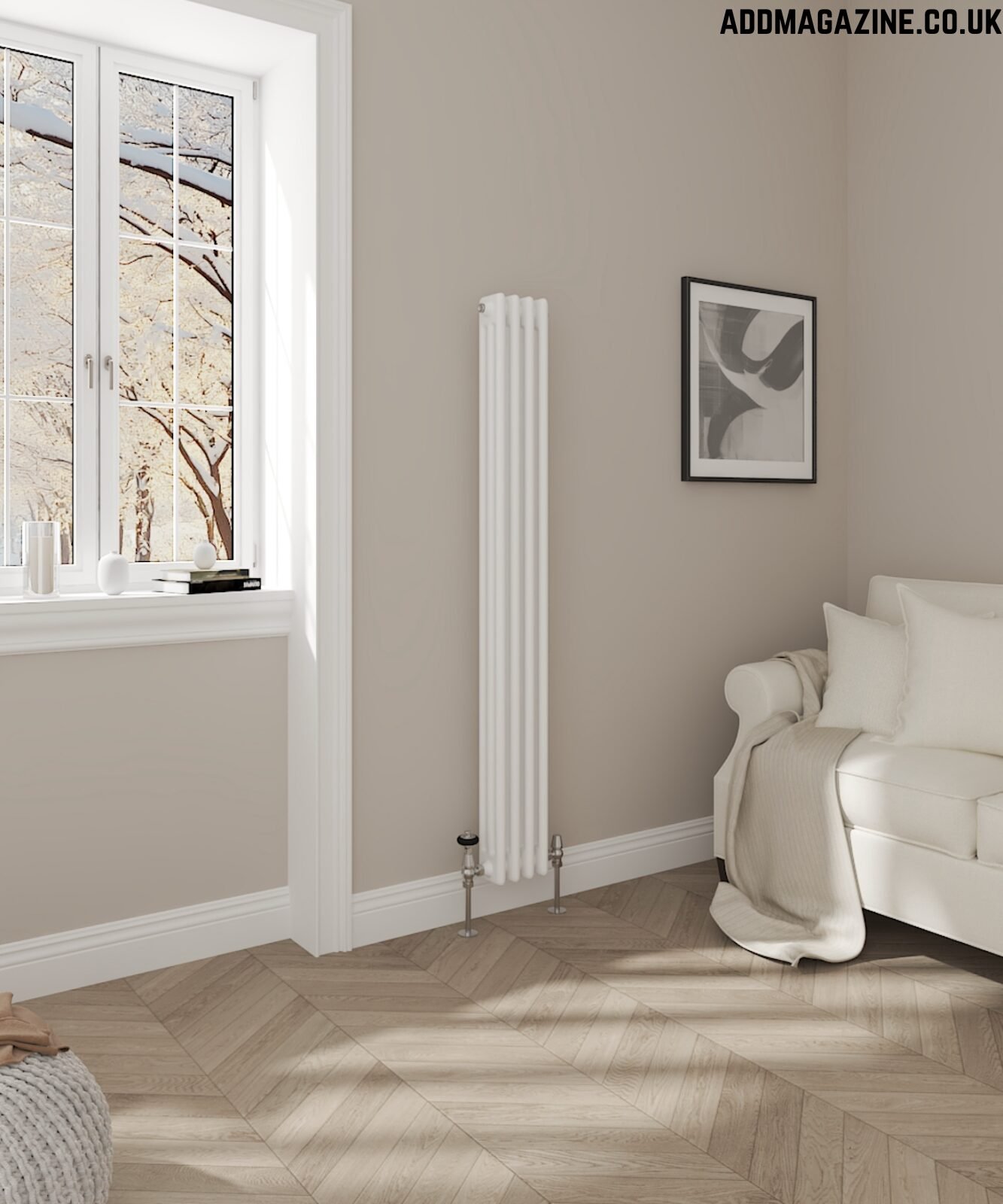
Limited wall space? Go vertical.
Wide empty walls? Horizontal works beautifully.
Vertical radiators are especially popular in modern apartments.
Material Matters
Steel Radiators
Steel is the most commonly used material in modern radiators because it is affordable, practical, and reliable. Steel radiators heat up fairly quickly once your heating system is turned on, which means you’ll start feeling warmth in a short time.
However, they also cool down relatively fast after the heating is switched off. This makes them suitable for homes where heating is used on a schedule — for example, turning it on in the morning and evening. They offer a good balance between cost and performance, which is why they are popular in most households.
Aluminium Radiators
Aluminium radiators are known for being lightweight and highly responsive. They heat up much faster than steel or cast iron because aluminium is an excellent heat conductor. This means the radiator transfers heat into the room quickly and efficiently.
They also cool down quickly, which might sound like a disadvantage, but it actually helps improve energy efficiency. The radiator doesn’t retain unnecessary heat, allowing your heating system to respond more accurately to temperature controls. Aluminium radiators are especially suitable for modern homes and low-temperature systems like heat pumps.
Cast Iron Radiators
Cast iron radiators behave very differently from steel and aluminium. They take longer to heat up because cast iron is dense and heavy. However, once they are hot, they retain heat for a long time, even after the heating system is turned off.
This makes them ideal for maintaining a steady, consistent warmth rather than quick bursts of heat. They are often chosen for traditional or period-style homes, not only for their heating performance but also for their classic appearance.
Energy Efficiency and Running Costs
Nobody wants sky-high bills.
Heat Retention and Warm-Up Time
Aluminium heats quickly. Cast iron retains heat longer. Steel sits somewhere in between.
Choose based on how you use your room. Do you need quick bursts of heat? Or steady warmth all day?
Compatibility with Modern Boilers and Heat Pumps
If you’re upgrading to a heat pump, ensure your radiator works efficiently at lower water temperatures. Some modern radiators are specifically designed for this.
Style and Design Considerations
Your radiator doesn’t have to be boring.
Matching Interior Décor
Minimalist home? Go sleek and flat-panel.
Vintage vibe? Column or cast iron fits beautifully.
Think of it as furniture, not just heating equipment.
Colour Options and Finishes
White is classic. But anthracite, black, and custom shades are trending. A bold radiator can transform a plain wall into a focal point.
Placement and Installation
Where you place your radiator affects performance.
Best Position for Maximum Heat
Traditionally, radiators are placed under windows. Why? To counteract cold air entering from outside.
Pipework and Wall Strength
Heavy cast iron models require strong wall support. Always check installation requirements before buying.
Budget and Value for Money
We all have budgets. But think long-term.
Upfront Cost vs Long-Term Savings
A cheaper radiator may cost more in energy bills over time. Investing in efficiency pays off.
Warranty and Quality Assurance
Look for strong warranties. They reflect product confidence and durability.
Heating contributes significantly to household emissions.
Common Mistakes to Avoid
- Ignoring BTU calculations
- Choosing style over performance
- Blocking the radiator with furniture
- Forgetting insulation quality
- Skipping professional installation
Avoid these, and you’re halfway to a smart purchase.
Buying a radiator isn’t just about heat; it’s about comfort, efficiency, style, and long-term savings. Think of it as choosing the engine for your home’s comfort system. Get it right, and your home feels warm, balanced, and inviting. Get it wrong, and you’ll constantly adjust the thermostat, wondering why it never feels quite right.
Take your time. Measure properly. Calculate BTUs. Consider material, style, and placement. When all these pieces come together, your radiator won’t just heat your room; it’ll transform it.