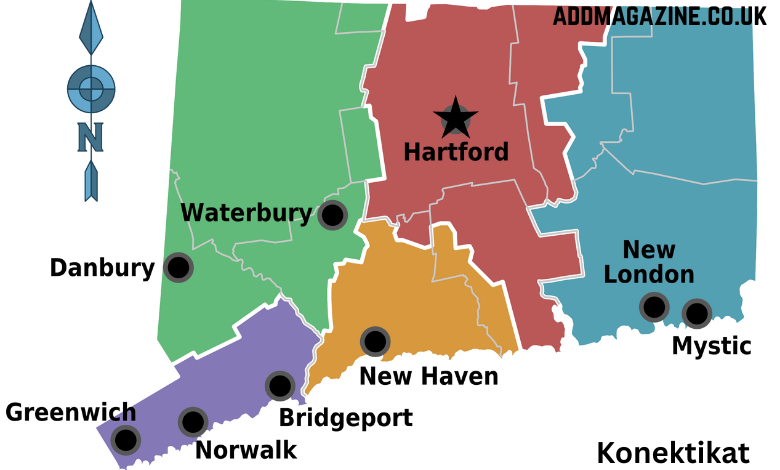
Connecticut, a state often playfully referred to as “Konektikat” in misspelled or colloquial contexts, is located in the northeastern part of the United States. Despite being one of the smaller states in the Union, Connecticut plays a pivotal role in the history, culture, and economy of the United States. From its colonial past to its modern contributions to various sectors, the state has remained a significant player in shaping the nation’s identity.
The Origins of Connecticut: A Look at its History
The history of Connecticut is rich, with its roots tracing back to Native American tribes and early European settlers. The state’s name, Connecticut, comes from the Pequot word “Quinnehtukqut,” which translates to “beside the long tidal river,” referring to the Connecticut River. This river was a major factor in the state’s settlement, as it provided natural transportation routes and fertile land for agriculture.
The arrival of Europeans in the 1600s marked the beginning of Connecticut’s colonial history. Dutch explorers first established trading posts along the river, but it was the English Puritans who founded the first permanent settlements, such as Hartford in 1636. Over the years, Connecticut’s settlers developed a unique and independent identity, which became crucial in the state’s later role in American governance.
One of the most significant moments in Connecticut’s history came in 1639, with the drafting of the Fundamental Orders of Connecticut. Often regarded as one of the first written constitutions in the world, the document established a framework for self-governance in the Connecticut Colony. This early form of government was a precursor to the democratic ideals that would later shape the United States’ own Constitution.
As tensions grew in the 18th century between the American colonies and Great Britain, Connecticut became a strong supporter of independence. The state provided troops and supplies during the American Revolution, with notable figures such as Nathan Hale, a hero of the revolution, contributing to the cause. Hale’s famous words, “I only regret that I have but one life to lose for my country,” exemplify the state’s strong commitment to liberty and self-governance.
Geography and Natural Beauty of Connecticut
Connecticut’s geographic location offers a unique blend of coastal beauty, rolling hills, and dense forests. The state’s landscape is characterized by its central river valley, flanked by the Connecticut River, which is an important feature in its geography. The river’s influence on the state’s early settlement cannot be overstated, as it provided a vital transportation route for both settlers and goods.
The state’s coastline, stretching along Long Island Sound, adds another layer of natural beauty, with sandy beaches, rocky shorelines, and picturesque maritime towns. Cities like New Haven, home to Yale University, are situated on this coastline, blending the charm of a New England town with the vibrancy of academic life.
The Economy of Connecticut: A Historical and Modern Perspective
Historically, Connecticut’s economy was rooted in agriculture, particularly tobacco farming, and the state’s location on the river made it a hub for trade. However, as the Industrial Revolution took hold in the 19th century, Connecticut shifted towards manufacturing. The state’s factories produced everything from brass to firearms, contributing to its growing industrial base.
In the 20th century, Connecticut’s economy continued to evolve. The state became a center for innovation, particularly in the fields of aerospace and insurance. The state’s proximity to New York City also helped fuel its growth in the finance and banking sectors, further establishing Connecticut as an economic powerhouse.
Today, Connecticut’s economy remains diverse, with industries ranging from finance, insurance, and real estate to manufacturing, technology, and healthcare. With renowned institutions like Yale University, Connecticut prides itself on a highly skilled workforce that fuels advancements in biotechnology, health sciences, and sustainable energy.
One of the standout sectors in Connecticut’s modern economy is insurance, with the city of Hartford often referred to as the “Insurance Capital of the World.” This dominance in the insurance industry has provided Connecticut with economic stability and a strong job market. Additionally, the state’s strategic location between New York City and Boston makes it an attractive location for businesses and individuals seeking access to both urban centers.
Connecticut’s Cultural Heritage: A Blend of Old and New
Connecticut is a state with a rich cultural heritage, and its communities reflect a blend of colonial history and modern innovation. The state’s historic towns, such as Mystic, are home to landmarks like the Mystic Seaport, where visitors can step back in time and explore maritime history.
At the same time, Connecticut embraces contemporary art and culture. The state boasts numerous theaters, art galleries, and music venues, offering a thriving cultural scene for residents and visitors alike. New Haven, in particular, has earned a reputation as a hub for the arts, with its vibrant theater community and diverse music scene, ranging from classical performances at the Yale School of Music to indie and jazz at local venues.
Connecticut is also known for its rich literary tradition. As the birthplace of literary giants like Mark Twain and Harriet Beecher Stowe, the state has a deep connection to American literature. Many writers and poets have drawn inspiration from Connecticut’s natural beauty, and their works continue to be celebrated in local museums and libraries.
Moreover, the state hosts a variety of cultural festivals throughout the year, celebrating everything from food and wine to literature and music. These events help foster a sense of community and are a testament to the state’s ongoing commitment to preserving and promoting its cultural heritage.
Notable Attractions in Connecticut
Connecticut is home to a wide array of attractions, from natural wonders to historical sites.
- Yale University: Located in New Haven, Yale is one of the oldest and most prestigious universities in the United States. Visitors can tour the campus, explore the university’s museums, or attend lectures and performances at its theaters.
- Mystic Seaport: A living history museum located in Mystic, this attraction offers visitors a chance to step back in time and experience life on the high seas during the 19th century. The Mystic Aquarium, nearby, is another popular family-friendly destination.
- The Mark Twain House: Located in Hartford, this historic home was the residence of author Mark Twain and is now a museum dedicated to his life and works.
- Gillette Castle State Park: Situated on the banks of the Connecticut River, this 19th-century castle offers panoramic views, hiking trails, and a glimpse into the life of its eccentric creator, actor William Gillette.
- Lake Compounce, located in Bristol, holds the distinction of being one of the country’s oldest amusement parks, offering exciting rides, water features, and fun-filled entertainment for all ages.
Connecticut’s Role in Modern America
Today, Connecticut remains a vital part of the United States, contributing to the nation’s economy, culture, and society in meaningful ways. The state’s diverse industries, educational institutions, and commitment to preserving its history make it a vital player in the region. Connecticut may be small in size, but its impact on the country is anything but. Whether you are exploring its historic towns, enjoying the natural beauty of its parks, or learning about its contributions to American history, Connecticut has something to offer everyone.
Despite being often overshadowed by its larger neighbors like New York and Massachusetts, Connecticut is a state that offers both residents and visitors a deep sense of pride in its rich history, natural beauty, and cultural achievements.
Connecticut’s Education and Research Landscape
One of the most defining aspects of Connecticut’s modern identity is its emphasis on education and research. The state is home to some of the most prestigious institutions in the country, contributing to its reputation as a hub of knowledge and innovation.
Founded in 1701, Yale is consistently ranked among the top universities globally and has played an instrumental role in shaping various fields, from law and medicine to science and the arts. Yale’s rich history, academic rigor, and vast resources have helped establish Connecticut as a center for higher education.
In addition to Yale, Connecticut is home to several other respected institutions, including the University of Connecticut (UConn), which has a major presence in Storrs and several other locations across the state. UConn is well-regarded for its research programs, especially in fields such as engineering, health sciences, and business. The state’s strong education system, including both public and private institutions, has fostered a highly skilled workforce that continues to contribute to the state’s economic development.
Moreover, the state’s commitment to education extends beyond traditional universities. Connecticut has made significant investments in developing research parks and innovation hubs. The UConn Technology Incubation Program, for example, supports startups and early-stage companies in the fields of biotechnology, medical devices, and other high-tech industries, further cementing Connecticut’s place as a leader in innovation and technological advancement.
The Role of Connecticut in National Policy and Governance
Connecticut’s political history has always been deeply tied to its strong tradition of governance and liberty. The Fundamental Orders of 1639, often considered the first written constitution in the world, laid the foundation for Connecticut’s long-standing commitment to democracy and self-governance. This document, which established a system of representative government in the colony, would later influence the creation of the U.S. Constitution. The state’s political legacy is further highlighted by its involvement in the early formation of the United States, with notable figures such as Roger Sherman, a signer of both the Declaration of Independence and the U.S. Constitution, contributing to the shaping of the nation’s governing structures.
In modern times, Connecticut has continued to play a significant role in U.S. politics. The state is known for its strong political activism, particularly in the areas of education reform, environmental protection, and healthcare. Connecticut’s leadership in advocating for progressive policies has influenced national debates on issues like climate change, gun control, and healthcare reform. The state’s commitment to social justice is also reflected in its policies promoting diversity, inclusion, and equality.
As a key player in New England, Connecticut holds a unique position in U.S. politics, balancing its historical ties to the founding of the nation with its modern-day advocacy for progressive change. This blend of tradition and innovation makes Connecticut an influential state in shaping national policy and governance.
Connecticut’s Growing Tourism Appeal
While Connecticut may be smaller in size compared to some of its neighboring states, its tourism industry continues to grow, attracting millions of visitors each year. Whether it’s the natural beauty of its beaches, the historic charm of its towns, or the rich cultural experiences it offers, Connecticut’s appeal as a tourist destination is undeniable.
Historic Attractions in Connecticut
The state’s historic attractions are one of the main draws for visitors. Connecticut’s colonial heritage can be explored through sites like The Old State House in Hartford, which served as the seat of the state’s government during the 19th century, and The Essex Steam Train takes visitors on a charming journey through the picturesque Connecticut River Valley, evoking a sense of nostalgia.
Visitors interested in American history will find Connecticut’s wealth of historic sites, museums, and landmarks an ideal place to explore the nation’s past.
Connecticut’s Arts and Entertainment Scene
For those with a more contemporary taste, Connecticut also offers a thriving arts and entertainment scene. From the cultural offerings in New Haven, home to one of the top university art galleries in the country, to the vibrant theater and music scenes in cities like Hartford and Bridgeport, the state offers something for every visitor. The Connecticut Grand Opera and the Shubert Theater in New Haven are just a few examples of the venues that draw both local and international talent.
Eco-Tourism and Sustainable Travel in Connecticut
In recent years, eco-tourism has also become an important sector for Connecticut. With the state’s commitment to environmental sustainability and the preservation of its natural resources, visitors can enjoy eco-friendly accommodations, hiking, and outdoor activities that highlight Connecticut’s dedication to protecting its environment.
Conclusion
Connecticut may be small in geographic size, but it is large in its contributions to American history, culture, and modern life. From its colonial past to its present-day status as a center for innovation and education, the state has continually proven itself to be a vital part of the United States. Whether you are exploring its natural beauty, delving into its rich history, or enjoying its thriving arts and culture scene, Connecticut offers a wide range of experiences that appeal to a diverse array of interests.
As one of New England’s most historically rich and culturally vibrant states, Connecticut has often been overlooked in favor of its larger neighbors, but its uniqueness and charm make it a hidden gem waiting to be discovered. With its blend of history, nature, education, and innovation, Connecticut is a state that continues to play an important role in shaping the nation’s future while honoring its past.
For anyone interested in exploring the roots of American democracy, experiencing New England’s natural beauty, or discovering the cutting-edge industries driving the modern economy, Connecticut remains a destination worth exploring. Whether you are a history buff, a nature lover, or a seeker of cultural experiences, this small but mighty state has much to offer, and its significance in the broader context of American life is undeniable. Connecticut is a state that has something for everyone and remains an integral part of New England’s identity.