
Steel is among the most widely utilized metals globally due to its versatility and durability. And also, it is powerful, complex, and long-lasting. People use metal for many things. Buildings, equipment, cars, and devices use metal. When operating with metal, it’s very critical to understand the melting point of the metal. This manual will explain the entirety in easy words.
What is the Melting Point of Steel?
You can say the melting point of Steel is the temperature at which steel changes from solid to liquid.
Anyway, Steel is a product of iron and carbon. Sometimes other metals are delivered to make it stronger or more flexible because of those elements, like some metals have unique melting points.
After that, Steel usually melts between 1370 °C and 1510 °C (2500 °F to 2750 °F). I mean, then the pure iron melts at about 1538 °C, but when we add carbon or other metals, then the melting temperature of Steel goes down. Such as knowing the melting point of Steel is very important if you want to work with it properly and get good results.
Why Knowing the Melting Point is Important
- There are many reasons to realise the melting point of metals. Some of them are:
- Such as Metallurgy and Casting. When metal is melted to make elements or shapes, it should reach the right temperature. So temperatures that are too low will not soften the metal nicely. Too high a temperature can weaken the Steel.
- Welding Welders use the melting factor of metal to join pieces of Steel. Also, correct heating of the metal results in stronger and longer welds.
- CNC machining services, particularly Steel CNC machining services, rely on understanding the melting point of steel to select the right tools and cutting methods.
- Safety Steel melts at very high temperatures. Like knowing its melting point helps workers avoid accidents. It also helps control heat safely.
Factors That Affect the Melting Point of Steel
The melting factor of Steel can change depending on its composition. Important factors encompass:
Carbon content: I mean, more carbon usually lowers the melting point slightly.
Alloying elements: Like metals chromium, nickel, and also manganese can affect the melting point.
Type of Steel: as you know that stainless Steel, device metal, and different sorts melt at special temperatures.
In short, for instance, stainless Steel melts at a higher temperature than carbon steel because of its chromium and nickel content.
How Steel is Melted
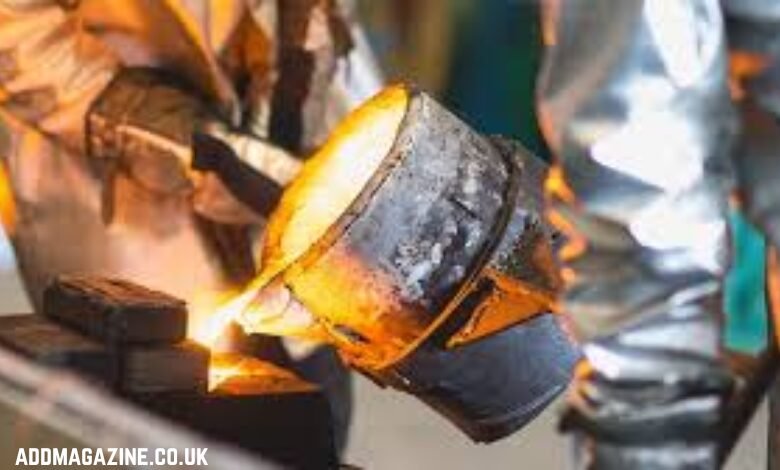
Steel is melted in large furnaces. There are two essential kinds: arc furnace and blast furnace. The straightforward way is this:
Heat the metal slowly until it reaches its melting point.
Remove impurities from molten Steel.
Pour molten metal right into a mould or form it similarly.
This procedure is used to make metallic sheets, bars, pipes, elements, and tools.
Different Types of Steel
Steel comes in lots of kinds. Each type has distinctive melting points. Some commonplace sorts are:
Carbon steel:such as used in construction, gears, and machines. And almost melts at around 1425°C-1540°C.
Stainless Steel: like contains chrome and nickel. And melts around 1400°C-1450°C. Used in kitchen appliances, medical systems, and machines.
Tool steel: Hardened Steel used for cutting gears. Also, it melts at high temperatures.
Alloy metal: Steel combined with other metals for special functions. The melting point varies.
Knowing the sort of metal allows while melting, forming, or machining it.
Applications of Knowing the Melting Point
Knowing the melting point of Steel is beneficial in many regions:
Construction: Normally, Builders use perfect metal for bridges, buildings, and pipelines.
Automotive industry: Also, Cars and vans require steel that can withstand heat and strain.
Production system: Knives, drills, and machine components had to soften the metal and shape it into the best form.
CNC Machining: Companies that provide CNC machining of metal use the melting factor to avoid device damage and errors.
Tips for Handling Steel Safely
- You must always wear gloves, protective glasses, and a protective outfit when handling metal.
- Use the right furnaces and systems for melting.
- Monitor the temperature carefully. Do no longer overheat.
- Work in well-ventilated regions to keep away from unsafe gases.
- Follow instructions when using steel CNC machining services or welding steel.
Fun Facts About Steel
Steel is a high-quality metal. It has been an essential material for humans for millennia, playing a key role in various advancements.
It could be very sturdy and may last a long time. Some metal homes can last for hundreds of years.
Steel is likewise recyclable. Old metal cans can be melted down and reused. This enables us to shop in the environment.
Steel is used in many things we see every day. Like cars, buses, trains, and ships are made of Steel. Aeroplanes also use metal due to the fact that it’s miles more potent and more secure. Space rockets also have steel parts.
As you know, even small devices, like including kitchen knives, scissors, and gear, are made from metal, and Steel makes them solid and long-lasting.
Steel is not only strong, but also flexible. It can be given the shape of sheets, rods, or tubes. This makes it smooth to use in houses, factories, and machines.
So metallic is everywhere! It helps us create, flow forward, and make our lives easier.
Conclusion
Simply, and in short, the melting factor of Steel is pivotal to everybody who works with metal. And whether you’re welding, casting, and CNC machining metal, you must know that the proper temperature is important. Such as different styles of metal have remarkable melting points, so always check before you start.
Using the proper temperature maintains the Steel sturdy, safe, and long-lasting. It also facilitates workers to stay safe and machines to perform well.
Steel is everywhere in our lives. Knowing about it and its melting point will let you make better products and use it adequately.