
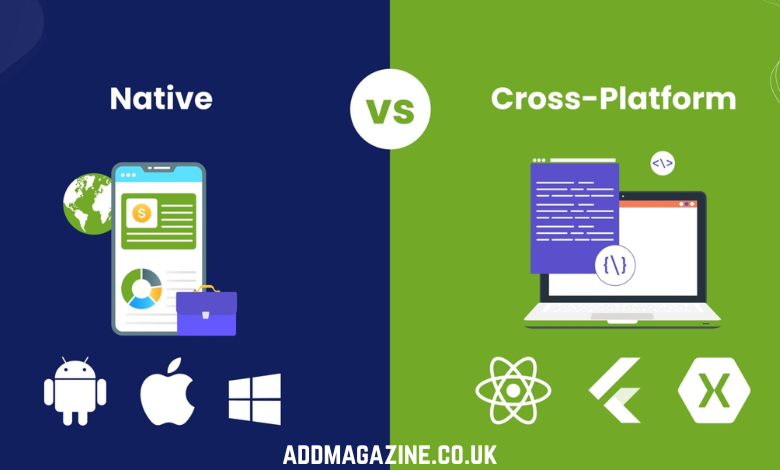
The mobile landscape in early 2026 is defined by a paradox of choice. On one hand, hardware has become incredibly powerful, with mobile chips now rivaling desktop performance. On the other, the cost of specialized labor remains high, and time-to-market is the primary metric for business success. Companies no longer ask if they should build an app, but how they can sustain one without exhausting their budget. The technical gap between native and cross-platform tools has narrowed, yet the strategic differences remain as sharp as ever.
In this current technological landscape, the decision-making process involves balancing user experience with resource allocation. When organizations look to hire mobile app developers, they must look beyond simple coding skills. They need architects who understand the nuances of the 2026 mobile ecosystem. The choice between a native stack and a cross-platform framework is no longer just about performance. It is about how your product will scale across different hardware profiles, from high-end flagship devices to budget-friendly models in emerging markets.
Many businesses find that they need a tailored approach rather than a universal template. To stay competitive, you might need to hire app programmer specialists who can navigate the complexities of specific operating systems or unified codebases. Whether you are building a high-frequency trading platform that requires millisecond precision or a lifestyle app focused on visual polish, the expertise of your team determines your long-term viability. Choosing the wrong path early on can lead to technical debt that slows down future updates and increases maintenance overhead.
The Evolution of Native Development: Insights into Swift & Kotlin in 2026
In 2026, native development remains the gold standard for applications that require deep hardware integration. Apple’s SwiftUI and Google’s Jetpack Compose have reached full maturity. They allow developers to build fluid, responsive interfaces with less boilerplate code than previous generations.
Why Choose Native in 2026?
- Low-Level Hardware Access: If your app relies heavily on the latest LiDAR sensors, advanced biometrics, or custom GPU shaders, native is the only way to go.
- Predictable Performance: Native apps have direct access to the device’s CPU and memory without an abstraction layer. This is critical for AAA games or real-time video editing.
- Zero-Day Support: When a new version of iOS or Android is announced, native developers can implement the latest features immediately.
- Battery Efficiency: Native code is generally more efficient at managing background tasks and power consumption.
Native development is ideal for enterprises that view their mobile app as their primary product rather than a secondary channel. While it requires two separate teams, one for Swift and one for Kotlin, the result is a product that feels “at home” on the device.
The Evolution of Cross-Platform Frameworks
The argument that cross-platform apps feel “sluggish” is largely a relic of the past. By 2026, frameworks like Flutter and React Native have refined their rendering engines to eliminate the “bridge” bottlenecks that once plagued them.
Flutter and the Impeller Engine
Flutter has now standardized the Impeller rendering engine across all platforms. This architecture moves away from runtime shader compilation, which was the main cause of “jank” or stutter in older apps.Today, Flutter apps achieve a consistent 120 FPS on high-refresh-rate screens, making them nearly indistinguishable from native builds in most scenarios.
React Native’s New Architecture
React Native has fully shifted to its “New Architecture,” which uses the JavaScript Interface (JSI). This allows for synchronous communication between the logic and the native layers. This advancement has significantly improved the performance of heavy lists and complex animations, making it a favorite for data-heavy business applications.
The “Middle Way”: Kotlin Multiplatform (KMP)
A significant trend in 2026 is the rise of Kotlin Multiplatform. Unlike traditional cross-platform tools that draw their own UI, KMP focuses on sharing business logic while keeping the user interface 100% native.
| Feature | Flutter / React Native | Kotlin Multiplatform | Native (Swift/Kotlin) |
| Code Sharing | UI + Business Logic | Business Logic only | None |
| UI Type | Custom/Drawn | Native (SwiftUI/Compose) | Native |
| Performance | High (Near-native) | Native | Native |
| Dev Speed | Very Fast | Fast | Moderate |
This “dual-core” strategy allows a single team to write the core networking, caching, and data logic once. Then, the iOS developer uses SwiftUI for the front end, and the Android developer uses Jetpack Compose. This ensures the app feels perfectly native to the user while cutting development effort by nearly 40%.
Decision Framework: When to Hire Which Expert
Choosing your team depends on your specific business goals. There is no longer a “better” technology, only a better “fit.”
Scenario A: High-Performance and Hardware-Centric
If you are building an augmented reality (AR) navigation tool or a professional audio recording suite, you should hire mobile app developers with deep native expertise. The complexity of these tasks requires direct access to the kernel and specialized SDKs provided by Apple and Google.
Scenario B: Rapid Market Entry and Consistent UI
If you are a startup building a social media platform or a delivery service, cross-platform is usually the better choice. You can launch on both stores simultaneously with a smaller team. This allows you to test your product-market fit without doubling your initial investment. In these cases, it is wise to hire app programmer talent specializing in Flutter or React Native to ensure a unified experience across all user devices.
Scenario C: Long-Term Enterprise Scalability
For large organizations with existing web and mobile assets, Kotlin Multiplatform is the modern answer. It allows you to stabilize your core logic across the entire company while giving your designers the freedom to use the best native UI components for each platform.
Cost Considerations and ROI
While the upfront cost of hiring two native teams is higher, the long-term ROI can be better for apps that require extreme stability. However, for 90% of business applications, cross-platform solutions offer a more attractive financial profile.
- Maintenance: Fixing a bug in a shared codebase updates both platforms at once, reducing long-term maintenance costs by nearly half.
- Talent Pool: React Native allows you to leverage web developers (JavaScript/TypeScript), while Flutter has a rapidly growing community of dedicated enthusiasts.
Final Thoughts: Building for the Future
As we move through 2026, the definition of a “mobile app” continues to refine itself. We are seeing more integration with wearable tech, foldable screens, and low-latency edge computing. The choice between native and cross-platform is no longer a binary struggle of quality versus cost. Instead, it is a sophisticated calculation of intent.
Native development remains the choice for those who want to push the boundaries of what a handheld device can do. Cross-platform is the choice for those who want to reach the widest possible audience with the greatest efficiency.By understanding the strengths of each approach, you can build a product that not only works today but remains maintainable as the mobile ecosystem continues to evolve.