Smart glasses have promised an always-on, everywhere display for years. In reality, most fall apart the moment you step outside. Sunlight drowns the screen, text vanishes, and what was supposed to be a hands-free future becomes an exercise in frustration.
The RayNeo X3 Pro attacks this problem head-on with a 6,000-nit MicroLED engine — a brightness figure that dwarfs anything else in consumer AR. But specifications on paper and performance under direct sunlight are very different things. I set out to test whether this display actually delivers outdoors.
Why Outdoor Visibility Is Still AR’s Biggest Weakness
AR displays overlay digital images onto the real world through a transparent lens. Outdoors, that overlay must compete with ambient light that can reach tens of thousands of lux. Most AR glasses today top out at brightness levels far below what comfortable outdoor reading demands.
The result is predictable. Step outside on a clear day and the display becomes a pale ghost against the sky. This limitation has effectively kept smart glasses tethered to indoor or shaded environments, undermining the core promise of augmented reality that works everywhere.
For many early adopters, this is exactly the reason their smart glasses end up in a drawer after a few weeks. Overcoming the outdoor visibility gap demands more than incremental brightness improvements — it requires rethinking the display engine and the optical pipeline from scratch.
The Technology Behind the Brightness Claim
RayNeo’s approach differs fundamentally from what most Smart Glasses brands rely on today. Instead of using Micro-OLED or LCoS panels — technologies that have defined the category for years — the X3 Pro is built around a custom MicroLED optical engine called Firefly.
MicroLED vs. Micro-OLED
MicroLED panels emit light directly from each pixel, producing significantly higher brightness than Micro-OLED alternatives. In outdoor AR, that raw brightness translates to stronger ambient contrast — the ability to remain readable against a bright background. MicroLED is also inorganic, so it resists burn-in and holds color accuracy at extreme output levels.
What 6,000 Nits Peak Brightness Actually Means
For context, flagship smartphones today peak at roughly 2,000 to 3,000 nits. The RayNeo X3 Pro reaches 6,000 nits at peak and sustains an average of 3,500 nits. That sustained figure may matter more for daily AR use, because maintaining peak output continuously would likely exceed the thermal and power budget of a 76-gram device.
Waveguide and Optical Design
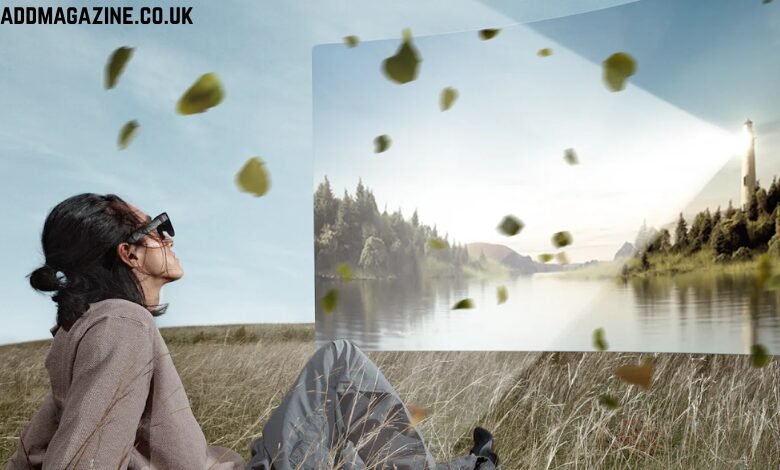
Brightness at the light engine is only part of the equation — waveguides inherently lose a significant portion of light during delivery. The X3 Pro uses a nanolithography-etched diffractive waveguide to route MicroLED output toward both eyes, and the high starting brightness of the Firefly engine is designed to compensate for that optical loss. The delivered result is a binocular full-color display equivalent to viewing a 43-inch screen from two meters away.
Testing the X3 Pro in Real Outdoor Conditions
Raw specifications only tell part of the story. The real question is whether the RayNeo X3 Pro’s brightness advantage translates into a functional experience when you are actually standing in sunlight with the glasses on. Two scenarios stood out during testing.
Bright Sunlight Performance
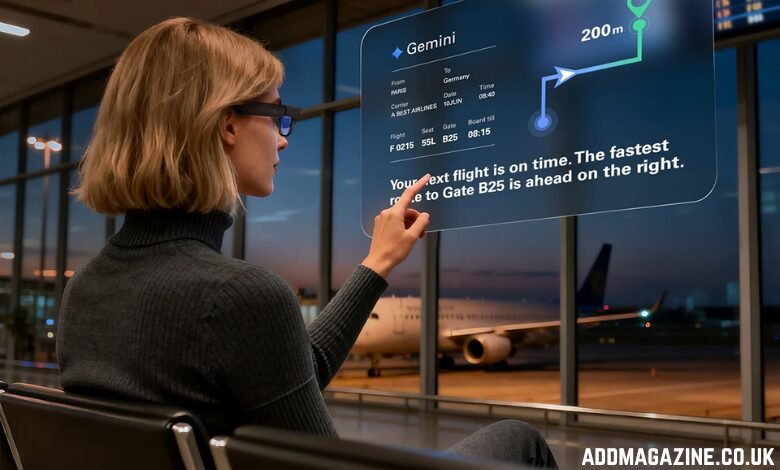
Under direct midday sun, the AR navigation overlay remained legible. Street names and directional arrows were visible enough to follow without shading the lens by hand. At 3,500 nits sustained brightness, text held contrast against bright pavement and sky. It was not perfect in the harshest glare, but it was genuinely usable — a clear step forward from other smart glasses I have tested in similar conditions.
Overcast and Mixed Lighting
In overcast and shaded conditions, the display became noticeably easier to read. Color saturation improved, and the heads-up navigation felt closer to an indoor experience. An ambient light sensor adjusts brightness automatically, which prevents the display from becoming overly harsh when lighting conditions change unexpectedly throughout the day.
How the RayNeo X3 Pro Compares
Brightness numbers mean more in context. Note that each product uses a different optical architecture, so nit figures reflect manufacturer-stated specs rather than a single standardized measurement.
Why the Numbers Favor the X3 Pro
The Xreal Air 2 Ultra offers a wider field of view but falls well short on brightness, making outdoor use difficult. Meta Ray-Ban Display reaches 5,000 nits — impressive — yet its monocular design limits the display to one lens only. The RayNeo X3 Pro combines high brightness with binocular full-color AR and a complete spatial operating system powered by Gemini 2.5, which gives it the most well-rounded outdoor package among current options.
What Else Outdoor Users Should Know
A bright display matters most, but it is not the only factor that shapes whether smart glasses work reliably outside. Weight, battery life, and connectivity also influence the outdoor experience in ways that spec sheets sometimes obscure.
Weight, Fit, and All-Day Comfort
At roughly 76 grams, the X3 Pro is lighter than most AR glasses with comparable feature sets. The titanium alloy frame and adjustable nose pads allow extended outdoor wear without noticeable discomfort. That low weight also reduces the tendency for glasses to slip during physical activity like walking or cycling.
Battery Life and Charging
RayNeo rates the X3 Pro for up to three hours of music playback, five hours of recording, and approximately 36 minutes of continuous video capture. A full recharge takes about 38 minutes via USB-C. However, battery life is a known weak point — early reviews suggest real-world use with navigation or AI may drain the 245 mAh cell considerably faster than those official figures imply. The ability to charge while wearing helps, but heavy outdoor users should plan around frequent top-ups.
What This Signals for the Smart Glasses Market
Outdoor visibility has been the quiet disqualifier for smart glasses trying to break beyond niche adoption. If the X3 Pro’s MicroLED approach proves durable and scalable, it may mark a turning point — the moment AR glasses become genuinely practical for everyday outdoor tasks rather than indoor-only conveniences.
For now, the RayNeo X3 Pro stands as a strong proof of concept that outdoor-readable AR is technically achievable at consumer scale.
The Verdict
Can you actually see the RayNeo X3 Pro outdoors? Yes — and the difference compared to previous smart glasses I have tested is substantial. The 6,000-nit MicroLED display does not make sunlight irrelevant, but it closes the gap enough to make outdoor AR genuinely functional rather than aspirational.
That said, the X3 Pro is not without trade-offs. Battery life remains a real constraint, and the $1,299 retail price puts it firmly in early-adopter territory. If outdoor visibility has been the one thing holding you back from smart glasses, the X3 Pro makes the strongest case yet — just go in with realistic expectations about endurance.