Building a custom icon set from scratch is a massive drain on design resources. A team might start with good intentions, drawing a few dozen perfectly matched interface icons. Six months later, the product scales, new features require obscure visual metaphors, and the design team cannot keep up with the demand. The result is usually a fragmented interface where line weights clash and corner radiuses mismatch.
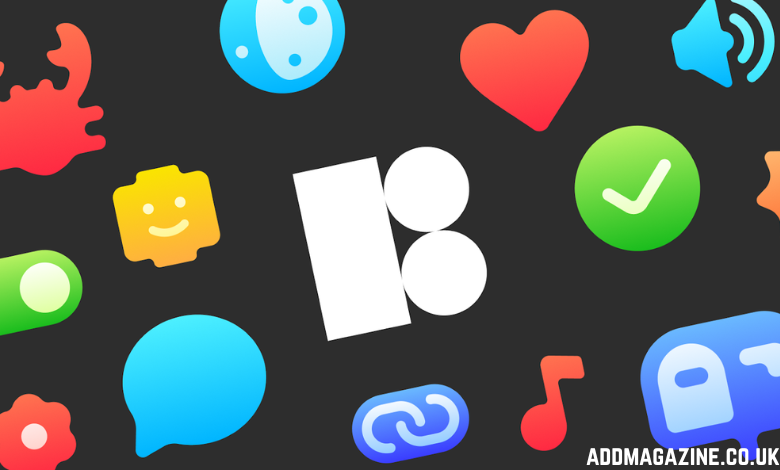
The core challenge for product teams is maintaining a consistent visual language across platforms without dedicating a full-time designer to drawing icons. Icons8 addresses this specific problem by offering over 1,476,100 icons categorized into strict visual styles. Instead of building and maintaining every asset in house, teams can adopt a pre-existing style pack that already contains enough variety to cover edge cases.
Scaling Product Design Workflows
When a UI designer is tasked with overhauling a complex enterprise application, icon consistency is an immediate hurdle. A typical workflow using Icons8 starts directly inside the design tool.
Because this single style pack contains over 17,000 icons, they know they will not run out of matching assets halfway through the project. They search for standard navigation elements like user profiles and settings, dragging them directly onto the canvas.
Later in the project, they realize the dashboard needs a specific status indicator combining a database symbol with a warning sign. Instead of drawing this manually, they click into the Icons8 in-browser editor. They load the database icon, use the subicon feature to overlay a warning triangle in the exact same style, adjust the padding, and scale the asset. They save this custom combination to a project Collection. Once the dashboard is approved, the designer uses the bulk recolor tool to apply the client’s exact HEX brand color to the entire Collection, exporting the batch as an SVG sprite to hand off to the engineering team.
Implementing Assets in Front-End Development
Developers have entirely different requirements when interacting with visual assets. A front-end developer building a cross-platform mobile app needs specific formats and optimized delivery methods, not just static image files.
This developer starts by searching the Icons8 library by text to find navigation icons compliant with Android Material Design guidelines. To keep the app bundle size small, they skip downloading files entirely. They select the required icons and copy the Base64 HTML fragments, embedding the images directly into the codebase.
For the app’s onboarding sequence, the developer needs smooth, scalable animations. They filter the search results to show only animated icons. They find a suitable loading sequence, bypass the basic GIF format, and download the Lottie JSON file. This format ensures the animation remains crisp on high-resolution mobile displays while maintaining a tiny file size. By relying on the CDN embed links and Base64 fragments for static elements, the developer completes the UI implementation without ever bloating the project directory with raw image files.
A Typical Workday Managing Assets
For a content manager building marketing materials, speed and accessibility are the primary concerns. Their workflow is highly tactical.
A content manager starts the morning drafting a product announcement presentation. They open the Google Docs add-on to access the library without leaving their workspace. They need a graphic to match an older slide deck but do not know the name of the original icon style. They take a screenshot of the old graphic and use the search by image feature. The system identifies the matching style as 3D Fluency.
Later, they need a few expressive reactions for a social media graphic. They navigate to the styles menu and browse the emojis pack, filtering for the exact facial expressions required. They use the in-browser editor to add a flat background color behind the graphics, scaling the padding to fit their template. They download the final assets as PNG files and drop them directly into their social media scheduling tool, completing the task in minutes rather than waiting on the design department.
Practical Tips for Better Icon Workflows
Getting the most out of a massive library requires understanding the underlying tools.
First, pay attention to the vector settings. By default, Icons8 provides simplified SVGs. This is ideal for web implementation because it reduces file size. If you plan to import the file into Lunacy or Illustrator to modify the actual vector paths, you must uncheck the simplified setting before downloading.
Second, utilize the Collection sharing feature for team alignment. When you organize assets into a Collection, you can generate a share link. Sending this link to a colleague automatically clones the entire collection into their account. This ensures everyone on the team pulls from the exact same pool of approved assets.
Third, leverage the icon request system for missing metaphors. If you search for a highly specific industry concept and find nothing, you can submit a request. The system relies on community voting. Once a request hits 8 likes, the in-house designers begin production on it.
Icons8 vs. Alternatives
Teams often compare Icons8 with open-source icon libraries and aggregate platforms.
Open-source options, like Feather or Heroicons, are great for early-stage projects. They are free and feature cohesive, aesthetically pleasing designs. However, they have limitations in scale, typically offering only a few hundred icons. When your product needs icons for specific or niche concepts, open-source packs might fall short.
On the other hand, aggregate services like Noun Project provide millions of icons from a variety of creators. While this ensures availability of a wide range of icons for any concept, it introduces challenges with visual consistency. The varying design styles across authors can result in mismatched line weights and corner radiuses, leading to time-consuming efforts in finding cohesive icons. Icons8 solves this by offering large, carefully curated style packs designed by their in-house team, ensuring visual consistency across icons.
When Icons8 May Not Be the Best Choice
Icons8’s free tier comes with significant limitations. Free users only have access to raster formats, such as PNGs at a maximum resolution of 100px, and are required to provide attribution by linking back to the site. For access to vector formats like SVG or PDF—necessary for professional web and print work—a paid plan, starting at $13.25 per month, is required.
If your project only requires a small set of basic icons, such as 20 navigation icons, you may find open-source packs more than sufficient, eliminating the need for a subscription.
Additionally, Icons8 may not be the right choice for companies requiring a unique, custom-made icon set for brand differentiation. If your brand guidelines call for highly distinct, custom-designed icons, you would still need to hire a dedicated illustrator to create and maintain that exclusive collection.