
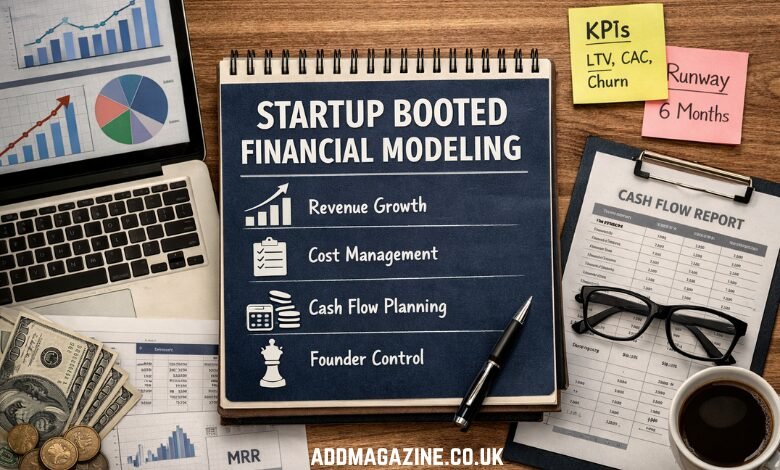
In the competitive world of startups, bootstrapping is a model that many founders choose to scale their businesses without external funding. Unlike venture capital-backed companies that rely on outside investors to fuel their growth, bootstrapped startups depend entirely on the founder’s capital, early revenue generation, and a disciplined reinvestment strategy. This self-reliant approach allows founders to retain control and equity over their companies. However, to grow sustainably, bootstrapped businesses must operate with precision and financial discipline.
At the heart of this process is bootstrapped financial modeling. It’s not just about tracking numbers on a spreadsheet—it’s about creating a roadmap for financial decisions that ensures a startup can grow at a steady pace, without running out of cash, while maintaining ownership and control. This guide takes you through how founders can effectively build and implement bootstrapped financial models to drive sustainable growth in their startups.
The Core Concept of Bootstrapped Financial Modeling
Bootstrapped financial modeling differs significantly from venture capital-funded financial planning. The fundamental approach here is:
- Revenue-first growth: The priority is to generate income from customers, which becomes the main source of funding, rather than seeking outside investment.
- Lean cost management: Founders are keen on minimizing unnecessary overhead, keeping costs lean, and avoiding an excessive burn rate.
- Founder control: Bootstrapping allows founders to maintain 100% control of the business, unlike venture-backed startups that have to answer to investors.
- Sustainability: Rather than rapid growth at all costs, the focus is on building a business that can stand on its own two feet without needing external cash inflows.
This financial model ensures that every dollar earned is reinvested thoughtfully to maintain the business’s health and grow at a manageable pace.
Why Is Bootstrapped Financial Modeling Important?
1. Ownership and Control
One of the biggest advantages of bootstrapping is that founders retain full control over their companies. Unlike investor-funded startups, which must answer to venture capitalists or angel investors, bootstrapped companies allow founders to make key decisions without external pressures.
2. Operational Discipline
Bootstrapped financial modeling promotes discipline across all areas of the business, from hiring practices to marketing and product development. Forecasting and budgeting ensure that spending is aligned with income, and the business doesn’t overextend itself.
3. Investor Readiness
Though bootstrapped startups don’t seek outside funding initially, having a strong financial model helps founders prepare for future investment opportunities. A clear, well-organized financial model signals operational maturity, making it easier to attract investors when the time is right.
4. Sustainable Growth
Rather than relying on external funding to fuel rapid growth, bootstrapped startups grow at a more sustainable pace. With solid financial forecasting, founders can avoid pitfalls like over-expansion or running out of cash.
5. Risk Management
Having a robust financial model enables founders to anticipate challenges in cash flow and other financial aspects. This proactive approach allows them to pivot when necessary and avoid surprises that could threaten the viability of the business.
The Building Blocks of a Bootstrapped Financial Model
A successful bootstrapped financial model consists of several core components that help founders track and manage their startup’s financial health:
1. Revenue Streams
For a bootstrapped startup, the key to sustainability is reliable, recurring revenue. Revenue streams could include:
- Subscriptions (e.g., SaaS products, memberships)
- Service Fees (e.g., consulting, freelancing)
- One-time Sales (e.g., product sales, workshops)
Forecasting these streams with realistic assumptions is critical for understanding how much cash the business can generate in the future.
2. Cost Structures
A bootstrapped startup must categorize its costs into two main buckets:
- Fixed Costs: These are costs that don’t change regardless of the level of business activity, such as salaries, rent, and utilities.
- Variable Costs: These costs fluctuate with business activities, like marketing expenses, payment processing fees, and shipping costs for e-commerce businesses.
By maintaining a tight grip on both fixed and variable costs, founders can keep burn rates low and optimize their spending.
3. Operational Expenses
Operational expenses are the costs involved in running the business day-to-day. These expenses include:
- Staffing: Salary payments for employees or contractors.
- Marketing: Expenses related to digital advertising, SEO, content creation, etc.
- Software and Tools: Subscriptions for software, SaaS products, and platforms necessary to run the business.
- Infrastructure: This includes office space, hardware, and other resources needed to keep the business running smoothly.
4. Capital Expenditure (CapEx)
CapEx refers to one-time, significant expenditures that are necessary for the business, such as:
- MVP Development: Costs associated with building the Minimum Viable Product (MVP) in the early stages.
- Office Setup: For businesses that operate from a physical location, office furniture and equipment would fall under CapEx.
- Hardware: Purchasing computers, servers, and other hardware necessary for operations.
Building a Financial Forecast
Once the revenue streams and cost structures are defined, the next step is to build a financial forecast. For a bootstrapped startup, this process can be broken down into the following steps:
1. Revenue Forecasting
Revenue forecasting begins with estimating sales based on realistic assumptions about customer acquisition. This involves considering factors such as:
- Pricing Strategy: Determining the optimal cost of your product or service to maximize value and drive customer demand.
- Sales Volume: The number of customers expected to purchase the product.
- Churn Rate: The rate at which customers leave or stop using the service.
For example, a SaaS business might estimate that it will acquire 50 new customers each month, at a monthly subscription fee of $100. This translates into predictable recurring revenue, which is a hallmark of bootstrapped business models.
2. Cost Forecasting
Cost forecasting helps to estimate both fixed and variable costs over a set period. Founders need to keep track of:
- Monthly Operating Costs: This includes salaries, software subscriptions, and rent.
- Marketing Expenses: This could be linked to customer acquisition cost (CAC), which indicates how much it costs to bring in each customer.
- Employee Costs: Salaries, taxes, and benefits need to be considered when forecasting monthly expenses.
3. Cash Flow Projections
A critical aspect of bootstrapped financial modeling is cash flow projections. This is important for ensuring that the startup has enough liquidity to cover expenses and continue operations. It’s crucial to ensure that cash inflows exceed outflows for a startup to remain viable.
4. Break-even Analysis
The break-even point is when revenue covers all operational costs. It’s essential for bootstrapped startups to know when they’ll hit break-even and start generating a profit. This analysis helps founders make informed decisions about when to scale and invest more resources.
5. Scenario Planning
Scenario planning is the process of forecasting various financial outcomes based on different assumptions. For example:
- Best-case scenario: The startup successfully acquires more customers than expected.
- Worst-case scenario: Sales fall short, or unexpected expenses arise.
- Most likely scenario: A realistic mix of growth and challenges based on past performance and market trends.
This helps founders prepare for uncertainty and plan for multiple eventualities.
Key Metrics for Bootstrapped Financial Modeling
Certain metrics are critical for measuring the performance of a bootstrapped startup. These include:
1. Monthly Recurring Revenue (MRR)
MRR is the amount of predictable revenue a startup expects to earn each month, especially important for subscription-based businesses like SaaS.
2. Customer Acquisition Cost (CAC)
This refers to the expenses involved in gaining a new customer, including marketing, sales, and other related costs. This could include marketing expenses, sales team costs, etc.
3. Customer Lifetime Value (LTV)
LTV measures the total revenue a customer will generate throughout their relationship with the company. It’s crucial for determining how much a startup can afford to spend on customer acquisition.
4. Churn Rate
Churn rate is the percentage of customers who leave the service during a given period. A high churn rate could signal issues with the product or service.
5. Runway
The runway is how long a startup can survive with its current cash reserves before needing additional funding or revenue.
Tools for Bootstrapped Financial Modeling
Several tools can help founders build and track their financial models:
- Google Sheets or Excel: These tools offer flexibility and allow founders to create customized financial models from scratch.
- QuickBooks: For managing accounting and bookkeeping.
- ChartMogul: A tool for tracking SaaS metrics like MRR and LTV.
- Fathom or LivePlan: These tools offer advanced financial forecasting and scenario planning features.
Pitfalls to Avoid in Bootstrapped Financial Modeling
While creating a bootstrapped financial model, there are a few common mistakes founders should avoid:
1. Overestimating Revenue
It’s easy to be optimistic about future revenue, but overestimating can lead to unrealistic projections and cash flow problems.
2. Underestimating Costs
Be sure to account for all potential expenses, especially hidden ones like taxes, software updates, or unforeseen events.
3. Ignoring Cash Runway
If cash runs out before the startup reaches profitability, the business will face serious challenges. Always keep an eye on cash runway.
4. Overcomplicating the Model
Simplicity is key. Don’t overcomplicate your financial model with unnecessary details. Focus on the most critical aspects.
Conclusion
Bootstrapped financial modeling is an essential skill for any startup founder who wants to retain control and grow sustainably. By focusing on revenue-driven growth, managing costs effectively, and forecasting with discipline, founders can build businesses that are resilient and financially sound. This model also helps create a roadmap for future investments, making the business more attractive to potential investors down the line. Ultimately, bootstrapped financial modeling is a powerful tool that helps founders maintain control while scaling their business without external funding.