
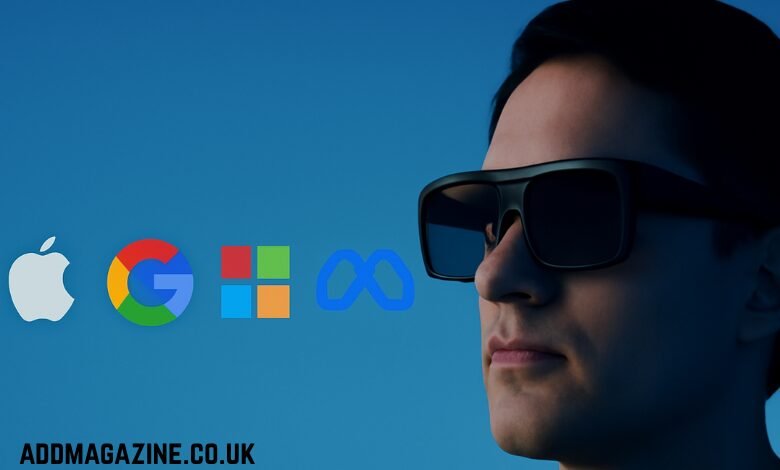
The world of technology is evolving at a rapid pace, and the big players in the industry are constantly pushing the boundaries of what’s possible. While smartphones have been the dominant device in recent years, leading companies such as Microsoft, Google, Apple, and Amazon are now looking beyond the small screens and focusing their efforts on what comes next. These companies are shifting their focus from the traditional smartphone era and embracing new technologies that will shape the future.
The Rise of Ambient Computing
One of the key areas that tech giants are exploring is ambient computing. This concept envisions a world where technology is seamlessly integrated into our daily lives, without the need for handheld devices. The idea is to create an environment where sensors, wearables, and other connected devices work together to provide information and services automatically, without requiring any input from the user. The goal is for technology to be invisible and constantly available, functioning in the background without interruption.
Companies like Google and Apple have already made strides in this direction with products such as Google Assistant and Apple’s Siri, but these are just the beginning. The true potential of ambient computing lies in the development of smarter, more intuitive systems that can anticipate our needs and react in real-time. This includes advancements in artificial intelligence (AI) and machine learning, which are enabling devices to understand and predict user behavior.
Google’s investment in AI and augmented reality (AR) reflects this shift. Their focus on developing systems that can interact with the environment, understand context, and provide relevant information is paving the way for a future where we rely less on screens and more on the world around us.
Augmented and Virtual Reality (AR/VR)
Another area where tech giants are focusing is augmented reality (AR) and virtual reality (VR). These technologies are designed to enhance or completely replace the physical world with digital information, providing new ways to interact with data and applications. Beyond entertainment, industries like construction and manufacturing are increasingly adopting virtual reality safety training to allow employees to practice emergency procedures in a risk-free, immersive environment. While smartphones were initially thought to be the primary platform for AR and VR experiences, the vision for the future goes beyond that.
Apple, in particular, has been very vocal about its future in AR. The company is investing heavily in AR technologies, with a focus on developing new hardware and software that will allow users to interact with the world in more immersive and natural ways. Their ARKit framework is already allowing developers to build AR applications for iPhones and iPads, but the company is also rumored to be working on a pair of AR glasses that could replace the need for smartphones altogether.
Microsoft, on the other hand, is betting big on mixed reality (MR) with its HoloLens. This device blends the physical and digital worlds, allowing users to interact with holograms in real-time. As the technology improves, we may see more widespread adoption of MR devices, making it possible to interact with computers and data in entirely new ways, without the need for traditional screens or input devices.
Facebook (now Meta) is also heavily invested in the development of virtual reality. Their Oculus platform has already brought immersive VR experiences to the masses, and they are now working on developing the Metaverse—a digital universe where users can interact with each other and digital environments in real-time. The Metaverse represents a bold vision for the future of computing, where users will be able to access information, entertainment, and work in entirely new ways, all without the need for a smartphone or laptop.
Wearables and the Internet of Things (IoT)
While AR and VR focus on enhancing our visual and interactive experience, wearables and the Internet of Things (IoT) are focusing on integrating technology directly into our bodies and environments. Wearables such as smartwatches, fitness trackers, and even smart clothing are already becoming commonplace, allowing users to track their health, receive notifications, and interact with their devices in new ways.
Apple’s Apple Watch and Google’s Fitbit are two of the leading products in this space, but there is a growing push to expand the possibilities of wearables. Companies are now exploring ways to incorporate more advanced sensors and capabilities into wearable devices, allowing for more personalized and context-aware experiences. For example, future wearables could monitor your body’s temperature, stress levels, or even detect early signs of disease, providing real-time health data and potentially saving lives.
The IoT is also playing a major role in the vision for a future beyond smartphones. The IoT refers to the network of interconnected devices that can communicate with each other, creating a smart environment where devices can work together to make our lives easier. Smart homes, for instance, allow users to control their lighting, heating, security, and appliances with their smartphones, but in the future, this could be taken a step further. Smart devices could anticipate your needs, adjust settings automatically, and even detect changes in your environment, making your home smarter and more responsive.
Companies like Amazon, with its Alexa voice assistant, and Google, with its Google Home platform, are already leading the charge in the smart home space. However, the future holds even greater potential, with advancements in AI, 5G connectivity, and sensor technology paving the way for a more intelligent and autonomous ecosystem.
The Evolution of Voice-First Interactions
Another area where smartphones may become less important is in voice-first technology. Voice assistants like Amazon’s Alexa, Google Assistant, and Apple’s Siri are already gaining popularity, allowing users to interact with their devices using only their voice. As these systems become more advanced, we can expect voice-first technology to replace many of the functions that were previously performed on smartphones.
Voice-first interactions are particularly useful in hands-free environments, such as when driving, cooking, or exercising. As these technologies evolve, they could become the primary means of interacting with devices, reducing the need for touchscreens and physical input. This could lead to a world where voice assistants control everything from your home appliances to your car, and even your workplace.
Microsoft’s recent investments in voice technology, including the acquisition of Nuance Communications, a leader in AI-powered speech recognition, signals the growing importance of voice interactions in the future of computing. Voice technology will become more intelligent, context-aware, and capable of understanding complex commands, leading to a more seamless and efficient user experience.
The Role of 5G and Edge Computing
While the shift away from smartphones is exciting, it would not be possible without the infrastructure to support these new technologies. 5G networks are critical to enabling the future vision of tech giants. 5G promises faster speeds, lower latency, and more reliable connections, which will be essential for the widespread adoption of AR, VR, IoT, and other advanced technologies.
Edge computing is also playing a vital role in the future beyond smartphones. By processing data closer to the source, edge computing reduces the need to rely on centralized cloud servers, enabling faster and more efficient data processing. This is particularly important for real-time applications, such as autonomous vehicles, smart cities, and industrial automation, where speed and reliability are critical.
With the combination of 5G and edge computing, we can expect a world where data is processed faster, devices are more responsive, and technologies like AR and IoT can function seamlessly in real-time.
The Future of Work and Collaboration
Tech giants are also envisioning a future beyond smartphones when it comes to the workplace. Remote work and virtual collaboration have become more common over the past few years, and this trend is likely to continue in the future. Companies are investing in new tools and platforms that will enable workers to collaborate and communicate more effectively, regardless of location.
The development of virtual workspaces, such as the Metaverse, could revolutionize the way we work and interact with colleagues. Instead of relying on video calls and chat platforms, employees could meet in virtual environments where they can interact with each other in real-time, share files, and collaborate on projects in a more immersive and natural way. This could lead to a shift away from traditional office setups and a greater reliance on virtual collaboration tools.
Conclusion
The future beyond smartphones is not just about the next iteration of mobile devices; it’s about creating a more seamless, intuitive, and immersive experience for users. As tech giants invest in new technologies such as ambient computing, AR/VR, wearables, and voice-first interactions, we can expect a world where technology is less obtrusive and more integrated into our daily lives. The next wave of innovation will be driven by AI, 5G, edge computing, and new interaction models, making it possible to interact with technology in ways we can’t yet fully imagine. While smartphones may have dominated the tech landscape for the past decade, the future holds exciting possibilities, and the tech giants are already leading the way.