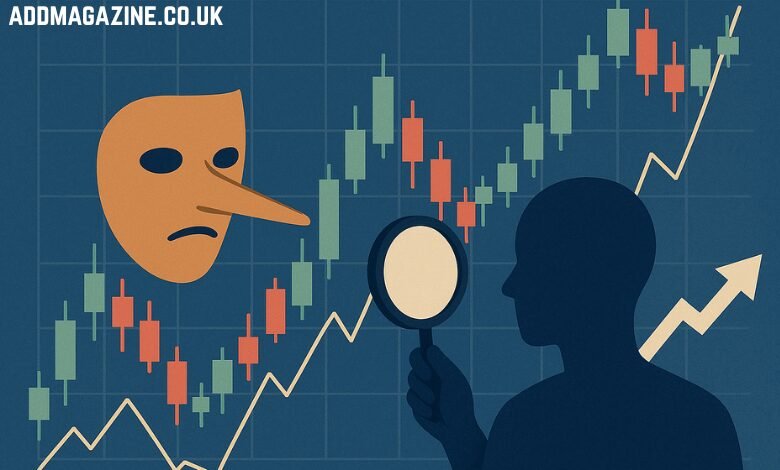
Trading more feels productive. Screens glow, orders fire, the day fills up. Trading smarter feels quiet. Almost suspiciously calm. One looks like work. The other looks like a restraint. Guess which one survives.
Most traders don’t lose because they’re wrong about markets. They trade more to fix problems that require less trading. It’s backwards, but it’s common. Spend enough time on a platform like Niobrix, and the pattern becomes obvious.
More Trades Create Noise. Smart Trades Create Clarity.
When frequency goes up, clarity drops. Decisions stack on decisions. Small mistakes hide inside momentum. You don’t notice the leak until the room floods.
Trading more usually means:
- Lower-quality entries justified by “opportunity”
- Overlapping positions that cancel each other out
- Emotional fatigue disguised as confidence
Smart trading does the opposite. It reduces inputs. Fewer decisions. Fewer variables. Less room for damage.
This isn’t about laziness. It’s about cognitive load. The brain only has so much bandwidth before it starts lying to itself. Smart traders protect that bandwidth like capital.
Smart Traders Measure Process, Not Adrenaline
High activity creates adrenaline. Adrenaline feels like focus. It isn’t.
Professionals watch different metrics. Quiet ones. Boring ones. The kind that don’t trend on social feeds.
They track:
- Time between trades, not just outcomes
- Rule adherence during drawdowns
- Execution quality when markets speed up
These things don’t spike dopamine. They build consistency.
On Niobrix, traders who slow down often notice execution improves without changing strategy. Slippage tightens. Errors drop. P&L stabilizes. Same market. Same tools. Different behavior.
Trading More Is Often a Fear Response
Here’s the part nobody likes admitting.
Overtrading usually starts with fear. Fear of missing out. Fear of falling behind. Fear that if you don’t act now, you’ll never catch up.
So you act. Again. And again. And again. Smart traders feel the same fear. They just don’t obey it.
They pause. They wait for alignment. They accept boredom as part of the job. That acceptance alone filters out half the bad trades.
Trading smarter often looks like:
- Passing on “almost” setups without regret
- Stopping after hitting daily limits, even early
- Letting the market come to them
This restraint shows up clearly when you review histories on Niobrix. High-frequency days cluster losses. Low-frequency days cluster clarity. It’s not subtle if you’re honest.
Efficiency Beats Intensity (Every Time)
Intensity burns out fast. Efficiency compounds.
Smart traders aren’t trying to win every hour. They’re trying to make the same good decision repeatedly under different conditions. That requires energy conservation.
They design rules that remove choice:
- Fixed risk per trade, no improvisation
- Predefined windows for trading
- Hard stops for daily damage
Once rules exist, trading becomes mechanical. Less exciting. More durable.
Trading more ignores this. It treats each trade as a fresh chance to prove something. Smarter trading treats each trade as a small sample in a long series. Ego disappears when series thinking takes over.
The Platform Doesn’t Care. You Should.
Here’s a hard truth: platforms don’t reward effort. They execute instructions. That’s it.
Niobrix doesn’t know if you’re tired, tilted, or chasing losses. It just fills orders. That neutrality exposes behavior over time.
When traders finally review their data, really review it, they notice patterns they’ve been defending for months:
- Losses spike late in sessions
- Win rate drops after three consecutive trades
- Performance improves on days with fewer clicks
That’s not market mystery. That’s human behavior.
Smart Trading Is Often Smaller Trading
Smarter trading rarely means bigger positions or more markets. It usually means less.
Less screen time. Less reacting. Less forcing.
It feels counterintuitive because effort culture is loud. More hours. More trades. More hustle. Markets don’t care about hustle. They care about timing, risk, and execution.
Traders who internalize this shift start using platforms like Niobrix differently. Not as a casino. Not as a battlefield. As an operating system. Clean inputs. Predictable outputs.
The Quiet Advantage
Trading smarter won’t impress anyone watching over your shoulder. There’s nothing to see. No flurry of orders. No heroic recoveries. Just a steady process doing what it does. That’s the advantage.
Most traders never slow down long enough to notice what actually moves their results. They keep trading more, hoping volume will solve a precision problem.
It won’t. Trading smarter isn’t about doing less forever. It’s about doing only what matters and cutting everything else without mercy. Once that clicks, performance stops feeling random.
And that’s when things finally change.