
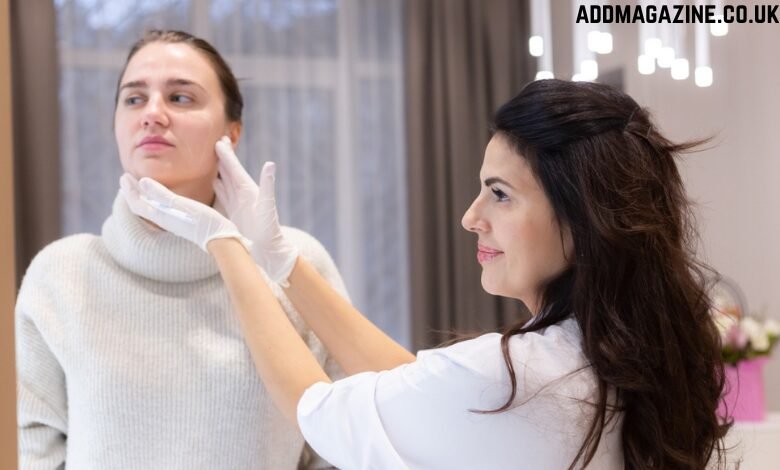
You’ve probably noticed it already. Maybe on Instagram. Maybe in real life, at brunch, staring a little too long at someone’s face and thinking—wait, what changed? Not “wow, fillers,” but more like… rested? Softer? Still them.
That’s kind of the point now.
In the middle of all this, products like Saypha dermal filler show up in conversations not as magic wands, but as tools—quiet ones—used when the goal is subtlety, not spectacle. And that alone tells you how the aesthetic world has shifted.
Because for a while there, honestly, things got loud. Overfilled lips. Frozen foreheads. Cheeks that caught the light in a way bones never quite do. You remember. We all do. The first time I saw it up close, I honestly thought it looked fake… then felt bad for thinking that… then couldn’t unsee it.
Now? Different energy. Very different.
When “Done” Stopped Being the Goal
You don’t walk into a clinic anymore saying, “I want cheekbones like hers.” Well, some people still do. But more often, you hear:
- “I just want to look less tired.”
- “I don’t want anyone to know.”
- “Can you make it look like… nothing?”
Which is funny, because you’re asking for something. But also not. You aim to reflect your best self, as if it’s your most confident day. Maybe a great night’s sleep. Maybe a vacation you never took.
According to the American Society of Plastic Surgeons, non-surgical aesthetic treatments have increasingly trended toward conservative dosing and individualized plans, especially since the late 2010s. Practitioners started noticing something important: patients were happier when results were subtle, gradual, and—this word comes up a lot—believable.
And yeah, believable matters.
Why Nature Is Suddenly… Everything
There isn’t one reason. It’s more like a pile-up.
Social media helped and hurt. Filters raised expectations, then exposed them. People got savvier. You started spotting overdone work from across the room. Or across the screen. Or mid-Zoom call (those were rough years).
There’s also aging. Not stopping it—reframing it.
Dermatologist Dr. Shereene Idriss has talked openly about the shift toward “skin quality over face shape,” emphasizing hydration, texture, and movement rather than dramatic volume changes. That mindset changed everything. Instead of sculpting a new face, clinicians started restoring what time quietly takes away.
And patients? You included? You got tired of extremes.
The Role of Softer Fillers (and Smarter Use)
This is where products like Saypha dermal filler come into play—not as a star, but as part of a system.
These newer-generation hyaluronic acid fillers are designed for flexibility. They move with your expressions. They integrate into tissue instead of sitting on top of it like… well, a layer.
A 2021 review in Aesthetic Surgery Journal highlighted that modern fillers aim to mimic natural tissue behavior, reducing stiffness and the risk of that telltale “filled” look. That’s not marketing fluff. That’s engineering responding to taste.
Here’s a quick breakdown of what’s changed:
| Then | Now |
| Max volume | Minimal effective dose |
| One-size-fits-all | Custom facial mapping |
| Immediate drama | Gradual refinement |
| Static results | Dynamic movement |
You’re not erasing lines as much as softening transitions. Less “before/after,” more “wait, what?”
It’s Also About Where You Treat
This part gets overlooked.
Natural-looking results don’t just come from what you inject, but where—and maybe more importantly, where you don’t.
Experienced injectors now talk about respecting facial anatomy and age-related changes. For example, overfilling the midface can actually make you look older or heavier. Counterintuitive, right?
A study in JAMA Dermatology noted that overcorrection often leads to patient dissatisfaction, even when technically “successful.” Translation: more product ≠ better outcome.
Sometimes the best move is restraint. Or spacing sessions months apart. Or saying, “Let’s wait.”
That’s new too—clinicians pushing back. And patients trust that.
Pro Tip #1: Timing Beats Quantity
If you’re considering any aesthetic treatment, especially fillers, don’t rush it.
- Start with a conservative plan.
- Take photos in different lighting.
- Live with the result for a few weeks.
Swelling lies. Mirrors lie. Time tells the truth.
The Emotional Side (Yeah, It’s Real)
No one talks about this enough, but getting aesthetic treatments is weirdly emotional.
You sit there thinking you’re just fixing a line. Then suddenly you’re confronting aging, identity, self-image… all of it. I’ve heard people say they felt oddly vulnerable afterward. Not regret—just exposed.
Natural-looking approaches help with that too. Because when you still recognize yourself, the adjustment is easier. Less cognitive dissonance. Less “who is that?”
Psychologist Dr. Vivian Diller has written about how subtle aesthetic changes tend to support confidence without disrupting self-perception, especially when motivations are internal rather than external. In other words, doing it for you matters. A lot.
When Natural Goes Too Far (Yes, That Happens)
Okay, balance matters. There’s a downside to every trend.
Sometimes “natural” becomes code for under-treatment. Or fear. Or vague promises. You leave thinking, Did anything even happen?
That’s frustrating too.
Natural-looking results shouldn’t mean invisible forever. They should mean appropriate. Proportional. Intentional.
This is where communication matters more than product choice. You and your provider need to be on the same page about goals, timelines, and trade-offs.
Which brings us to…
Pro Tip #2: Ask Better Questions
Instead of:
- “How many syringes?”
Try:
- “What changes will this make when I smile?”
- “What will this look like in six months?”
- “What’s the potential danger of overdoing it if we decide to add more later?”
The answers tell you everything.
The Bigger Picture: Wellness, Not Perfection
Zooming out for a second…
This shift toward natural-looking results mirrors what’s happening across wellness in general. Fewer extremes. More sustainability. Less punishment, more care.
You see it in skincare. In fitness. Even in how people talk about aging now—less anti-, more with.
A report from the International Society of Aesthetic Plastic Surgery (ISAPS) noted rising demand for treatments that support skin health and subtle rejuvenation rather than dramatic alteration. That’s not a fad. That’s a values change.
You’re not trying to be someone else. You’re trying to feel like yourself again. Or maybe just a slightly less exhausted version.
And honestly? That’s reasonable.
Final Thoughts
If you’d asked five years ago, natural-looking aesthetic care might’ve sounded boring. Or vague. Or like a marketing trick.
Now it feels… grown-up.
You know what you want. You know what you don’t. You’re okay with nuance. With trade-offs. With results that whisper instead of shout.
Products like Saypha dermal filler fit into that world not because they promise transformation, but because they allow for restraint. And restraint, it turns out, is kind of powerful.
So if you’re thinking about doing something—or not doing it yet—that’s okay too. Take your time. Ask questions. Sit with the idea. Let it be messy.
Nothing about faces is simple anyway.