Influencer Marketing is indeed a rapidly emerging industry. It involves complete clarity and understanding to run a successful brand collaboration.
As influencer marketing grows, it’s important to have clear, fair contracts that protect both the brand and the influencer. A good influencer agreement helps make sure everyone understands their roles, responsibilities, and what’s expected.
In this article, we’ll help you create a clear scope of work for successful Instagram influencer marketing. Including these key elements in your plan can help brands and influencers build strong, well-defined partnerships and avoid confusion or conflicts later on.
Checklist for Successful Instagram Influencer Marketing
When we talk about influencer marketing, having a checklist is extremely important before the execution of any collaboration. Keeping that in mind, we have gathered some of the important Marks required to run a successful Influencer marketing campaign.
Set Clear Goals
Before starting your influencer campaign, it’s important to know exactly what you want to achieve. Your main goals might include:
- Getting your brand noticed by reaching more people through influencers with large, active followings.
- Increasing sales by driving the right people to your product pages and encouraging them to buy.
- Bringing more visitors to your website by having influencers share links and content that lead people there.
- Growing social media activity by getting more likes, comments, shares, and overall engagement.
- Building trust by working with influencers who are seen as reliable and respected by their audience.
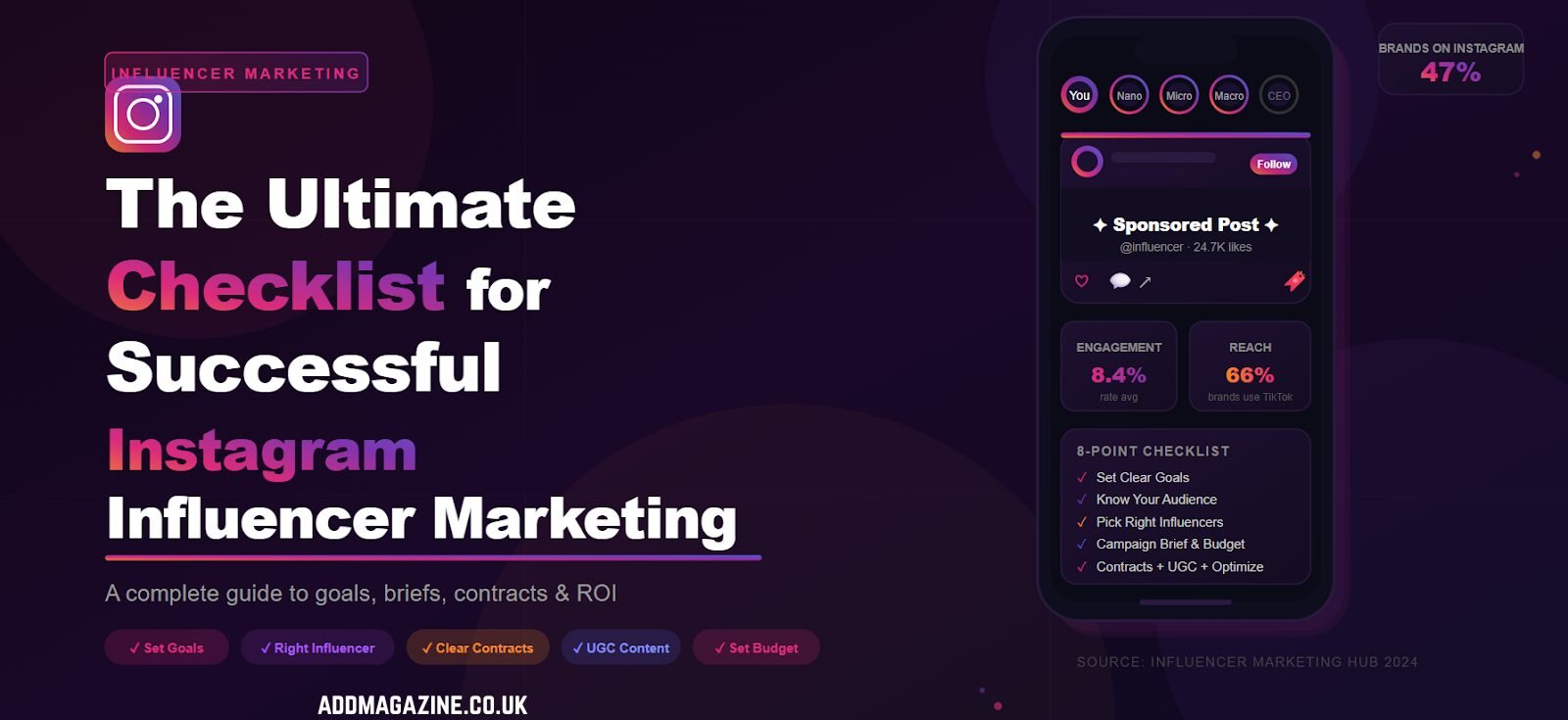
When it comes to influencer marketing, TikTok is currently leading the way. According to The State of Influencer Marketing 2024: Benchmark Report, about 66% of brands use TikTok for influencer campaigns. In comparison, 47% use Instagram, and 33% turn to YouTube.
2. Know Who You’re Targeting
To choose the right influencers, you need a clear picture of your ideal audience. Here’s what to focus on:
- Demographics: Look at age, gender, and location to make sure the influencer’s followers match your target customers.
- Interests and Online Behavior: Pay attention to the type of content they engage with, their hobbies, and the hashtags they follow. Also, look for high-quality Instagram comments that show genuine interest and interaction.
- Preferred Platforms: Figure out which social media channels your audience uses most, whether it’s Instagram, TikTok, YouTube, or Twitter, to pick the best platform for your campaign.
- Buying Habits: Understand what drives their purchases. Are they influenced by reviews, discounts, or trusted recommendations from influencers?
By clearly defining your target audience, you can work with influencers who have a real connection with potential buyers.
3. Pick the Right Influencers
Choosing the right influencers is a key part of a successful campaign. Here’s what to look for:
- Influencer Type: Decide what level of influencer fits your needs. Nano (1K–10K), Micro (10K–100K), Macro (100K–1M), or Celebrity. Each offers different reach and engagement levels depending on your goals and budget.
- Relevant Niche: Work with influencers who focus on your industry, like fitness, fashion, beauty, tech, or travel, so their content naturally fits your brand.
- Engagement Over Followers: Don’t just go by follower count. Make sure they have a good engagement rate, meaning their followers actually like, comment, and interact with their posts.
- Authenticity and History: Check if they’ve done brand partnerships before, read their audience’s feedback, and review the quality of their past content. This helps you spot influencers who are genuine and professional.
- Right Platform: Choose influencers who are active and successful on the platforms your audience uses most, whether that’s Instagram, TikTok, YouTube, or Twitter.
Speaking of Social media Platforms, if you’re struggling for organic growth on platforms like Instagram and TikTok. Then you can absolutely trust Followerscart UK, as it provides 100% real, authentic, and reliable services for both TikTok and Instagram.
4. Create a Clear Campaign Brief
A good campaign brief helps influencers understand exactly what you expect. Here’s what to include:
- Goals and KPIs: Clearly explain what you want to achieve, like more sales, clicks, or engagement, and how success will be measured.
- Content Guidelines: Share key messages and brand rules, but also give influencers the freedom to be creative in their own style.
- Deliverables: List what you need from them, such as Instagram posts, Stories, videos, or blog content. Be specific.
- Brand Values and Tone: Describe your brand’s personality and values so the influencer can match your tone in their content.
- Deadlines and Schedule: Set clear timelines for when content should be delivered and posted to keep everything on track.
A well-prepared brief helps influencers produce content that feels true to your brand and reaches your campaign goals.
5. Set a Realistic Budget
When planning your budget, it’s important to think about several key factors:
- Influencer Type: Costs vary based on whether you’re working with Micro, Macro, or Celebrity influencers. Generally, the bigger the following and engagement, the higher the fee.
- Content Format: Videos, Reels, blogs, and carousel posts can all have different pricing. More detailed or time-consuming content often costs more.
- Campaign Length: Longer partnerships usually cost more but can give your brand ongoing visibility and stronger audience trust.
- Platform Differences: Prices and engagement levels can change depending on whether you’re using Instagram, TikTok, YouTube, or another platform.
- Performance-Based Models: Consider using models like affiliate marketing or pay-per-conversion, where influencers earn based on results. This can help manage your budget while improving ROI.
By setting a thoughtful and flexible budget, you can build an effective campaign without overspending.
6. Create Clear and Transparent Contracts
A solid contract protects both the brand and the influencer. Make sure your agreement includes:
- Payment Terms: Clearly state how much the influencer will be paid, when payments will be made, and if there are any extra bonuses or incentives.
- Content Rights: Specify who owns the content. Make sure the brand has the right to reuse the influencer’s content for ads, social media, or other marketing.
- Exclusivity: Include a clause that prevents the influencer from promoting competitors during and shortly after your campaign.
- Posting Schedule: Set clear deadlines for when content should be delivered and posted to stay on track with your campaign.
- Performance Tracking: Outline how success will be measured, such as views, engagement, clicks, or conversions, and what data influencers need to share.
Having a clear, written contract helps avoid confusion and ensures a smooth, professional partnership
7. Use User-Generated Content (UGC)
It feels more real and helps build trust with your audience. You can reuse this content in many ways:
- Social Media Posts: Use their content to reach more people and get better engagement.
- Paid Ads: Turn influencer content into eye-catching ads that feel more genuine.
- Email Campaigns: Add influencer photos or quotes to your emails to connect with your audience and encourage action.
UGC helps your brand feel more relatable and makes your marketing more effective.
Bonus Tip:
Focus on influencers with authentic Instagram followers, real people who actively engage, not fake or inactive accounts. These signs indicate a loyal and trusting community, making your campaign more likely to succeed.
8. Optimize Content for Better Engagement
For influencer content to perform well, it needs to be carefully crafted. Here’s what to focus on:
- Eye-Catching Visuals: Use high-quality photos and videos that grab attention and look professional.
- Brand Consistency: Make sure the content matches your brand’s style, colors, and tone so everything feels connected.
- SEO-Friendly: Include keywords, hashtags, and tags to help the content show up in searches and reach more people.
- Strong CTAs (Calls to Action): Encourage viewers to like, share, comment, click a link, or make a purchase.
When content is well-optimized, it grows engagement, increases visibility, and helps your campaign deliver better results.
Summary
The Instagram influencer marketing industry is quite immense and has a great scope ahead.
For brands and businesses, influencer marketing is an important aspect of their growth and brand presence.
By seeking help from the given checklist marks, you can surely implement a prominent brand presence, helping you run a successful and result-oriented Influencer marketing campaign.