Walmart, as one of the largest retail chains in the world, offers a variety of financial services to customers. These services include cash transfers, check cashing, bill payments, and even money orders, which are provided across its many stores. Because of the nature of these services, Walmart is bound by stringent regulations to ensure it does not become a conduit for illegal financial activities such as money laundering. In this regard, Walmart’s Anti-Money Laundering (AML) training program plays a critical role in safeguarding the company’s operations, the financial system, and its customers.
The Walmart Anti-Money Laundering (AML) training is a mandatory program for employees working in positions related to handling financial transactions. The training, known as the Computer-Based Learning (CBL) program, educates employees on how to spot suspicious transactions, understand the risks associated with money laundering, and follow proper procedures to report any concerns. The goal is to create an informed workforce that upholds the law and protects the company from criminal activities while ensuring compliance with both federal and state regulations.
Why is Anti-Money Laundering (AML) Training Important?
Money laundering refers to the process of disguising the original ownership and control of illegally obtained money. Criminals typically move illicit money through legitimate channels in an attempt to make it appear as though the funds are from lawful sources. Retailers like Walmart, which process a high volume of cash transactions, are often targeted by criminals looking to exploit their financial services to clean money.
Walmart’s AML training is not just a formality, but a vital program that helps prevent these illegal activities. Walmart’s financial services, including money transfers, bill payments, and check cashing, make it susceptible to being used by criminals for money laundering. If Walmart fails to detect and report suspicious activities, it can face severe legal and financial consequences.
Federal Regulations Guiding AML Efforts
Walmart’s commitment to Anti-Money Laundering efforts stems from strict regulatory requirements. These laws aim to detect and prevent financial crimes, including money laundering, terrorism financing, and fraud. Some of the key federal laws that guide Walmart’s compliance practices include:
- The Bank Secrecy Act (BSA): This act requires businesses in the financial services sector to keep records of transactions and file reports on suspicious activity. The BSA is one of the most important pieces of legislation in the fight against money laundering.
- The USA PATRIOT Act: This act was introduced in response to terrorism financing concerns and mandates that financial institutions take steps to prevent money laundering and report suspicious activities.
- The Financial Crimes Enforcement Network (FinCEN): An agency within the U.S. Department of the Treasury. Department of the Treasury, FinCEN works to safeguard the financial system from illicit use, and its rules affect how Walmart and other businesses implement their AML programs.
The training equips employees with knowledge of these regulations and teaches them how to comply with the law. By following these guidelines, employees can help protect Walmart from legal consequences while minimizing financial risks.
Components of Walmart’s Anti-Money Laundering Training
Walmart’s AML CBL training is structured to provide employees with a comprehensive understanding of the risks associated with money laundering, while also guiding them on the correct procedures to follow in the event of suspicious activity. Key elements of the program include:
1. Understanding Money Laundering and Its Stages
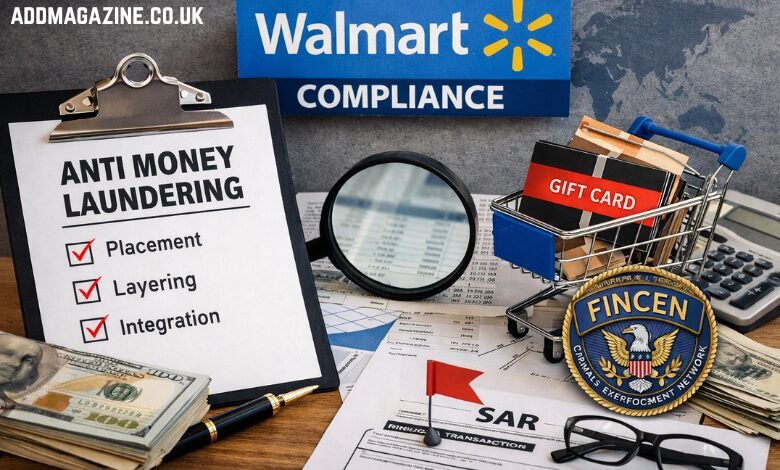
Money laundering generally unfolds in three phases: initial placement, complex layering, and final integration into the legitimate financial system. Employees are taught to recognize each stage and understand how criminals may try to move illicit funds through legitimate financial channels.
- Placement: The initial phase where illegally obtained money is introduced into the financial system. This could be through large, cash-based transactions.
- Layering: In this stage, the illegal money is moved or transferred to obscure its origin. For example, criminals may make multiple small transactions to avoid detection.
- Integration: At this point, the money is fully integrated into the legitimate financial system and can be used freely.
Walmart’s AML training helps associates recognize transactions that could be part of any of these stages, so they can act quickly and report concerns.
2. Identifying Red Flags
Recognizing suspicious behavior is a crucial part of the training. Walmart employees are trained to look for unusual patterns in transactions, such as:
- Large transactions just below the reporting threshold
- Multiple money transfers to the same recipient in a short period
- Customers who seem reluctant to provide required documentation
- Customers who avoid direct eye contact, provide vague responses, or seem overly nervous
Employees are also taught to be wary of bulk purchases of gift cards or money services, as these are often used by criminals to launder money.
3. Proper Reporting Procedures
When a suspicious transaction is identified, Walmart employees are instructed to follow the company’s internal reporting procedures. These procedures ensure that concerns are communicated promptly to the compliance department, where experts can assess the situation and take further action if necessary.
Importantly, employees are told not to confront customers directly about suspicious behavior. Instead, they are expected to remain professional and discreet, observing the situation carefully and reporting their observations through the appropriate channels.
4. Documentation and Verification
The training places significant emphasis on ensuring that all financial transactions are properly documented and verified. Employees are taught the importance of collecting accurate customer information and verifying identification. This documentation is crucial for complying with AML regulations and for preventing fraud and identity theft.
5. Consequences of Non-Compliance
Walmart’s AML training also highlights the serious consequences of failing to adhere to AML regulations. Employees are educated on the potential legal, financial, and reputational risks associated with non-compliance. For the company, this could include fines, loss of licenses to operate certain financial services, and damage to its public image. For employees, failing to report suspicious activities could result in disciplinary action or termination.
The Role of Employees in AML Efforts
While Walmart’s compliance officers and regulatory teams oversee the company’s AML strategy, it is the employees at the ground level who are the first line of defense. These employees interact with customers on a daily basis and are in the best position to notice unusual behaviors that might indicate money laundering.
For instance, an employee working at a Walmart MoneyCenter may notice a customer making multiple large cash deposits over a short period of time, which could be a red flag. In this case, the employee is responsible for reporting this activity in accordance with Walmart’s AML policies, not for confronting the customer.
Why Understanding Is More Important Than Answer Keys
Some associates may be tempted to search for quick solutions, such as Walmart AML CBL answers, in hopes of passing the training assessment without fully engaging with the material. However, this approach undermines the integrity of the program and fails to ensure compliance with the law.
Walmart’s AML training is not about memorizing answers to a quiz; it’s about understanding the principles of money laundering and how to prevent it. If employees only focus on getting the answers right without grasping the reasoning behind the training, they may miss crucial information that could help them identify suspicious activity in real-world situations.
The Real Value of the Training
The true value of Walmart’s AML CBL program lies in its ability to prepare employees for real-life scenarios. Employees who understand the logic behind the training are better equipped to handle situations as they arise. Whether it’s noticing patterns in customer transactions or knowing when to report a suspicious activity, the training helps employees make informed decisions that align with legal requirements.
Final Thoughts
Walmart’s Anti-Money Laundering CBL training is an essential part of ensuring the company operates in compliance with federal regulations and maintains the trust of its customers. By equipping associates with the knowledge they need to recognize and report suspicious activity, Walmart helps protect both its business and the broader financial system from criminal exploitation.
Rather than focusing on finding answers to the quiz, employees should concentrate on the purpose behind the training—to recognize illegal activities and know how to respond appropriately. This approach not only helps Walmart avoid legal risks but also supports a safer, more secure environment for customers and employees alike.
Walmart’s commitment to anti-money laundering is about more than just meeting regulatory requirements; it’s about maintaining integrity, trust, and responsibility in every financial transaction it processes.