The way professionals connect has changed dramatically over the past decade. From virtual meetings to AI-powered CRMs, the tools of modern business have evolved at a pace that most industries are still catching up with. Yet one relic of the past has stubbornly remained on desks and in jacket pockets around the world: the paper business card. In 2026, that stubbornness is starting to look less like tradition and more like a missed opportunity.
Paper business cards have served professionals well for centuries. They are tangible, familiar, and carry a certain old-school charm. But in an era where your contact details can be outdated before the ink even dries, clinging to paper is costing professionals more than they realise — in money, in missed connections, and in the impression they leave behind.
The Problem With Paper in a Digital World
Let us start with the basics. The average professional reprints their business cards at least once a year. A new job title, a change in phone number, a rebrand — any one of these events turns an entire print run into waste. When you multiply this across a team of fifty or a hundred employees, the cost and environmental toll becomes significant.
Then there is the question of what happens after the card is handed over. Research consistently shows that the vast majority of paper business cards are thrown away within a week of being received. The recipient may have every intention of saving your details, but without a frictionless way to do so, the card ends up in a bin, a junk drawer, or lost at the bottom of a conference bag.
For the person handing out the card, there is no way of knowing whether their details were ever saved, whether the conversation led anywhere, or whether a follow-up would even be welcome. Paper offers zero data, zero insight, and zero automation. In 2026, that simply is not good enough.
What Has Changed in 2026
The professional landscape this year looks different from even just a few years ago. Hybrid work is the norm rather than the exception. Networking happens at trade shows, on video calls, in airport lounges, and over LinkedIn messages. The window to make a strong impression has narrowed, and the expectation for a seamless, tech-savvy interaction has risen considerably.
Clients and prospects now form opinions about your professionalism the moment they interact with you. Handing someone a flimsy paper card in 2026 sends a subtle but clear message: this person or company has not kept pace. It may seem like a small thing, but first impressions are built from dozens of small things stacked on top of one another.
On the other side of the coin, professionals who show up with smart, modern networking tools signal something entirely different. They communicate that they value efficiency, that they care about the experience of the person they are meeting, and that their business operates with a level of polish that extends to even the smallest details.
The Case for Going Digital
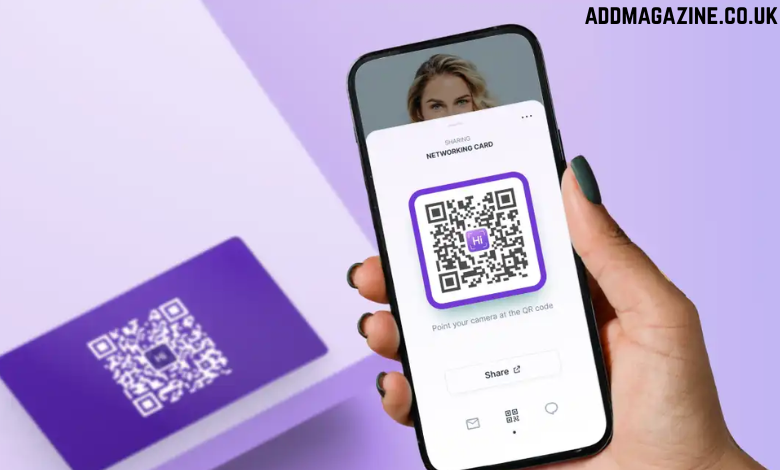
A digital business card solves every core problem that paper cannot. It never runs out, never becomes outdated, and never ends up in a landfill. It works whether you are in London, Singapore, or on a video call with someone halfway around the world. You tap, scan, or share a link — and your full professional profile is in someone’s hands within seconds.
But the advantages go well beyond convenience. The best digital business card platforms available today are built around lead capture and workflow automation. When someone receives your card, their details can be automatically pulled into your CRM, a follow-up email can be triggered, and a record of the interaction is logged, all without any manual input from you. For sales teams, recruiters, and consultants who attend events regularly, this kind of automation is not just useful; it is transformative.
There is also the matter of customisation and control. A digital card can carry everything a paper card cannot: clickable links to your LinkedIn profile, portfolio, booking calendar, company brochure, and social channels. You can update any of this information instantly, and every person who has ever tapped or scanned your card will see the most current version of your details. No reprinting required.
The Environmental Argument
It would be remiss not to mention sustainability. Over ten billion paper business cards are printed globally every year, and a significant proportion of those are discarded almost immediately. The paper, the ink, the packaging, the shipping, all of it adds up to an environmental cost that sits oddly at odds with the corporate sustainability pledges many companies now make publicly.
Switching to a digital format is one of the most straightforward steps a business can take toward reducing its environmental footprint. Some platforms even go further, offering cards made from responsibly sourced wood or recyclable metal for those who still want a physical card with a reduced impact. It is a change that requires minimal effort and costs very little, yet the cumulative effect across a large team can be genuinely meaningful.
Real-World Use Cases
Consider a sales professional attending a three-day industry conference. Over the course of that event, they might meet seventy or eighty people. With paper cards, they hand them out, collect a stack of other people’s cards, and then spend the following week manually entering details into a spreadsheet or CRM, if they do it at all. Leads go cold. Follow-ups get missed. Opportunities slip through the cracks.
Now consider the same professional equipped with a smart digital business card. Each tap or scan automatically captures the recipient’s information and routes it directly into the CRM. A personalized follow-up message is sent automatically. The lead is scored against their ideal customer profile. By the time they land back home, their pipeline has already been updated and prioritised without them lifting a finger.
The same logic applies to a freelancer, a consultant, or even a small business owner. The card becomes not just a way to share contact details but an active tool in the business development process.
Cost Savings That Actually Add Up
There is a common misconception that digital business card solutions are expensive. In reality, the opposite is often true. The average company spends close to two hundred dollars per employee per year on paper business card printing. Multiply that across a team and you are looking at a substantial recurring cost with nothing to show for it in terms of data or results.
Digital solutions, by contrast, are typically subscription-based and scale with the size of the team. Many platforms offer free tiers that cover the basics, with premium plans that unlock lead capture, CRM integration, and analytics. When you run the numbers, the switch almost always comes out in favour of going digital, and that is before accounting for the time saved on reprinting and manual data entry.
Making the Switch
Transitioning from paper to digital does not have to be complicated. Most platforms allow you to set up a profile in minutes, customize it to match your branding, and start sharing immediately via NFC tap, QR code, or link. For teams, admin controls allow managers to ensure that everyone’s cards are consistent, on-brand, and up to date, no chasing people to reorder before the next trade show.
The professionals who make this switch in 2026 are not just adopting a new tool. They are signalling something to everyone they meet: that they operate with intention, that they respect the other person’s time, and that their business is built for the present, not the past.
The Bottom Line
Paper business cards had a good run. For decades, they were the standard way professionals introduced themselves and stayed in touch. But the standard has moved on, and the professionals who move with it will find themselves better connected, better organised, and better positioned than those who do not.
In a world where your network is your net worth, the tools you use to build and maintain that network matter more than ever. Making the upgrade is one of the simplest, smartest decisions a professional can make this year, and the results tend to speak for themselves.