We live in an era where constant connectivity feels almost guaranteed. Smartphones sit in our pockets, smartwatches buzz on our wrists, and Wi-Fi reaches cafés, trains, and even some rural villages. It’s easy to assume we’re always reachable and always able to reach others. Yet anyone who has tried to get a signal in the countryside, at a crowded festival, or during a network outage knows how fragile that assumption can be.
In a world built on digital networks, there’s a quiet resurgence of interest in simpler, more direct forms of communication. Not as replacements for smartphones, but as reliable companions when modern infrastructure falters. Handheld communication devices, once seen as old-fashioned, still play a meaningful role in how people travel, explore, and stay safe.
The Illusion of Always-On Connectivity
Mobile networks are impressive, but they’re not infallible. Coverage maps often look reassuringly full, yet real-world performance varies. Rural areas, coastal regions, mountains, and even basements in major cities can become dead zones. Add bad weather or overloaded networks, and even urban users may find themselves temporarily disconnected.
Large public events highlight this clearly. Concerts, sporting events, and festivals frequently overload local networks, making texts and calls unreliable. In those moments, the most advanced smartphone can feel surprisingly limited.
This has led many people to reconsider the idea that one device can handle every communication need. Just as we carry backup batteries or offline maps, some now think about backup communication too.
A Different Kind of Reliability
Handheld radios and similar devices operate on a simple principle: direct, short-range communication without relying on mobile towers or internet access. That independence is precisely what gives them value.
While smartphones route messages through complex networks, radio devices connect user to user. There’s no app to load and no signal bar to chase. You switch on, select a channel, and speak. In situations where speed and clarity matter, that simplicity can be reassuring.
This is one reason certain communities have never fully abandoned them. Hikers, campers, road-trippers, and event organisers often keep alternative communication tools on hand. Not because they distrust modern technology, but because they understand its limits.
Travel, Adventure, and the Appeal of Self-Reliance
Travel culture has shifted in recent years. Many people now seek experiences away from dense cities, national parks, remote coastlines, long-distance road trips, and off-grid stays. These trips offer peace and perspective, but they also come with reduced connectivity.
In such environments, communication becomes less about constant updates and more about practical coordination and safety. If you’re travelling in a group, separating for activities, or navigating unfamiliar terrain, staying in touch matters.
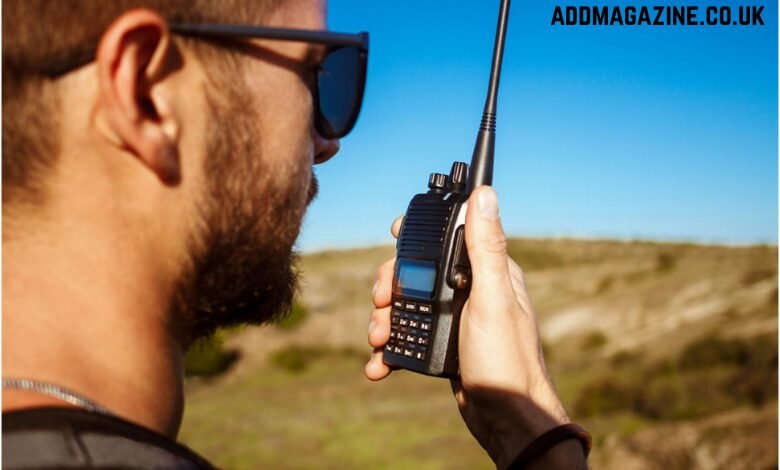
That’s where devices beyond the smartphone still find relevance. While smartphones dominate daily communication, many travellers and outdoor enthusiasts still rely on devices like handheld cb radios for dependable, short-range communication when cellular service is unreliable or unavailable. They’re straightforward, durable, and designed for environments where a dropped signal isn’t just inconvenient, it can be risky.
For families on camping trips or groups on road journeys, these tools can offer peace of mind. They allow quick check-ins without worrying about roaming fees, battery-draining apps, or vanishing coverage.
The Human Side of Simpler Tech
Image by EyeEm on Freepik
There’s also a cultural angle to this. Not every communication needs to be filtered through notifications, social feeds, and constant alerts. Radio-style communication is immediate and purposeful. You listen when it matters.
Some people find this refreshingly mindful. It strips communication back to essentials. In a time when digital burnout is widely discussed, tools that reduce noise can feel appealing.
This doesn’t mean people want to abandon smartphones. Rather, they’re recognising that different tools serve different moments. A map app is brilliant for navigation, but a printed map still has its place. The same logic applies to communication.
Preparedness Without Panic
There’s a fine line between being prepared and being anxious. Most people carrying a backup communication device aren’t expecting emergencies; they simply prefer not to be caught off guard. It’s similar to packing a first-aid kit or carrying a torch on a hike. Sensible, not dramatic.
Recent global events, from extreme weather to travel disruptions, have reminded people that infrastructure can be fragile. As a result, resilience has become part of modern lifestyle thinking. People look for small ways to stay adaptable without overcomplicating life.
Handheld communication tools fit into that mindset. They’re not about fear; they’re about options.
Not Old Tech – Complementary Tech
It’s tempting to label radios as outdated, but that misses the point. Many technologies coexist rather than replace each other. Vinyl records survived streaming. Printed books live alongside e-readers. Film photography still attracts enthusiasts in the digital age.
Communication tools are similar. Smartphones excel at global connectivity. Radios excel at local, direct communication. Each does its job well.
In fact, modern handheld radios often incorporate updated features, better battery life, and improved durability. They’ve evolved quietly while remaining true to their core function.
A Broader Lesson About Connectivity
Perhaps the bigger takeaway is philosophical. True connection isn’t just about signal strength; it’s about reliability and intention. The ability to reach someone when it genuinely matters carries more weight than endless availability.
As people rethink work-life balance, digital boundaries, and screen time, they’re also rethinking how they communicate. Sometimes the simplest tools support the richest experiences, especially when exploring the world beyond strong Wi-Fi.
The Connected World Is Still Patchy
Despite impressive advancements, global connectivity remains uneven. Billions still live with inconsistent access, and even well-connected countries have blind spots. Assuming constant access can lead to complacency.
Carrying a secondary communication option is, for some, a quiet acknowledgement of reality. It’s not a rejection of progress but a practical response to it.
Handheld communication devices endure because they solve a specific problem well. They provide direct, reliable contact in situations where smartphones struggle. For travellers, families, and outdoor enthusiasts, that reliability can be valuable.
In a hyper-connected world, it’s easy to forget how dependent we are on invisible infrastructure. Tools that work independently of that system remind us that connection doesn’t always require complexity.
Sometimes, staying in touch is as simple as pressing a button and speaking. And in the right moment, that simplicity still matters.