Anxiety doesn’t knock before it arrives. One moment everything is fine; the next, the chest tightens, the mind races, and the body feels like it’s running from something that isn’t there. For millions of people dealing with chronic stress, that state isn’t an occasional visitor—it’s the default setting.
The search for real, reliable relief has led a lot of people toward an anti-anxiety device that works on a physiological level, rather than asking them to think their way out of a stress response. And that shift in approach—from the psychological to the biological—is where things get genuinely interesting.
Why the Standard Toolkit Often Falls Short
Meditation apps. Deep breathing exercises. Herbal supplements. These things aren’t useless, but they share a common limitation: they tend to work best when stress levels are already manageable. When someone is deep in cortisol overload, sitting still and focusing on breath feels almost impossible.
The Neurochemical Problem Nobody Talks About
The underlying problem with chronic stress is neurochemical. Persistently elevated cortisol degrades vagal tone—the measure of how well the vagus nerve is functioning. Low vagal tone tips the brain’s chemistry out of balance, pushing excitatory neurotransmitters like glutamate into overdrive while suppressing inhibitory ones like GABA. The result is a nervous system essentially stuck in alarm mode, unable to downshift on its own.
That’s why so many people feel burned out, wired-but-tired, or simply unable to relax even when the circumstances allow for it. The body knows something is wrong, but without a functioning biological off-switch, the loop just keeps running. Anxiety becomes the resting state. Sleep suffers. Cognitive performance drops. And no amount of positive thinking changes the underlying chemistry.
Why Willpower Isn’t Enough
There’s a tendency to treat anxiety as a mindset problem—something to be reasoned away or meditated through. But telling a dysregulated nervous system to calm down is a bit like asking a car with a broken brake line to slow down through good intentions. The mechanism for stopping isn’t working. That’s the actual problem. And addressing it requires something that operates at the level of biology, not belief.
The Science Behind Vagus Nerve Stimulation
The vagus nerve is the primary conduit of the parasympathetic nervous system—the biological system responsible for rest, recovery, and calm. When vagal tone is high, the body transitions out of stress mode efficiently. When it’s chronically low, that off-switch barely functions.
What Happens During Stimulation
An effective anti-anxiety device targets this mechanism directly. Rather than masking symptoms or asking the body to self-regulate without support, vagus nerve stimulation reactivates the nerve itself, prompting an immediate parasympathetic response. Cortisol drops. Glutamate activity calms. GABAergic function—the brain’s natural braking system—gets a meaningful boost.
The physiological cascade that follows isn’t subtle: reduced stress reactivity, clearer thinking, and a genuine sense of calm that doesn’t require willpower to maintain. The body isn’t being tricked into relaxation. It’s being given the neurological conditions under which relaxation becomes possible again.
Why This Approach Is Different
Most conventional approaches manage the downstream experience of anxiety—the feelings, the thoughts, the physical symptoms. Vagus nerve stimulation goes upstream. By restoring vagal tone and rebalancing the ratio of excitatory to inhibitory neurotransmitters, it addresses what’s actually causing those symptoms. That’s a meaningfully different kind of intervention, and it’s why people who’ve tried everything else sometimes describe this type of relief as unlike anything they’ve experienced before.
Hoolest: Anti-Anxiety Devices Built Around Real Recovery
Hoolest has developed two anti-anxiety devices that apply this science in practical, daily-use formats. Both are designed for people who can’t step away from their lives to recover—they need something that fits into those lives instead.
Hoolest Pro: Desk-Ready Stress Relief
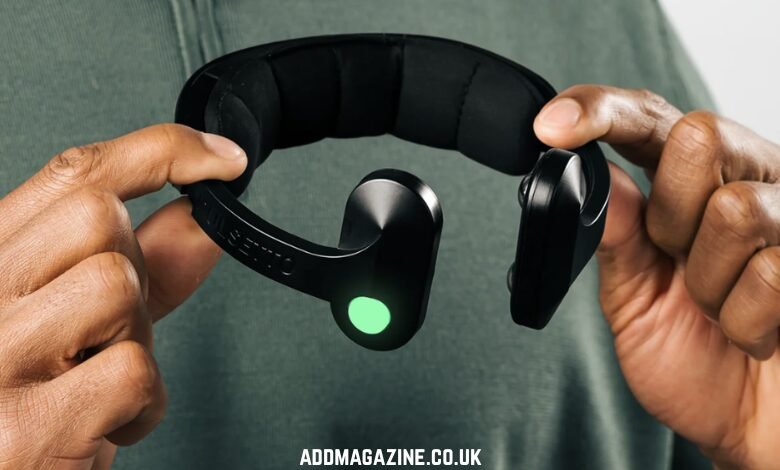
The Hoolest Pro takes the form of headphones that combine vagus nerve stimulation with music. It’s not a clinical device requiring setup time or a quiet room—it sits on a desk, always accessible whenever stress peaks during a workday.
What it does, biologically, is straightforward: it delivers immediate parasympathetic activation. That means cortisol impact drops, excessive glutamate activity is calmed, and GABAergic function is enhanced. The effect is noticeable fairly quickly.
For people in high-demand professional environments, having an anti-anxiety device this accessible—one that doesn’t interrupt workflow or require stepping away from a screen—is a real advantage. It fits into the rhythm of a busy day rather than demanding a pause from it.
VeRelief Prime: Portable Nervous System Support
The VeRelief Prime is a pocket-sized vagus nerve stimulator built for on-the-go use. No wires, no app to open, no configuration required. When stress hits, the device is used directly. That’s the entire process.
Its mechanism of action mirrors the Hoolest Pro: it increases vagal tone, lowers stress reactivity, reduces brain excitatory overdrive, and triggers the kind of downregulation that typically requires sleep or extended rest to achieve.
Having that level of nervous system support available anywhere—a commute, a difficult meeting, a sleepless night—changes what’s realistically possible in managing daily anxiety. The fact that it requires nothing beyond itself to work is part of what makes it stand out among anti-anxiety devices in this category.
How These Devices Compare to Other Options
There’s no shortage of products and approaches marketed toward anxiety relief. So, where do the best anti-anxiety devices actually stand in comparison?
- Meditation apps and supplements work gradually and require consistent, long-term use. They don’t address the root cause—depleted vagal tone—and offer little in the way of immediate relief during an acute stress episode.
- Wellness spas and therapy are valuable, but access is limited by cost, time, and availability. They’re not an option at 2 a.m.
- Prescription medications carry dependency risks and side effects that make long-term use complicated. They manage symptoms rather than restoring nervous system function.
- Other vagus nerve stimulators exist, but most are more cumbersome, less effective, or require professional oversight to use.
What sets Hoolest’s anti-anxiety devices apart is that they address the root physiological cause of chronic stress—not just the feeling of it. That distinction matters more than most people realize until they’ve experienced what genuine nervous system recovery actually feels like.
Who Benefits Most From an Anti-Anxiety Device Like This?
The honest answer is: most people are dealing with persistent stress. But certain groups are particularly well-positioned to see the most from it.
High-Pressure Professionals
People in demanding careers—executives, clinicians, lawyers, teachers—often operate in sustained high-cortisol environments for years. The burnout that follows isn’t just fatigue; it’s a physiological state with measurable neurochemical consequences. Having an anti-anxiety device like the Hoolest Pro within arm’s reach at a workstation offers something most productivity tools don’t: actual nervous system recovery, not just a temporary distraction from stress.
People Who Need Relief Without Disruption
Not everyone can schedule a rest. Parents managing chaotic households, shift workers without consistent sleep, caregivers in extended, demanding roles—these people need relief that meets them where they are. The VeRelief Prime was essentially built for this. No setup, no learning curve, no reliance on external conditions being just right.
Anyone Living With the Long-Term Effects of Chronic Stress
Beyond situational use, anyone who has spent months or years in a high-cortisol environment and noticed the downstream effects—poor sleep, reduced focus, persistent low-level anxiety, emotional blunting—is a strong candidate. Restoring vagal tone doesn’t just reduce anxiety in the moment; it gradually rebuilds the nervous system’s capacity to regulate itself. That’s a longer-term benefit that compounds meaningfully over time.
The Bigger Picture on Anti-Anxiety Devices
There’s a broader shift happening in how people approach mental health and stress management. The conversation is slowly moving away from purely psychological interventions toward methods that work with the body’s underlying physiology. Anti-anxiety devices that stimulate the vagus nerve are part of that shift—and among the most evidence-aligned options currently available outside clinical settings.
The question isn’t whether technology can help with anxiety. It’s whether the technology is targeting the right mechanism. For most products in this space, the answer is no—they address the surface experience of stress without touching what’s driving it. For Hoolest’s anti-anxiety devices, the answer is different. The mechanism is sound, the application is practical, and the barrier to daily use is low enough that people actually keep using it.