Ground preparation plays an important role in industrial construction, logistics infrastructure development, and facility maintenance across the United States. Warehouses, distribution centers, loading yards, and transport corridors require stable surfaces to support heavy equipment and constant vehicle movement. Poorly compacted soil or aggregate can lead to structural instability, pavement failure, and long term maintenance problems.
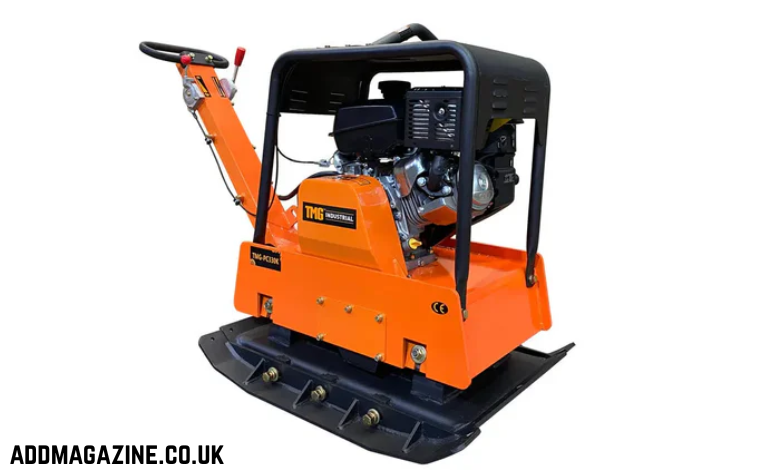
One commonly used piece of equipment in site preparation is the reversible plate compactor. Machines such as the Reversible Plate Compactor are designed to compact soil, gravel, and asphalt layers in preparation for construction or infrastructure installation. Their ability to move both forward and backward allows operators to work efficiently in confined or complex work zones.
Industrial and Market Context in the United States
Industrial development in the United States continues to expand due to growth in logistics, transportation, and manufacturing sectors. New warehouse facilities, distribution hubs, and industrial parks require reliable ground preparation before foundations, pavement, or utility systems can be installed.
Compaction equipment is essential during this process. Construction crews rely on compactors to increase soil density and reduce air pockets within aggregate layers. This creates stable surfaces capable of supporting heavy equipment, trucks, and long term infrastructure loads.
Operating Principles of Reversible Plate Compactors
A reversible plate compactor uses a heavy steel base plate that vibrates rapidly against the ground surface. The vibration is generated by an engine driven eccentric mechanism. This vibration forces soil particles closer together, increasing density and structural stability.
The reversible capability allows the machine to move forward and backward without turning the equipment. This feature improves maneuverability in narrow construction zones.
Typical components include:
· Engine that powers the vibration system
· Heavy steel compaction plate
· Eccentric vibration mechanism
· Directional control handle
· Shock absorbing handle system
Applications in Industrial and Logistics Infrastructure
Reversible plate compactors are used across many types of construction and site preparation activities.
· Compaction of soil before warehouse foundation installation
· Preparation of gravel surfaces in logistics yards
· Road and pathway construction in industrial facilities
· Utility trench backfill compaction
· Pavement base layer preparation
Because of their size and maneuverability, these machines are often used in locations where large rollers cannot operate effectively.
Importance of Efficiency and Productivity
Construction timelines are closely linked to site preparation speed. Efficient compaction equipment helps crews complete groundwork tasks more quickly while maintaining surface stability.
Key efficiency benefits include:
· Fast soil density improvement
· Ability to operate in confined construction zones
· Reduced need for multiple passes compared to manual compaction
· Improved mobility during trench or pathway work
Technical Capacity and Equipment Selection
Selecting the correct compactor depends on several technical factors related to soil conditions and project requirements.
Important considerations include:
· Engine power and vibration force
· Plate size and machine weight
· Soil type such as sand, gravel, or clay
· Compaction depth requirements
· Operator control and maneuverability
Factors That Influence Compaction Performance
The effectiveness of compaction equipment is influenced by environmental and operational conditions.
· Moisture content of soil
· Layer thickness during compaction
· Machine operating speed
· Ground composition and particle size
· Number of compaction passes
Proper site preparation planning ensures that the equipment delivers consistent results.
Safety Considerations and Best Practices
Ground compaction machines produce strong vibration and require careful handling during operation.
· Inspect the machine before each use
· Wear protective gloves and hearing protection
· Maintain safe distance from trench edges
· Operate equipment on stable ground surfaces
· Follow manufacturer operating instructions
Related Equipment and Construction Tools
Plate compactors are typically used alongside other construction equipment during site preparation.
· Excavators for soil removal
· Skid steer loaders for material transport
· Vibratory rollers for large area compaction
· Laser leveling tools for surface accuracy
· Soil moisture measurement tools
Advantages and Limitations
Advantages
· High compaction force in a compact machine
· Effective operation in narrow work areas
· Forward and reverse movement improves maneuverability
· Suitable for multiple soil and aggregate types
Limitations
· Requires operator training for proper control
· Less effective in very cohesive clay without preparation
For broader land management and equipment solutions, explore reliable options from industrial suppliers like TMG Industrial equipment solutions, including products such as the 5600-lb Reversible Vibratory Plate Compactor.
Real World Example from an Industrial Construction Site
During the construction of a distribution warehouse in the southern United States, contractors needed to compact soil layers for utility trenches and loading dock foundations. Large rollers were used for open areas, but narrow trench sections required smaller equipment. Reversible plate compactors were used to compact backfilled soil in these restricted zones. This approach ensured proper density around underground utilities while maintaining construction progress.
Conclusion and Future Trends
Reversible plate compactors remain essential tools in construction and infrastructure preparation. Their ability to compact soil efficiently in confined spaces makes them valuable in industrial development, logistics facility construction, and infrastructure maintenance projects.
Future improvements in compaction equipment may include improved vibration control systems, reduced operator fatigue technology, and enhanced fuel efficiency. As industrial construction continues to expand, compact ground preparation machines will remain important for safe and stable infrastructure development.