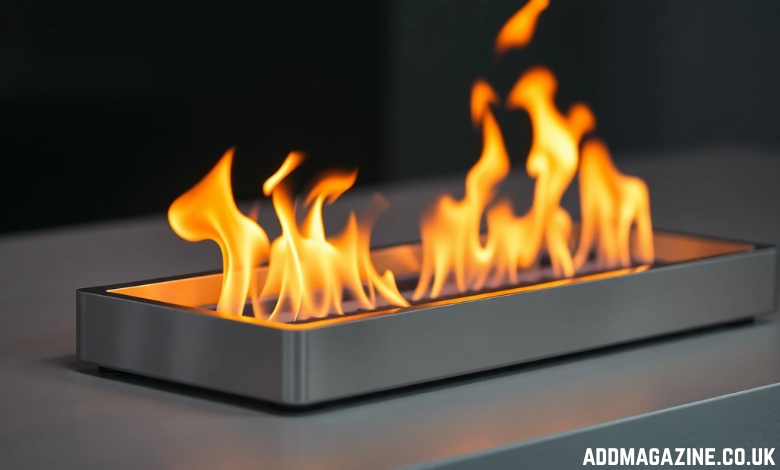
Building a custom bioethanol fireplace or converting an existing hearth requires one essential component—the burner itself. This stainless steel insert holds the fuel, controls the flame, and determines both the visual impact and heat output of your finished installation. Quality ethanol burners in various sizes and configurations are available at redlakecompany.co.uk, ranging from compact units for modest projects to substantial inserts for dramatic feature fireplaces.
What Ethanol Burners Actually Do
An ethanol burner serves as the functional heart of any bioethanol fireplace. The unit consists of a fuel reservoir, typically constructed from stainless steel for durability and heat resistance, combined with a combustion chamber where the flame burns. Most designs incorporate adjustable lids or sliding covers that regulate airflow, allowing users to control flame height and fuel consumption rate, points out Keyrenter Hampton Roads Newport News.
Unlike complete fireplace units, standalone burners offer flexibility for custom installations. Architects and designers specify them for bespoke projects where standard products cannot achieve the desired aesthetic. Homeowners use them to convert disused traditional fireplaces, building surrounds from stone, concrete, or metal to create unique focal points. The burner handles the technical requirements while the surrounding design reflects individual taste.
Size and Capacity Considerations
Ethanol burners range dramatically in size, from compact inserts barely wider than a book to substantial units spanning over a metre. Capacity—measured in litres—determines how long the burner operates between refills. A one-litre burner might run for two to three hours, while six-litre versions can operate throughout an entire evening without attention.
Choosing appropriate size involves balancing several factors. The intended opening dimensions set obvious physical constraints. Desired visual impact influences length selection—longer burners create more dramatic linear flames. Heat output requirements matter too; larger burners produce more warmth, though all bioethanol fires function best as supplementary rather than primary heating. Finally, practical considerations around refuelling frequency affect the optimal capacity choice.
Construction Quality and Safety Features
Quality differences between ethanol burners become apparent in construction details. Premium units use thicker stainless steel that resists warping under repeated heating cycles. Welded seams prove more durable than crimped joints over years of use. Precision-machined sliding mechanisms operate smoothly and maintain consistent flame control throughout their lifespan.
Safety features distinguish reliable burners from questionable alternatives. Spill-proof reservoirs prevent fuel escaping if units tip during refuelling. Flame arrestors stop fire travelling back into the fuel tank. Clearly marked maximum fill lines prevent overfilling accidents. Quality manufacturers submit products for independent safety testing and display relevant certifications prominently.
Installation Requirements and Surrounds
Installing an ethanol burner demands attention to clearances and materials. Manufacturers specify minimum distances between the flame and surrounding surfaces—typically several centimetres on all sides. These clearances prevent heat damage to adjacent materials and ensure adequate oxygen supply for clean combustion.
Surround materials must withstand radiated heat without combusting, cracking, or discolouring. Natural stone, concrete, steel, and certain ceramics work well. Timber requires careful planning with adequate clearances and possibly heat shields. Flammable materials like fabric or paper should never contact or approach installed burners. Following manufacturer guidelines precisely ensures safe, trouble-free operation.
Running Costs and Maintenance
Ethanol burner operating costs depend primarily on fuel consumption rates and usage patterns. Typical consumption ranges from 0.3 to 0.6 litres per hour depending on flame settings and burner size. With bioethanol prices around three to four pounds per litre, hourly running costs work out at roughly one to two pounds—reasonable for occasional use though significant if operated extensively.
Maintenance requirements prove minimal. Occasional cleaning removes any residue accumulation. Checking sliding mechanisms for smooth operation takes moments. Inspecting seals and gaskets annually catches potential issues before they develop. Quality burners constructed from appropriate materials should provide many years of service with basic care.
Ethanol burners enable creative freedom in fireplace design, providing the technical functionality within whatever aesthetic vision the installer imagines. From compact inserts reviving redundant hearths to substantial units powering dramatic architectural features, these components bring bioethanol flame technology to custom applications. Selecting appropriate size, ensuring quality construction, and following installation guidelines carefully results in safe, attractive, and long-lasting fire features.