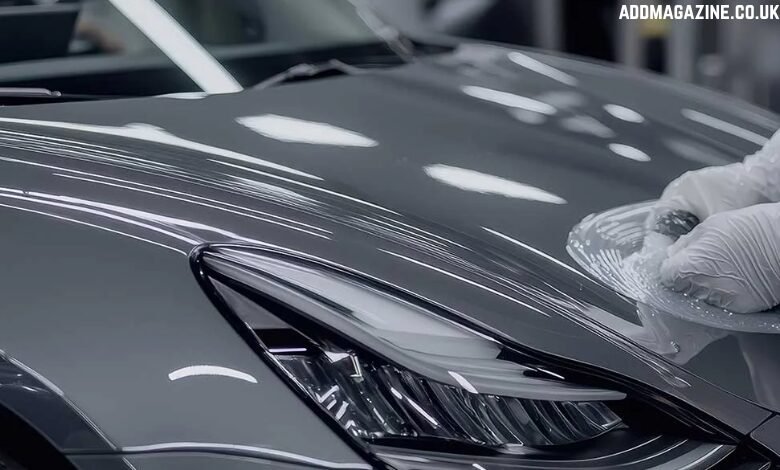
Self-healing car paint technology uses advanced polymer networks and nano-coatings that automatically repair minor scratches and swirl marks when exposed to heat or sunlight. While fully self-healing factory paint remains limited to premium vehicles like the BMW iX, aftermarket ceramic coatings with self-healing properties are now widely available and offer practical protection for everyday drivers across the UK.
What Is Self-Healing Car Paint Technology?
Self-healing automotive coatings represent a significant advancement in paint protection technology that emerged from materials science research over the past decade. Self-healing paint is not a marketing gimmick—it’s a legitimate application of polymer chemistry that allows damaged surfaces to repair themselves under specific conditions.
According to research published by scientists in Korea, modern self-healing coatings contain polymer networks with dynamic chemical bonds that can break apart in response to stimuli like heat or UV light, then reform in their original arrangement. The process works at a molecular level, where the coating’s molecules flow into scratched areas and rebond, effectively filling minor damage.
The technology comes in two primary forms: factory-applied systems integrated into vehicle manufacturing, and aftermarket ceramic coatings that car owners can have professionally applied. Factory systems typically use specialized polyurethane layers, while aftermarket solutions leverage silicon dioxide nanoparticles combined with healing agents that activate at temperatures around 60°C (140°F).
Self-healing coatings are not bulletproof solutions—they work specifically on minor surface scratches, swirl marks from washing, and light abrasions. Deep scratches that penetrate through the coating layer or reach the base paint cannot be repaired through self-healing mechanisms. According to IDTechEx, the automotive sector offers the clearest road to commercialization for self-healing materials, though widespread factory adoption remains cost-prohibitive for mainstream manufacturers.
The healing process typically requires one of three activation methods: heat exposure (either from ambient temperatures or applied warmth), UV light from sunlight, or specific humidity conditions. UK drivers should note that healing times vary significantly based on weather conditions—a scratch might self-repair in 30 minutes during summer sunshine but take 24 hours during winter months.
| Technology Type | Healing Time | Temperature Required | Commercial Availability |
|---|---|---|---|
| Factory Polyurethane | 5-24 hours | Room temperature or 40°C+ | Limited (BMW iX, Nissan) |
| Aftermarket Ceramic | 30 mins-2 hours | 60°C+ (sunlight/heat gun) | Widely available |
| Experimental Nano-coatings | 30 minutes | Direct sunlight only | Research phase |
| PPF (Paint Protection Film) | Variable | 50°C+ | Common aftermarket |
How Self-Healing Ceramic Coatings Actually Work
Self-healing ceramic coatings combine silicon dioxide (SiO2) nanoparticles with specialized polymer chains that exhibit thermoplastic behavior. When the coating surface sustains minor damage, applying heat causes these polymer chains to become temporarily mobile, allowing them to flow across the damaged area and re-establish chemical bonds.
The process differs fundamentally from traditional ceramic coatings, which form a rigid protective layer. According to coating manufacturers like Feynlab and Kovalent Coatings, self-healing formulations sacrifice a small degree of initial hardness in exchange for the ability to repair surface-level damage. The coating maintains a 9H pencil hardness rating while retaining molecular flexibility in its top layer.
Professional-grade ceramic coatings like Gtechniq’s Crystal Serum range create a multi-layer system where the base layer provides chemical resistance and bonding strength, while the top layer contains the self-healing polymers. This dual-layer approach maximizes both protection and longevity—base layers can last 5-7 years, while top coats may require reapplication every 2-3 years.
The self-healing effect is repeatable but not infinite—each healing cycle slightly depletes the coating’s polymer reserves. According to Azom, coatings can typically self-heal 20-50 times before requiring reapplication, depending on the severity of scratches and frequency of activation. UK motorists who park outdoors benefit from natural UV activation, while garage-kept vehicles may need occasional heat gun treatment to trigger healing.
The chemistry involves hindered urea structures within the polymer network. When heat is applied, hydrogen bonds between urea groups temporarily break, allowing molecular segments to reorient and fill voids created by scratches. As the coating cools, these hydrogen bonds reform, locking the repaired structure in place. The entire process occurs in the coating’s top 2-5 microns, preserving the protective base layer underneath.
| Coating Component | Function | Layer Thickness | Durability |
|---|---|---|---|
| SiO2 Nanoparticles | Hardness & chemical resistance | Base layer (1-3 microns) | 5-7 years |
| Polymer Matrix | Self-healing mechanism | Top layer (2-5 microns) | 2-3 years |
| Hydrophobic Agents | Water beading & dirt repellency | Integrated throughout | Variable |
| Cross-linking Agents | Bonding to paint surface | Primer layer (< 1 micron) | Permanent |
Commercial Self-Healing Solutions Available in 2026
The UK market offers three tiers of self-healing paint protection, each with distinct advantages and limitations. Factory-applied systems remain exclusive to premium manufacturers, aftermarket ceramic coatings dominate the professional detailing sector, and paint protection film (PPF) provides the most comprehensive coverage for buyers willing to invest.
Factory systems like BMW’s self-healing grille coating on the iX demonstrate what’s possible with integrated manufacturing. According to Manufacturing.net, BMW’s polyurethane formulation repairs minor scratches in five minutes when exposed to warm air, or 24 hours at room temperature. However, this technology remains confined to specific exterior components rather than entire vehicle bodies—applying self-healing coatings across full panels during manufacturing would significantly increase production costs.
Aftermarket ceramic coatings represent the most accessible self-healing option for UK drivers. Products from Gtechniq, Feynlab, Kovalent, and others offer professional-grade protection at £500-1,500 depending on vehicle size and coating system. These products require professional application in controlled environments with strict surface preparation protocols. According to application specialists, improper prep work or environmental contamination during curing can compromise self-healing properties by up to 70%.
Paint protection film (PPF) with self-healing properties offers the most robust solution for high-impact areas like bonnets, front bumpers, and wing mirrors. Modern PPF combines thermoplastic urethane with self-healing top coats, providing both impact resistance and scratch repair. UK pricing typically ranges from £600 for partial front coverage to £3,500 for full-body installation. According to MG Mobile Detail, quality PPF can self-heal scratches up to 2mm deep when exposed to heat, significantly outperforming ceramic coatings.
DIY self-healing products have entered the consumer market, though professional detailers caution against expecting comparable results. Consumer-grade spray ceramics claiming self-healing properties often contain minimal active polymers and provide 3-6 months of protection versus 2-5 years for professional coatings. According to Stellarix, the gap between professional and consumer formulations remains substantial due to curing requirements and polymer concentrations.
| Solution Type | UK Price Range | Application | Lifespan | Best For |
|---|---|---|---|---|
| Factory Systems | N/A (included) | OEM manufacturing | 5+ years | New premium vehicles |
| Professional Ceramic | £500-1,500 | Specialist detailer | 2-5 years | All vehicle types |
| PPF (Self-healing) | £600-3,500 | Professional installer | 5-10 years | High-impact protection |
| Consumer Spray Products | £15-60 | DIY application | 3-6 months | Budget maintenance |
The Science Behind Heat-Activated Scratch Repair
Heat activation represents the most reliable trigger for self-healing mechanisms in automotive coatings, leveraging thermoplastic behavior to enable molecular mobility and rebonding. The process requires understanding glass transition temperature (Tg)—the point at which rigid polymers become pliable without permanently degrading.
Self-healing coatings designed for automotive use typically feature Tg values between 50-70°C, strategically positioned above normal ambient temperatures but below levels that would damage vehicle paint or plastics. According to Promwad, this temperature range ensures coatings remain stable during daily driving while activating when intentionally heated or exposed to direct summer sunlight.
The healing mechanism progresses through four distinct phases. First, heat energy excites polymer molecules, increasing their kinetic energy and causing temporary bond disruption. Second, liberated polymer chains migrate toward damaged areas following concentration gradients—areas with missing material create molecular voids that flowing polymers naturally fill. Third, as chains intermingle across the scratch boundaries, they re-establish hydrogen bonds and Van der Waals forces. Finally, cooling locks the repaired structure in place, restoring surface continuity.
UK climate conditions present unique considerations for heat-activated coatings. Summer temperatures rarely exceed 30°C ambient, meaning natural healing may require extended timeframes or direct sunlight exposure. According to New Atlas, Korean researchers developed coatings that self-heal in 30 minutes under direct sunlight—but “direct sunlight” implies UV intensity levels often obscured by British cloud cover. Professional detailers frequently use heat guns set to 60-80°C for reliable activation, ensuring consistent results regardless of weather.
The relationship between temperature and healing speed is logarithmic, not linear—increasing temperature from 60°C to 80°C might halve healing time, but further increases provide diminishing returns while risking coating damage. According to coating manufacturers, optimal activation involves 60-70°C heat applied for 30-90 seconds per damaged area, followed by natural cooling. Excessive heat (above 100°C) can break permanent cross-links in the coating’s base layer, compromising long-term durability.
A black bonnet might reach 55-60°C on a sunny 25°C day, approaching activation threshold without intervention. Lighter colors like white or silver may require 5-10°C higher ambient temperatures for comparable results, explaining why some owners report better self-healing performance on darker vehicles.
Limitations and Realistic Expectations for 2026
Despite significant advances, self-healing paint technology faces practical limitations that UK vehicle owners should understand before investing. Self-healing coatings cannot repair deep scratches, stone chips, or damage that penetrates through to base paint—the technology works exclusively on surface-level imperfections within the coating layer itself.
According to IDTechEx analysis, cost remains the primary barrier to widespread factory adoption. Premium self-healing polymers cost 3-5 times more than conventional automotive coatings, and application processes require controlled environments with precise temperature and humidity management. Mainstream manufacturers targeting volume production cannot justify these costs for family vehicles, limiting factory systems to luxury brands and flagship models.
Environmental dependency affects real-world performance across the UK’s variable climate. Coatings requiring sunlight activation may underperform during winter months when UV intensity drops by 80% compared to summer peaks. According to Azom, healing mechanisms slow exponentially as temperatures fall below activation thresholds—a scratch requiring 30 minutes to heal at 25°C might need 6-8 hours at 10°C, assuming sufficient UV exposure.
The technology’s marketed capabilities sometimes outpace practical reality. Many products claiming “self-healing” properties offer only partial repair, leaving faint traces of deeper scratches even after activation. According to professional detailers, coatings typically restore 70-90% of surface clarity for light swirl marks, but visible damage often requires multiple heating cycles or cannot fully disappear without reapplication.
Durability trade-offs merit consideration when choosing between conventional and self-healing formulations. Traditional ceramic coatings prioritize maximum hardness and chemical resistance, while self-healing variants intentionally maintain some polymer flexibility. This design choice means self-healing coatings may show slightly faster degradation under harsh chemical exposure (road salt, alkaline cleaners) compared to their rigid counterparts.
Professional application requirements create accessibility barriers for DIY enthusiasts. Unlike spray waxes or sealants, ceramic coating installation demands paint correction (machine polishing), chemical decontamination, and application in dust-free environments with controlled humidity. UK detailers typically charge £400-800 for preparation work alone, before coating costs—a significant investment that puts professional-grade protection beyond budget-conscious buyers’ reach.
Frequently Asked Questions
Does self-healing car paint really work? Yes, self-healing coatings genuinely repair minor surface scratches and swirl marks through polymer chemistry. However, they work only on light damage within the coating layer itself—not on deep scratches, stone chips, or damage that reaches the base paint. Activation requires heat (60°C+) or direct sunlight, and healing effectiveness depends on scratch depth and coating condition.
How long does self-healing paint last on cars? Factory-applied self-healing systems can last 5-7 years before requiring maintenance. Aftermarket self-healing ceramic coatings typically provide 2-3 years of active protection before the top layer depletes and requires reapplication. Paint protection film (PPF) with self-healing properties lasts 5-10 years. Durability depends on driving conditions, maintenance practices, and coating quality.
Can I apply self-healing coating myself? Consumer-grade self-healing spray products exist for DIY application, but they provide significantly less protection (3-6 months) compared to professional coatings (2-5 years). Professional-grade ceramic coatings require specialized equipment, paint correction, and controlled application environments. Most UK detailers recommend professional installation for coatings exceeding £100 in material costs.
What temperature activates self-healing paint? Most automotive self-healing coatings activate between 60-70°C (140-158°F). This can be achieved through direct summer sunlight (30-90 minutes), heat gun application (30-60 seconds), or hot water exposure. UK ambient temperatures rarely trigger healing naturally—most applications require deliberate heat application or extended sun exposure on warm days.
Are self-healing coatings worth the investment for UK drivers? For vehicles driven frequently in urban environments with narrow parking spaces and automatic car washes, self-healing coatings offer measurable value by maintaining appearance between professional details. However, UK weather conditions (limited intense sunlight) may reduce natural healing frequency compared to sunnier climates. Vehicles garaged or driven infrequently may benefit more from traditional high-hardness coatings that maximize scratch resistance rather than repair capabilities.