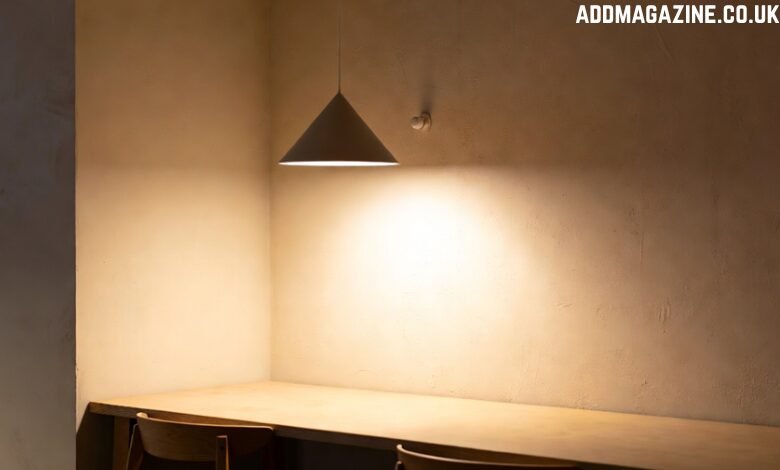
You can have beautiful antiques, heirloom chairs and perfectly good paint, and still feel like your dining room is stuck in another decade. In most homes, the real culprit is what is hanging overhead. The right pendant lighting for dining room can quietly change the whole mood, making everything underneath feel more intentional, even if you do not touch the furniture. Designers keep pointing out that updated pendants, warmer light and better placement are doing most of the work in “after” photos you see online now.
With one or two smart swaps, you can take a very 2010 dining room and give it a 2026 attitude over a single weekend.
1. Retire The Fussy Fitting And Simplify The Shape
If your dining room still has a small chandelier, multi-arm fitting or a tangle of shades, that is probably what is pulling the room backwards.
Current dining room schemes lean on cleaner silhouettes: single domes, drum shades, linear bars and neat clusters that feel closer to modern sculpture than jewellery. This does not mean you need something ultra-minimal if your room is traditional. A simple fabric drum, milk-glass globe or relaxed rattan shade can sit above a classic table and still read as 2026. Thoughtful updates like these also lift rental appeal for anyone buying investment property in Folsom.
Think about how the pendant looks when it is off as well as on. If it feels busy or fussy against your ceiling line, it will date quickly. If it feels calm and clear, it will help everything else look more considered.
2. Drop The Light To Table Level (Almost)
Even a beautiful pendant can feel wrong if it is floating too high above the action. In older dining rooms, lights were often hung close to the ceiling, which leaves the table feeling disconnected.
Most height guidance now centres on the same idea: hang pendants so the bottom of the shade sits roughly 60-80 centimetres above the tabletop, adjusted for ceiling height and pendant scale. This does three useful things:
- It pulls light down to the table, where you actually need it.
- It creates a more intimate pool of light for meals.
- It visually ties the fitting to the furniture instead of the ceiling.
For very large or solid shades, stay closer to 75-80 centimetres. For smaller, lighter designs, you can usually come down a touch without blocking sightlines across the table.
3. Let The Table Decide The Pendant, Not The Other Way Around
One common mistake is choosing a pendant purely because you like it, then hoping it will suit the room. It is easier to start with your table and work upwards.
Designers often follow simple pairing rules: round pendants over round tables, linear fittings over rectangular tables, or a small cluster over a compact square. The pendant should feel proportionate, roughly half to two-thirds the width of the table, so it looks substantial but not overwhelming.
This is where choosing the right pendant lighting for dining room layouts makes an older table feel deliberate. A heavy, dark table often benefits from a lighter, more translucent pendant. A slim, pale table can handle something a bit bolder or more sculptural.
You are not trying to erase your furniture’s character; you are choosing a light that frames it in a more current way.
4. Connect Entrance And Dining With A Thoughtful Foyer Pendant
In many homes, the journey to the dining room starts at the front door. If your entrance still has a small flush fitting or dated lantern, while the dining room holds a fresh new pendant, the shift can feel abrupt.
Treat the foyer as the opening scene. Using well-chosen pendant foyer lighting that shares a finish or language with the dining pendant makes the whole route feel intentional. Foyer lighting guides suggest scaling the entrance pendant so it is about one-third the width of the space and hanging it high enough for comfortable clearance, while still reading as a feature.
The two pendants do not have to match. If the dining room has a brass dome, the foyer might have a glass lantern with brass details. If the dining room uses a black linear bar, the foyer could echo that with a simpler black frame pendant. The shared notes are what make the house feel pulled together.
5. Use Light Quality To Do Quiet Modernising
Shape is what you see first, but the character of the light itself is what makes a room feel current. Many older fittings run too bright, too cool or too yellow, which quickly dates the space.
Recent reports on residential lighting trends emphasise warm white LEDs, better colour rendering and dimmable control as the core of modern schemes. In a dining room that looks like:
- Choosing LEDs in the 2700-3000K range for a gentle, flattering warmth.
- Opting for bulbs with good colour rendering so food, wood and fabrics look rich rather than flat.
- Adding a dimmer so you can have brighter light for homework or board games and softer light for late dinners.
The combination of updated fittings and kinder light almost always makes even older decor look more expensive.
Real-World Scenarios: Three Dining Rooms, Three Fast Refreshes
1. The Traditional Dining Room With A Tiny Brass Chandelier
You have a solid table, matching chairs and a chandelier that feels a little too ornamental.
- Replace the chandelier with a single drum or wide dome shade in fabric, glass or a simple metal.
- Hang it roughly 70 centimetres above the table surface.
- Fit warm, dimmable LEDs so you can switch from bright weekday to soft weekend settings.
Experts note that this kind of simplified, scaled-up pendant is one of the quickest ways to pull a classic dining room into a more modern feeling without losing its character.
2. The Open-Plan Dining Space That Feels Like An Afterthought
Your table sits between the kitchen and the lounge, under a basic ceiling fitting that does little to define the area.
- Swap the flush mount for a considered pendant or a pair of smaller pendants centred over the table.
- Choose a shape that relates to the table and sits visually between the kitchen pendants and living room lamps.
- Keep the height in the 65-75 centimetre range above the tabletop so it feels anchored but not intrusive.
Designers often use pendants in open-plan spaces to “draw a circle” around the dining zone, making it feel like a destination rather than a pass-through.
3. The Old Hall And Dining Room That Do Not Quite Talk
Your hall still has a semi-flush or old lantern, and the dining room has a new fitting, but the combination feels a bit random.
- Introduce pendant foyer lighting that borrows a material or shape from the dining pendant: perhaps similar ribbed glass, matching black frames or the same brushed metal tone.
- Hang the foyer pendant high enough to clear tall guests, but low enough that you notice it as soon as the door opens.
- Use bulbs in the same colour temperature in both spaces so the light quality feels consistent as you move through.
Foyer and dining lighting are often treated as separate decisions, but aligning them is one of the easiest ways to make older homes feel quietly refreshed.
FAQ
How big should a dining pendant be for a standard table?
As a guide, aim for a pendant that is about half to two-thirds the width of your table. This keeps the fixture feeling substantial without overwhelming the furniture or blocking sightlines.
Is one pendant enough over a long dining table?
Often, yes, if the pendant is wide or linear enough. For very long rectangular tables, designers sometimes prefer two smaller pendants or a long bar to spread light more evenly and give a balanced look in open-plan spaces.
Do my entrance and dining pendants really need to relate to each other?
They do not have to match, but some shared detail helps the house feel cohesive. Repeating a metal finish, glass type or general shape between your entrance pendant and your dining fitting means guests experience the spaces as connected rather than coincidental, which is exactly what makes a dated home feel freshly edited.