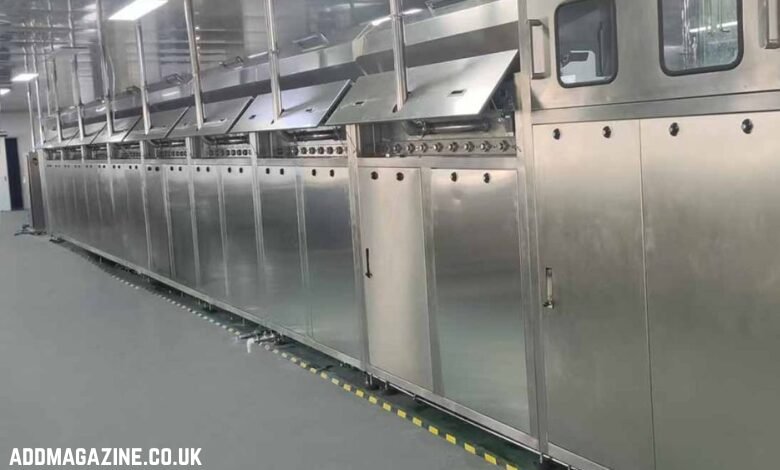
Clean water, efficient filtration, and advanced separation processes are essential in today’s industries. From healthcare to wastewater treatment, the demand for high-performance membranes continues to grow.
A hollow fiber membrane spinning machine plays a central role in manufacturing these advanced filtration materials. It produces thin, tube-like membranes with microscopic pores that allow selective separation of particles, liquids, or gases.
In simple terms, this machine transforms raw polymer solutions into highly functional hollow fibers used across multiple industries. Its precision and adaptability make it one of the most important technologies in membrane science.
How Does a Hollow Fiber Membrane Spinning Machine Work?
A hollow fiber membrane spinning machine is an industrial system designed to produce hollow fiber membranes through controlled extrusion and solidification processes. These membranes resemble fine straws with porous walls that filter substances at a microscopic level.
The machine operates by pushing a polymer solution through a specially designed nozzle called a spinneret. At the same time, a bore fluid creates the hollow inner channel. As the fiber forms, it undergoes phase inversion, turning from liquid into a solid porous structure.
This process allows manufacturers to control key characteristics such as pore size, thickness, and permeability. As a result, the final product can be customized for specific filtration or separation needs.
How the Hollow Fiber Membrane Spinning Process Works
The working process of a hollow fiber membrane spinning machine is continuous and highly controlled. It combines chemical and mechanical steps to produce consistent and high-quality fibers.
Polymer preparation and extrusion
The process begins with preparing a polymer solution, often called dope. Common materials include polysulfone, polyethersulfone, and PVDF. This solution is carefully mixed to achieve the desired viscosity and composition.
Once ready, the solution is pumped into the spinneret. At the same time, a bore fluid flows through the center, creating the hollow structure. The co-extrusion forms a thin fiber instantly.
Phase inversion and solidification
After extrusion, the fiber passes through a short air gap before entering a coagulation bath. This is where phase inversion occurs. The solvent in the polymer exchanges with a non-solvent, usually water, causing the fiber to solidify.
This step determines the internal structure and porosity of the membrane. Even slight changes in temperature or composition can significantly affect the final product.
Washing, drying, and collection
Once solidified, the fibers are washed to remove residual solvents. They are then dried under controlled conditions to maintain structural integrity.
Finally, the fibers are collected using a winding system. The entire process is continuous, allowing large-scale production with consistent quality.
Key Components of a Hollow Fiber Membrane Spinning Machine
Understanding the main components helps in grasping how the machine achieves precision and efficiency.
Essential parts and their functions
- Dope tank stores and maintains the polymer solution
- Metering pumps control the flow rate of both polymer and bore fluid
- Spinneret shapes the hollow fiber during extrusion
- Bore fluid system forms the inner channel of the fiber
- Air gap section influences membrane morphology
- Coagulation bath solidifies the fiber structure
- Washing unit removes remaining solvents
- Drying system stabilizes the membrane
- Winding system collects the finished fibers
Each component plays a specific role in ensuring uniform fiber production and high performance.
Important Parameters That Affect Membrane Quality
The quality of membranes produced by a hollow fiber membrane spinning machine depends on several process parameters. These factors must be carefully controlled to achieve the desired results.
Key influencing factors
- Polymer concentration determines pore structure and strength
- Flow rates affect fiber diameter and wall thickness
- Air gap distance influences surface properties
- Temperature impacts phase inversion speed
- Coagulation bath composition controls porosity
- Spinning speed affects overall production efficiency
Adjusting these parameters allows manufacturers to tailor membranes for specific applications.
Advantages of Using Hollow Fiber Membrane Spinning Machines
This technology offers several benefits that make it a preferred choice in modern industries.
Major advantages
- High surface area improves filtration efficiency
- Compact design allows space-saving membrane modules
- Continuous production supports large-scale manufacturing
- Customizable structure meets diverse application needs
- Energy-efficient operation compared to traditional methods
- Consistent quality due to automated controls
These advantages make hollow fiber membranes a reliable solution for advanced filtration systems.
Applications Across Different Industries
The versatility of membranes produced by a hollow fiber membrane spinning machine makes them suitable for a wide range of applications.
Water and wastewater treatment
They help remove suspended solids, bacteria, and other contaminants from water.
Medical and healthcare
They act as artificial kidneys, filtering waste from the blood.
Food and beverage industry
They are used for clarifying juices, milk processing, and removing impurities without affecting taste or quality.
Gas separation
Hollow fiber membranes are used to separate gases such as oxygen and nitrogen. This is important in industrial and environmental processes.
Biotechnology and pharmaceuticals
They support sterile filtration and purification processes, ensuring product safety and quality.
Types of Spinning Techniques Used
Different spinning techniques are used depending on the material and application requirements.
- Dry-wet spinning is the most common method, combining air exposure and coagulation for controlled structure formation.
- Non-solvent induced phase separation is widely used for water treatment membranes due to its simplicity and effectiveness.
- Thermally induced phase separation involves cooling a heated polymer solution to create pores.
- Melt spinning is used for specific polymers where solvents are not required.
Each technique offers unique advantages and is selected based on the desired membrane properties.
Challenges and Considerations
While the hollow fiber membrane spinning machine is highly effective, there are certain challenges to consider.
Maintaining consistent quality requires precise control of all parameters. Small variations can lead to defects in the membrane.The initial setup cost of the machine can be high, especially for industrial-scale systems. Handling solvents and chemicals safely is essential to avoid environmental and health risks.
Despite these challenges, proper design and operation can minimize issues and ensure reliable performance.
Future Trends in Membrane Spinning Technology
Advancements in membrane technology continue to improve the capabilities of spinning machines.
Automation and digital control systems are making production more efficient and accurate. New polymer materials are being developed to enhance durability and filtration performance. Sustainable processes are gaining attention, focusing on reducing waste and energy consumption.
These trends indicate a strong future for hollow fiber membrane production.
The hollow fiber membrane spinning machine is more than just a manufacturing tool. It is a key enabler of clean water, efficient healthcare systems, and advanced industrial processes.