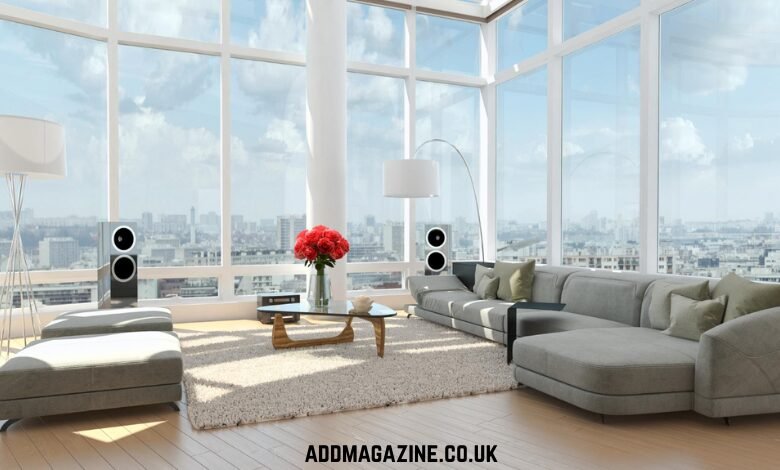
Luxury living has always been shaped by convenience, though the definition of convenience continues to evolve alongside technology. In modern penthouses, entertainment is no longer treated as a separate feature tucked into a single room. It forms part of a connected system where content, control, and performance come together without visible effort.
Streaming has moved beyond individual apps and devices, becoming something that runs through the entire living space.
Residents expect immediate access, consistent quality, and minimal friction, whether they are watching a film, switching between platforms, or moving from one room to another. This metamorphosis explains why all-in-one streaming hubs are replacing traditional setups.
With that in mind, this article explores how all-in-one streaming hubs unify content, control, and performance across the entire living space, enabling seamless access, consistent playback, and effortless transitions between rooms without the need for separate systems.
Seamless Access Across a Connected Space
A penthouse designed around streaming hubs removes the need to manage multiple devices or inputs. Instead of switching between systems, everything runs through a central platform that controls access across screens and rooms.
Using a free VPN supports that continuity by maintaining stable access across different networks and services, especially when content availability varies by region. It allows streaming hubs to operate without interruption, keeping platforms accessible without repeated adjustments.
When access remains consistent, the entire system feels unified rather than fragmented. Content loads quickly, transitions happen without delay, and the experience carries across the space without interruption.
One System Instead of Many Devices
Traditional setups often rely on separate devices for different functions, including streaming sticks, consoles, and individual app ecosystems. Managing these systems can create unnecessary complexity, especially when switching between platforms.
All-in-one streaming hubs simplify this by bringing everything into a single environment. Content libraries, apps, and controls sit within the same interface, which reduces the need for constant switching.
Systems such as Apple TV 4K integrated with tvOS, Samsung Smart Hub built into flagship displays, LG webOS, Roku Ultra, and Amazon Fire TV Cube show how multiple services can be centralised into a single control layer rather than spread across separate hardware.
The table below compares how these systems consolidate streaming and control within one environment:
| System | Type | Integration Level | Control Method | Best Fit |
| Apple TV 4K | External hub | Deep app + ecosystem integration | Remote + voice (Siri) | Multi-device Apple environments |
| Samsung Smart Hub | Built-in TV platform | Full TV-level integration | Remote + voice | High-end smart TV setups |
| LG webOS | Built-in TV platform | Native app ecosystem | Remote + pointer control | Visual-first navigation |
| Roku Ultra | External hub | Platform-agnostic aggregation | Remote + mobile app | Simplicity across services |
| Amazon Fire TV Cube | External hub | Voice-led system control | Voice (Alexa) + remote | Hands-free environments |
Consolidation improves responsiveness as well. Instead of routing through multiple devices, the system processes everything within a unified layer, which shortens load times and creates a more immediate, consistent experience across platforms.
Performance That Matches the Environment
High-end living spaces demand performance that aligns with their design. Large displays, multi-room audio, and high-resolution content all require systems that can handle sustained data flow without slowing down.
Streaming hubs are built to manage this demand by prioritising consistent playback rather than peak speed alone. This results in smoother streaming, fewer interruptions, and more reliable quality during extended use.
Insights into streaming market trends show how user expectations continue to rise alongside technology, with performance and accessibility becoming central to the overall experience.
Reducing Dependence on Unstable Platforms
A more capable setup changes how users approach content sources. When systems deliver consistent quality, unreliable platforms become easier to recognise and avoid.
Issues surrounding streaming safety concerns reflect how unstable services often introduce interruptions, inconsistent quality, and potential risks that disrupt the experience.
Similarly, streaming site reliability highlights how performance can vary widely depending on source and infrastructure. It becomes easier to prioritise stable, well-supported platforms that maintain consistent playback, reduce interruptions, and provide a more secure viewing experience across different devices and networks.
A centralized hub encourages the use of stable platforms where content is delivered as intended, without constant troubleshooting or compromise.
Unified Navigation and Multi-Room Continuity
Modern streaming hubs combine interface design and system integration to remove friction from both navigation and playback.
When content, controls, and services sit within a single environment, menus respond instantly, transitions feel continuous, and users no longer need to move between separate apps or devices. This creates a viewing experience that prioritises access and flow rather than process.
These systems extend beyond a single screen. Playback can move between rooms without restarting, allowing content to follow the user rather than remain tied to one location. A film can continue from one space to another, while music or ambient content can run across multiple areas without interruption. The system behaves as a connected whole, aligned with how modern living spaces are used.
Key capabilities include:
- Centralised interface that removes the need to switch between multiple platforms
- Faster navigation with reduced loading and fewer interaction steps
- Seamless playback transfer between screens without losing position
- Synchronized multi-room audio and video for consistent coverage
- Background system coordination that maintains continuity without manual input
This combination of unified control and spatial flexibility creates an environment where content remains accessible and consistent, regardless of where or how it is being used within the home.
A New Standard That Disappears Into the Space
All-in-one streaming hubs are designed to integrate into the environment rather than stand apart from it. Hardware is reduced, components are often concealed, and control is centralised so that the system remains present without becoming a focal point. This reflects a broader shift in design, where functionality is embedded into the space and supports it quietly rather than competing for attention.
This approach aligns with how modern penthouses are used, where technology is expected to work continuously without interruption or visible effort. Entertainment no longer revolves around managing devices or navigating between platforms, but around immediate, consistent access that fits naturally into daily routines. Performance, accessibility, and simplicity come together to form an experience that feels complete from the moment it is used.
Streaming hubs deliver this by unifying access, control, and processing within a single system that operates in the background. Content remains available, transitions feel immediate, and the underlying technology stays out of view, creating a space where the experience is defined by ease rather than the systems enabling it.