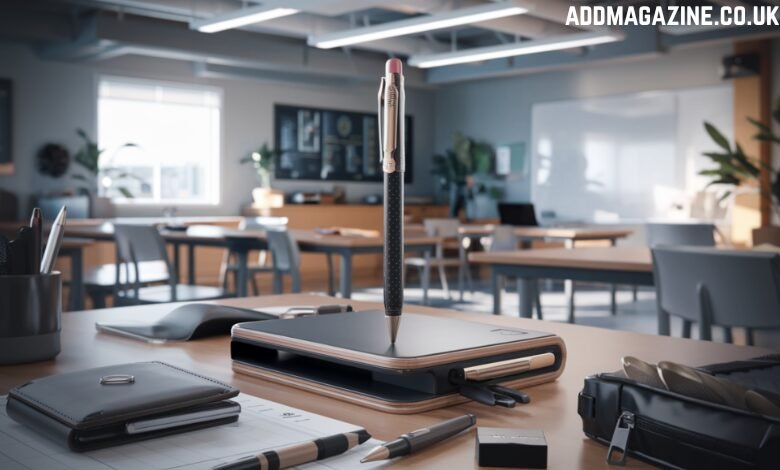
Writing instruments have undergone a quiet revolution over the past decade, and mechanical pencils—particularly those designed for everyday carry—now occupy a central place in classrooms and lecture halls worldwide. As educational institutions modernize their approach to learning tools, the humble mechanical pencil has evolved from a simple alternative to wooden pencils into a precision instrument that meets the demands of contemporary students.
This transformation reflects broader shifts in how we think about educational tools: durability matters, sustainability counts, and the tactile experience of writing still plays a crucial role in learning. The EDC mechanical pencil embodies these values while offering practical advantages that traditional pencils simply cannot match.
From Industrial Tool to Educational Essential
The mechanical pencil’s origins trace back to the early 19th century, when inventors sought to eliminate the constant need for sharpening. What began as a novelty for draftsmen and engineers gradually found its way into mainstream use, driven by successive waves of innovation:
- Refillable lead mechanisms that eliminated interruptions during extended writing sessions
- Advanced materials engineering incorporating aerospace-grade metals and high-impact polymers
- Precision lead advancement systems offering controlled, consistent line quality
According to research from the Journal of Writing Research, the consistency of line width provided by mechanical pencils can improve handwriting legibility by up to 23% compared to traditional wooden pencils, particularly among younger students still developing fine motor control.
What Defines an EDC Mechanical Pencil
The everyday carry movement—rooted in preparedness culture and minimalist design philosophy—has elevated certain mechanical pencils beyond mere writing implements. An EDC mechanical pencil distinguishes itself through several critical characteristics:
- Pocket-friendly design: Compact profiles with secure clip mechanisms that prevent loss or damage
- Aesthetic intentionality: Clean lines and thoughtful finishes that reflect personal style while maintaining professional appropriateness
- Reliable mechanisms: Lead advancement systems engineered for thousands of cycles without failure
These pencils represent a convergence of industrial design and practical utility. Brands like Rotring and Staedtler have long defined this space, and precision-machined EDC mechanical pencils from Everyman have further refined the concept with knurled grips and replaceable components, addressing both functionality and longevity.
Selecting Mechanical Pencils for Academic Success
Students face unique demands: marathon note-taking sessions, varied writing surfaces, and the need for equipment that survives the chaos of backpacks and lockers. The ideal student mechanical pencil balances several factors:
- Grip comfort: Textured or cushioned grip zones that reduce pressure points during extended use
- Lead diameter: 0.5mm offers precision for detailed work, while 0.7mm provides durability for general writing
- Lead hardness options: HB for everyday writing, 2H for technical drawing, B for sketching
- Eraser accessibility: Top-mounted erasers with simple replacement mechanisms
- Visual lead indicators: Windows or mechanisms showing remaining lead supply
Research published in Learning, Media and Technology suggests that students who use consistent, reliable writing tools report lower cognitive load during note-taking, allowing greater focus on content comprehension rather than tool management.
The Manufacturing Process Behind Precision
Understanding how mechanical pencils are manufactured reveals why quality varies so dramatically across price points. The production process involves several sophisticated stages:
- Material selection and preparation: Injection-molded polymers for budget models, CNC-machined metals for premium versions
- Lead production: Graphite and clay mixtures extruded at precise diameters, then fired at temperatures exceeding 1000°C for optimal hardness
- Mechanism assembly: Spring-loaded clutches and ratcheting systems assembled with tolerances measured in hundredths of millimeters
- Quality assurance: Drop testing, lead advancement cycle testing, and grip pressure analysis
According to industry analysis from Grand View Research, the global writing instruments market increasingly emphasizes sustainable manufacturing, with major producers adopting recycled materials and reducing packaging waste.
Why Mechanical Pencils Outperform Traditional Alternatives
They represent a fundamentally different approach to writing instruments:
- Consistent line quality: Uniform width eliminates the gradual degradation that occurs as wooden pencils wear down
- Environmental efficiency: A single mechanical pencil with refill leads replaces dozens of wooden pencils over an academic year
- Ergonomic consistency: Fixed weight and balance point, unlike wooden pencils that change characteristics as they’re sharpened
- Reduced maintenance: No sharpening interruptions during exams or timed assignments
- Cost effectiveness: Higher initial investment offset by years of use with inexpensive lead refills
The environmental case is particularly compelling. The Environmental Protection Agency estimates that wooden pencil production consumes significant timber resources, while mechanical pencils—particularly those with metal bodies—can last decades with proper care.
Mechanical Pencils as Creative Instruments
Beyond utilitarian note-taking, mechanical pencils have become essential tools for creative students. Art and design programs increasingly recognize their versatility:
- Lead variety: Different hardness grades enable techniques from precise technical illustration to expressive sketching
- Consistent pressure response: Predictable mark-making that helps students develop technical control
- Layering capability: Fine leads allow subtle tonal gradations and detailed cross-hatching
- Portability for field work: Compact kits with multiple lead types support outdoor sketching and observational drawing
Design educators note that mechanical pencils remove variables that can frustrate beginners, allowing students to focus on developing observational skills and hand-eye coordination rather than managing their tools.
Engineering Applications and Technical Precision
In technical disciplines, the engineering pencil represents a specialized evolution of the mechanical pencil concept. These instruments meet exacting standards:
- Ultra-fine leads: 0.3mm and 0.5mm diameters for detailed technical drawings and mathematical notation
- Lead grade specificity: Harder leads (2H to 4H) that maintain sharp points for extended periods
- Grip precision: Knurled metal grips providing tactile feedback and control
- Durability standards: Construction that withstands the demands of studio and field work
Engineering and architecture programs often specify particular pencil models in their required materials lists, recognizing that precision instruments contribute to developing professional-grade technical skills. The consistency these pencils provide helps students learn proper line weight and drafting conventions that remain relevant even in an increasingly digital workflow.
The Future of Writing in Educational Contexts
As educational technology continues evolving, the persistence of mechanical pencils might seem counterintuitive. Yet their enduring relevance reflects fundamental truths about how humans learn and create. The tactile feedback of pencil on paper engages cognitive processes differently than typing or stylus input on screens.
The EDC mechanical pencil, in particular, represents a synthesis of traditional craftsmanship and modern materials science. These tools acknowledge that despite technological advancement, students still need reliable, comfortable instruments for the physical act of writing—whether capturing lecture notes, sketching design concepts, or working through complex mathematical problems.
The trajectory is clear: as educational institutions balance digital tools with traditional methods, quality mechanical pencils will remain essential equipment. Their combination of precision, sustainability, and tactile satisfaction ensures they’ll continue serving students who value both performance and the simple pleasure of well-designed tools.