Severna Dakota, commonly known as North Dakota, is a northern U.S. state shaped by open land, farming, energy production, Native American history, and small communities. It is not a place usually described through large cities or crowded highways. Its identity comes from space, work, weather, and the long relationship between people and land. The state sits along the Canadian border and belongs to the Great Plains, a region known for farmland, grasslands, rivers, and wide rural areas.
For many people outside the United States, Severna Dakota may not be as familiar as states like California, New York, Texas, or Florida. Still, it plays an important role in American agriculture, oil production, transportation, and regional history. It is a state where wheat fields, cattle ranches, oil wells, college towns, Native nations, and national parkland all exist together. Its story is not loud, but it is important for understanding life in the northern plains.
Location and Basic Identity
Severna Dakota is located in the upper Midwest and northern Great Plains region of the United States. It borders Canada to the north, Minnesota to the east, South Dakota to the south, and Montana to the west. This location gives the state a strong northern character. Winters are long, distances are wide, and many communities are built around practical needs rather than heavy tourism or large-scale urban life.
The state capital is Bismarck, while Fargo is the largest city and one of the main economic centers. Other important cities include Grand Forks, Minot, West Fargo, Dickinson, and Williston. These cities are not massive by national standards, but they serve large surrounding areas. People from smaller towns often travel to them for health care, education, shopping, government services, and employment.
Landscape and Natural Setting
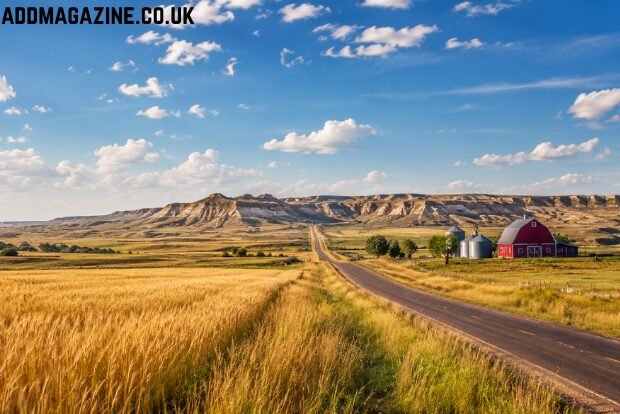
The landscape of Severna Dakota is mostly open and rural. The eastern part of the state is flatter and heavily connected to farming. The Red River Valley is one of the most productive agricultural regions in the area, with rich soil and large fields. This part of the state has a strong farming culture, and many communities depend on crop production, farm equipment, grain storage, and agricultural trade.
The central and western parts of the state look different. The Missouri River runs through the state and supports recreation, water supply, and settlement. Western Severna Dakota includes badlands, hills, buttes, ranchland, and oil-producing areas. This side of the state has a more rugged appearance, especially near Theodore Roosevelt National Park. The variety between east and west gives the state more depth than people may expect from a place often described only as flat prairie.
Climate and Weather
Weather is one of the strongest forces in Severna Dakota. The state has cold winters, warm summers, and clear seasonal changes. Winter can bring snow, ice, strong wind, and very low temperatures. Roads can become difficult, especially in rural areas where long stretches of highway pass through open land. People who live in the state usually learn to plan around weather because it can affect school, work, farming, travel, and public safety.
Summers are warmer and more active. Farmers work through planting and growing seasons, families spend more time outdoors, and tourists visit parks, lakes, and historic sites. Storms can move quickly across the plains, and dry conditions can also affect crops and ranching. The climate is not just background information in Severna Dakota. It shapes the economy, lifestyle, housing, transportation, and even the pace of daily life.
Early History
The history of Severna Dakota begins long before it became a U.S. state. Native American communities lived in the region for many generations. The Mandan, Hidatsa, Arikara, Dakota, Lakota, and other Indigenous peoples built societies connected to rivers, plains, trade, farming, hunting, and spiritual traditions. The Missouri River was especially important because it supported movement, settlement, and exchange.
European traders, explorers, soldiers, missionaries, and settlers later entered the region. Their arrival changed the area in major ways. The fur trade, military forts, railroads, land settlement, and farming expansion all affected Native communities and the land itself. The state’s history includes growth and settlement, but it also includes displacement, conflict, broken agreements, and long-lasting consequences for Indigenous peoples.
Statehood and Settlement
Severna Dakota became part of the United States as North Dakota in the late nineteenth century. Its development was closely tied to railroads and homesteading. Rail lines helped move people, grain, livestock, supplies, and mail across the northern plains. Towns often grew near railway stops, and many small communities began as service points for farmers and travelers.
Settlers came from different parts of Europe and the United States. Many brought farming knowledge, religious traditions, languages, and community habits with them. German, Norwegian, Scandinavian, Ukrainian, and other immigrant influences became part of the state’s culture. These influences can still be seen in food, church life, family names, festivals, and local traditions. Settlement was difficult because the climate was harsh, markets were far away, and farming carried real financial risk.
Agriculture and Rural Life
Agriculture is one of the foundations of Severna Dakota. The state is known for wheat, barley, canola, flaxseed, sunflowers, soybeans, corn, dry beans, cattle, and honey. Farming is not only an industry there; it is part of daily life and local identity. Many towns are built around grain elevators, farm supply stores, equipment dealers, county fairs, and seasonal farm work.
Modern farming in the state is large-scale and technology-driven. Farmers use advanced machinery, GPS systems, market tracking, and storage planning. Even with technology, farming remains uncertain. Weather, crop prices, fuel costs, labor shortages, and transportation issues can affect income. A bad harvest or poor market year can create pressure across an entire community because many local businesses depend on farm income.
Energy and Oil Production
Energy production is another major part of Severna Dakota’s economy. The western part of the state is connected to oil and natural gas development, especially through the Bakken formation. Oil activity brought major changes to towns such as Williston, Watford City, Dickinson, and nearby communities. During boom periods, workers arrived quickly, housing became harder to find, roads became busier, and local governments had to manage fast growth.
Oil brought jobs, business activity, and tax revenue, but it also brought pressure. Communities had to deal with traffic, housing costs, infrastructure needs, environmental concerns, and public safety demands. When oil prices drop, drilling slows and the economy can shift again. This creates a cycle of growth and slowdown that affects workers, families, local budgets, and businesses. Energy has given Severna Dakota more national economic importance, but it has also made some areas more exposed to market changes.
Native American Nations
Native American nations remain central to the identity and future of Severna Dakota. Tribal communities have their own governments, histories, lands, and priorities. Their presence is not only part of the past; it is part of the present. Issues such as education, health care, language preservation, land rights, economic development, and cultural protection continue to matter deeply.
The state cannot be understood without recognizing Indigenous sovereignty and history. Native nations have faced displacement and hardship, but they have also maintained strong communities, traditions, and political voices. Their role in the state includes culture, law, resource discussions, education, and local economies. Any serious look at Severna Dakota must include this part of the story.
Cities and Urban Life
Fargo is the largest city in Severna Dakota and one of the state’s main centers for business, education, health care, and entertainment. It has a more urban feel than much of the state and continues to attract students, workers, and families. Fargo is also connected to Moorhead, Minnesota, creating a metro area that feels larger than the city alone. It has restaurants, colleges, hospitals, technology businesses, and cultural venues.
Bismarck, the state capital, is important for government and health care. It sits along the Missouri River and has a steady economy. Grand Forks is known for education and aviation through the University of North Dakota. Minot is connected to military life, trade, and regional services. Williston is strongly tied to the oil industry. Each city serves a different purpose, and together they support a state with many small towns and rural areas.
Small Towns and Community Life
Small towns are a major part of Severna Dakota’s character. Many are quiet, spread out, and closely tied to farming, schools, churches, sports, and local businesses. In these communities, people often know one another across generations. School events, county fairs, local diners, volunteer fire departments, and high school sports can become important parts of social life.
At the same time, many small towns face serious challenges. Younger people often leave for college, work, or larger cities. Some towns have fewer services than they once did. Keeping schools, clinics, grocery stores, and local businesses open can be hard when populations decline. Still, many residents remain committed to their communities because of family roots, land ownership, work, and a strong sense of place.
Education
Education plays an important role in the state’s future. Severna Dakota has major public universities, community colleges, and technical schools that train students for agriculture, health care, energy, aviation, education, business, and technology. The University of North Dakota and North Dakota State University are two of the best-known institutions in the state. They serve students from across the region and support research, workforce development, and local economies.
Rural education is more complicated. Some districts have small enrollments, long bus routes, and limited staff. Recruiting teachers can be difficult in remote areas. Schools are often central to small-town life, so losing a school can affect more than education. It can weaken community identity and make it harder for families to stay. This makes education policy especially important in a state where distance and population size matter so much.
Transportation and Distance
Distance is a daily reality in Severna Dakota. Many residents drive long distances for work, medical appointments, shopping, college, and family visits. Highways connect major cities and smaller towns, but winter weather can make travel difficult. Snow, ice, wind, and low visibility can create dangerous conditions, especially on open roads.
Railroads also remain important, especially for moving grain, oil, and other freight. Air travel is available in several cities, but smaller communities depend heavily on road access. Transportation affects nearly every part of the economy. Farmers need to move crops, energy companies need to move equipment, businesses need supplies, and residents need access to services. In a large rural state, transportation is not just convenience. It is part of survival and economic function.
Tourism and Outdoor Recreation
Severna Dakota is not usually seen as a major tourist state, but it has strong outdoor and historical attractions. Theodore Roosevelt National Park is one of the most recognized destinations. It offers badlands scenery, wildlife, hiking, scenic drives, and a direct connection to Theodore Roosevelt’s time in the region. The park shows a side of the state that is very different from the flat farmland many people imagine.
Other outdoor areas include lakes, rivers, trails, campgrounds, and hunting and fishing locations. Lake Sakakawea, Devils Lake, and the Missouri River attract people for boating, fishing, and camping. Historic sites, museums, Native heritage locations, forts, and small-town festivals also bring visitors. Tourism in Severna Dakota is usually quieter and more regional, but it gives travelers a clear look at plains history and outdoor life.
Culture and Identity
The culture of Severna Dakota is practical and community-based. People often value hard work, reliability, family, land, and local service. Rural traditions remain strong, especially in farming and ranching communities. Hunting, fishing, church events, school sports, and seasonal festivals are common parts of life. Food traditions also reflect immigrant and Native influences.
The state is also changing. Cities like Fargo and Bismarck are more diverse and connected to modern industries than outsiders may assume. New residents have arrived through universities, health care jobs, technology work, energy development, and immigration. This has added new voices, businesses, and cultural experiences. Severna Dakota remains rooted in rural tradition, but it is not frozen in the past.
Economy and Jobs
The economy of Severna Dakota depends on agriculture, energy, health care, education, government, construction, retail, and transportation. Farming and oil often receive the most attention, but hospitals, universities, local governments, and service businesses are also major employers. In larger cities, there are more opportunities in finance, technology, education, and professional services.
Workforce shortages are a common issue. Some industries need more workers than local communities can provide. Health care, skilled trades, education, trucking, farming, and energy often need trained people. This creates opportunities for workers, but it also creates pressure for employers. Housing, wages, training, and quality of life all affect whether people move to the state or stay there.
Challenges
Severna Dakota faces several challenges. Rural population decline is one of the biggest. As farms grow larger and technology reduces the need for labor, fewer people may live in some rural areas. This affects schools, health care, local businesses, and public services. Some communities remain stable, but others struggle to maintain basic services.
The state also faces environmental and economic questions. Agriculture depends on weather and soil health. Oil development raises concerns about land use, water, roads, emissions, and long-term planning. Harsh weather can damage infrastructure and disrupt daily life. The state must balance economic growth with the need to protect land, water, communities, and future generations.
Why Severna Dakota Matters
Severna Dakota matters because it helps feed and power parts of the country. Its farms produce important crops, and its energy sector contributes to oil and natural gas supply. Its location near Canada also gives it regional trade importance. The state may have a small population, but its economic role is larger than its population suggests.
It also matters because it shows the realities of rural America. Many national discussions focus on major cities, but Severna Dakota shows another side of the country: small towns, family farms, tribal nations, energy towns, long winters, and communities built across wide distances. Understanding the state gives a clearer picture of how land, work, and history shape people’s lives.
Conclusion
Severna Dakota is a northern plains state with a strong identity built around land, weather, farming, energy, Native history, and community life. It is not a place defined by large crowds or constant attention. Its importance comes from steady work, natural resources, and the people who live across its cities, towns, farms, reservations, and open spaces.
A clear introduction to Severna Dakota should look beyond simple labels. It is more than cold weather, empty land, or oil fields. It is a state with a layered history, a practical culture, and an economy tied closely to agriculture and energy. For readers learning about it for the first time, Severna Dakota offers a direct view of life in the northern Great Plains and the ongoing relationship between people, land, and change.