Over the past two years, the landscape of corporate communications has undergone a silent revolution. From London-based public relations agencies to internal comms teams within multinational organisations, generative artificial intelligence has become the ultimate drafting assistant. Press releases, executive newsletters, and stakeholder updates can now be generated in seconds. However, this unprecedented efficiency has introduced a subtle but significant risk: the dilution of brand authenticity.
When a company relies too heavily on raw AI to communicate with its audience, the resulting text often suffers from a “robotic uniformity.” It is grammatically flawless but emotionally hollow, lacking the distinct tone and character that brands spend decades cultivating.
The Stakeholder Backlash
Today’s consumers, investors, and employees are highly discerning. They can intuitively sense when a heartfelt apology from a CEO or an inspiring quarterly update has been algorithmically generated. In corporate communications, trust is the primary currency. When communications feel synthetic, that trust is immediately compromised.
For modern PR professionals, the objective is no longer just speed; it is delivering messages that leave an undetectable ai footprint. Achieving this isn’t an exercise in deceiving the public. Rather, it is a commitment to quality control—ensuring that every piece of corporate literature respects the reader’s time by maintaining empathy, varied sentence structures, and genuine human cadence.
The New Editorial Workflow
To bridge the gap between AI efficiency and human authenticity, forward-thinking agencies are fundamentally restructuring their content workflows. The days of simply copying and pasting from a generative prompt into a content management system are over. The new standard requires a robust “editorial layer.”
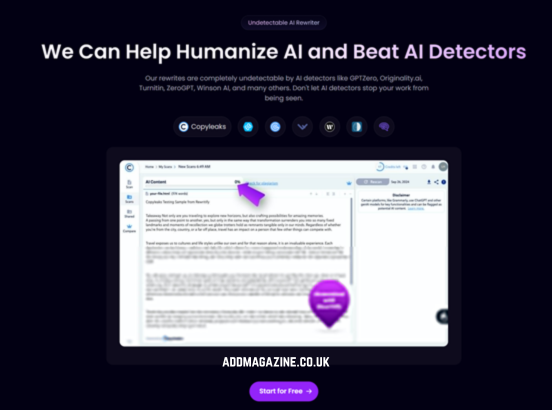
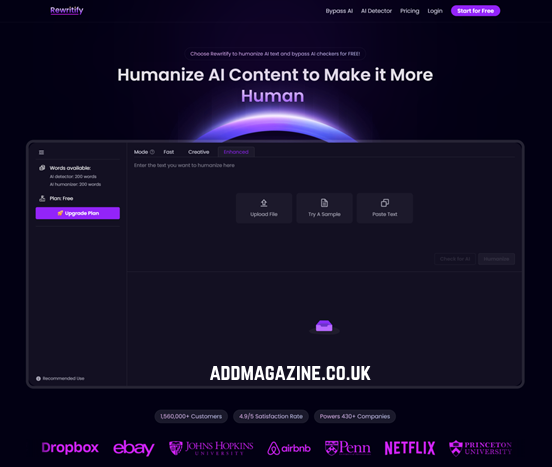
Instead of employing basic synonym-swapping tools that often distort the original meaning, communication directors are integrating advanced semantic refinement platforms into their tech stacks. For example, utilising a solution like rewritify.ai allows corporate writers to take a rigid, mechanically produced draft and seamlessly inject it with the natural, asymmetrical rhythm of a seasoned copywriter. These tools analyse the probability distribution of the text and adjust the phrasing to mirror natural human thought patterns, preserving the original message while completely transforming its delivery.
The Future of Brand Identity
As we navigate this new digital era, the most successful organisations will be those that strike the perfect balance between automation and empathy. Artificial intelligence is an extraordinary tool for structuring ideas and overcoming writer’s block, but it should never be the final voice of your brand.
In a marketplace flooded with generic content, protecting your brand’s unique voice is more critical than ever. The future of public relations belongs to those who use technology not to replace human connection, but to enhance and refine it.