Common vision problems often begin with small changes that are easy to ignore. You hold your phone further from your face than you used to, oncoming headlights glare on the drive home, or the text on your screen looks blurred by the end of the working day.
Most people who notice changes like these want to know whether they have an eye condition or need glasses. In practice, the answer is often glasses, because problems with how the eye focuses are one of the most common causes of blurred vision. The catch is that some eye conditions, such as glaucoma, usually cause no symptoms at first, so an eye check up that tests both your sight and the health of your eyes can find a problem before you notice any change.
In this article, we will walk through the different types of vision problems, the symptoms to watch for, whether stress can cause vision problems, and when to get your eyes checked.
What Are the Different Types of Vision Problems?
The different types of vision problems fall into two groups: focusing problems, which doctors call refractive errors, and eye conditions that affect the health of the eye itself.
Focusing problems and cataract are the leading causes of vision impairment worldwide, according to the World Health Organization (WHO).
- Short-sightedness (myopia) – distant objects look blurred, while close objects stay clear.
- Long-sightedness (hypermetropia) – nearby objects look blurred, while objects far away are easier to see.
- Astigmatism – the front of the eye has a shape closer to a rugby ball than a football, so vision can blur at any distance.
- Presbyopia – the lens inside the eye becomes stiffer with age, which makes it harder to focus on close objects, usually from your forties.
- Cataract – the lens becomes cloudy, causing blurred vision, glare and faded colours.
- Glaucoma – the optic nerve, which connects the eye to the brain, becomes damaged, usually because pressure builds up inside the eye.
- Macular degeneration – age-related macular degeneration (AMD) affects the middle part of your vision and can make reading and recognising faces difficult.
- Dry eye – the eyes do not make enough tears, or the tears dry up too quickly, which can leave your vision blurry and your eyes gritty.
Glasses or contact lenses usually correct the first four, while the other four may need eye drops, surgery or regular check-ups to manage:
What Are the Symptoms of Vision Problems?
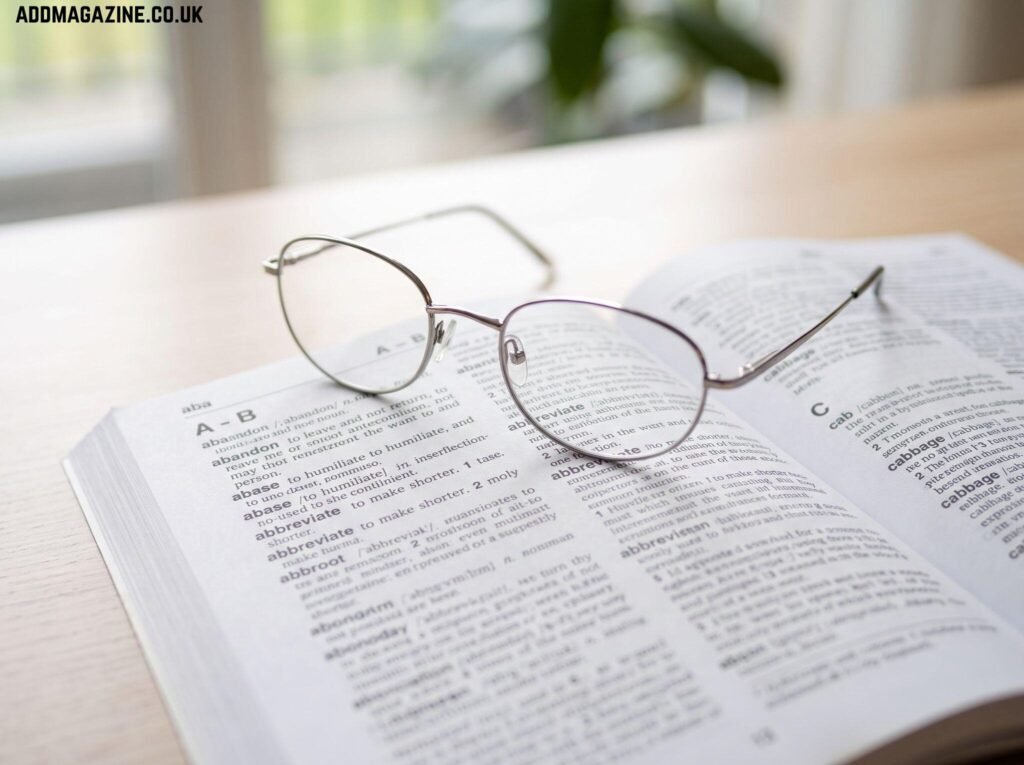
Alt text: Wire-framed reading glasses resting on an open dictionary on a wooden desk.
The symptoms of vision problems include blurred vision, difficulty focusing, trouble seeing at night, loss of side vision, eye strain and headaches.
Because one symptom can have several causes, an eye test is how an optometrist finds out which cause applies to you.
Vision Focus Problems
Vision focus problems make objects look blurred at a certain distance, or at both near and far distances in the case of astigmatism. If you are short-sighted, you might squint to read road signs, while long-sightedness or presbyopia can make you hold a book or your phone further away to read it.
Focusing problems can also leave your eyes tired, or give you a headache, after a long stretch of reading or computer work. If you are in your forties and reading up close has become harder, presbyopia is a common reason, and reading glasses usually correct it.
Night Vision Problems
Night vision problems make it hard to see in dim light or in the dark. Poor night vision is not a condition in its own right, but a symptom of another condition.
Cataract is one common cause, and it can also make headlights and streetlights look as though they are surrounded by glowing rings (halos). Other causes of poor night vision include glaucoma, retinitis pigmentosa (an inherited condition that damages the retina, the light-sensitive layer at the back of the eye) and a lack of vitamin A, especially in people whose bodies have trouble absorbing it.
Peripheral Vision Problems
Peripheral vision problems reduce what you can see at the edges of your vision, outside the point you are looking at directly. Glaucoma is one of the main causes, and because it usually develops slowly over many years, most people do not realise they have it until a routine eye test finds it.
Diabetes can also affect side vision through diabetic retinopathy, which is damage to the blood vessels of the retina. In addition, a drooping upper eyelid, known as ptosis, can block part of your vision. In adults, ptosis often develops with age, as the muscle that lifts the eyelid stretches.
Can Stress and Anxiety Cause Vision Problems?
Stress and anxiety can cause vision problems, including slightly blurred vision, eye strain, eye twitching and sensitivity to bright light. When you feel stressed, your body releases adrenaline, a hormone that widens your pupils and lets more light into your eyes.
Stress is also linked to central serous chorioretinopathy, a condition in which fluid builds up under the retina and blurs or distorts the centre of your vision, usually in one eye. It is more common in men, in people aged 35 to 55 and in people who take steroid medicines.
During a panic attack, fast breathing (hyperventilation) can blur your vision for a short time, and extreme anxiety can briefly narrow your side vision so that you mainly see what is directly in front of you. These effects usually ease once the stress passes.
Even so, blurred vision that stays after a stressful period has passed is worth having checked, because a focusing problem or an eye condition can cause the same symptoms as stress.
When Should You Get Your Eyes Checked?
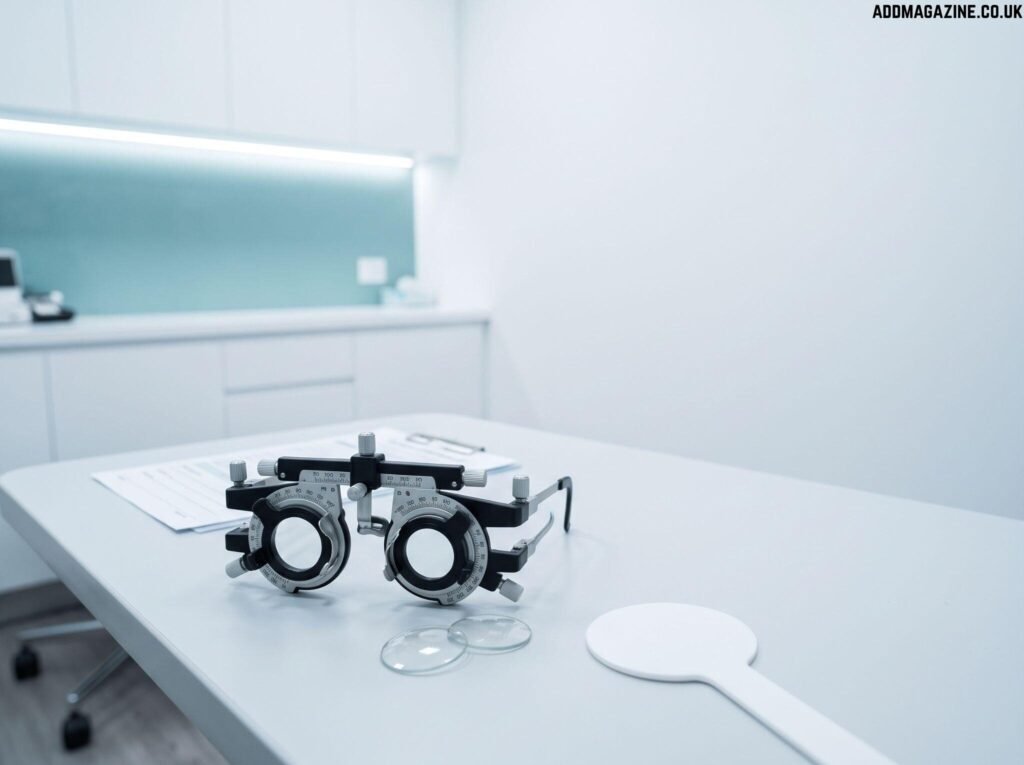
You should get your eyes checked at least every two years, even when your vision seems fine, because conditions such as glaucoma are usually found during a routine eye test. Your optometrist may suggest tests more often if you have a higher risk, for example if a parent, brother or sister has glaucoma.
Between routine tests, how quickly you should see someone depends on your symptoms:
- Not urgent – if your vision changes gradually, see an optometrist without waiting for your next routine test.
- Urgent – ask for an urgent appointment if your vision suddenly becomes blurred, you start to see double, your eye is red and painful, or floaters (small dark dots or lines) or flashes of light appear for the first time. A dark shadow moving across your vision is also urgent, because it can be a sign of retinal detachment, where the retina separates from the back of the eye.
- Emergency – if you suddenly cannot see from one or both eyes, or you develop severe eye pain, get emergency medical care straight away.
| Disclaimer: The information in this article is general guidance and does not replace medical advice |
Final Thoughts: Many Vision Problems Can Be Corrected
The good news is that many common vision problems can be corrected or managed. For many people, the answer is a pair of glasses or contact lenses, which usually bring blurred text and road signs back into focus.
A regular eye check up also gives you a starting point and reassurance about the health of your eyes, because it can find conditions such as glaucoma before they cause symptoms. With your optometrist’s help, you can look after your eyesight for many years to come.